
Landscaping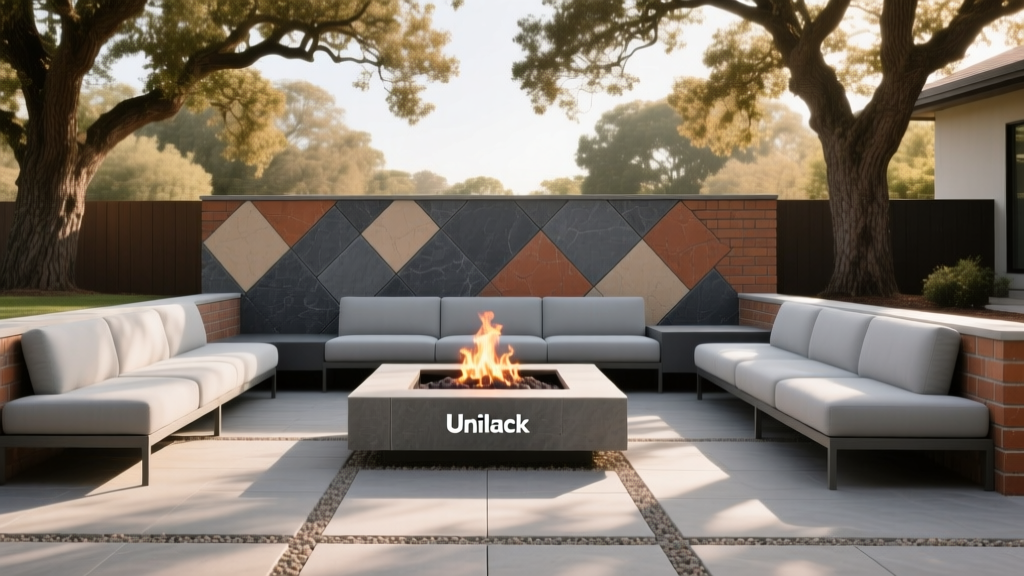
2026 Fire-Resistant Unilock Paver Fire Pit & Seating Wall Guide
James MillerPublished
The Evolution of Fire-Resistant Hardscaping in 2026
As we navigate the 2026 wildfire season, the concept of outdoor living has fundamentally shifted for homeowners in the Wildland-Urban Interface (WUI) and fire-prone regions. No longer is a backyard oasis just about aesthetics; it is about survival, resilience, and intelligent design. According to the CAL FIRE Defensible Space guidelines, creating non-combustible zones immediately surrounding your home and outdoor structures is the single most effective way to prevent ember ignition. This is where high-end hardscaping meets critical safety infrastructure.
Building a fire pit area with a Unilock paver surround and an integrated seating wall offers the perfect synthesis of luxury and fire-resistant landscaping. Unlike wood decks, composite lumber, or loose organic mulches, premium concrete pavers and architectural wall blocks provide a beautiful, functional, and inherently non-combustible surface. In this comprehensive guide, we will explore how to design, install, and maintain a Unilock paver fire pit and seating wall that adheres to the strictest 2026 fire-resistant landscaping principles.
Why Unilock Pavers Excel in Defensible Space Design
When evaluating materials for the "Immediate Zone" (the first 0 to 5 feet around structures and high-use areas), the National Fire Protection Association (NFPA) strongly recommends non-combustible hardscaping. Unilock concrete pavers are manufactured using high-density concrete and advanced EnduraColor technology, making them exceptionally resistant to heat, freezing, and thawing. More importantly, they do not ignite, melt, or off-gas toxic fumes when exposed to wind-blown embers or direct radiant heat from a nearby wildfire.
Furthermore, a properly installed paver patio eliminates the crevices where dry pine needles, dead leaves, and organic debris typically accumulate. When paired with high-quality polymeric sand, the joints between the pavers become sealed, preventing weeds from sprouting. In fire-resistant landscaping, a dried-out weed growing between patio stones is a hidden wick waiting for an ember; sealing those joints is a critical, yet often overlooked, safety measure.
Designing the Fire Pit Surround: Clearances and Materials
The fire pit itself is a controlled burn, but it remains a source of flying embers and intense radiant heat. To ensure your fire pit area remains safe and compliant with local WUI ordinances, the surround must be expansive and entirely devoid of combustible materials.
Choosing the Right Unilock Product Line
For the fire pit surround, you want a paver that offers a smooth surface for easy sweeping and a sophisticated aesthetic. Two top-tier choices for 2026 include:
- Unilock Umbriano: Featuring a granite-like texture and a smooth, modern finish. Its dense surface makes it incredibly easy to sweep away dry debris and embers.
- Unilock Richcliff: With its natural stone appearance and embossed surface, Richcliff provides a more rustic, organic look while maintaining the non-combustible integrity of premium concrete.
Sizing the Non-Combustible Perimeter
A standard gas or wood-burning fire pit ranges from 36 to 48 inches in diameter. However, the paver surround should extend a minimum of 6 to 10 feet outward from the center of the fire pit in all directions. This 10-foot non-combustible hardscape radius acts as a catch-basin for escaping embers, ensuring they land on cool concrete rather than dry lawn, wood decking, or flammable mulch. If space permits, extending the Unilock patio to 15 feet provides an even greater buffer zone, seamlessly transitioning into your wider defensible space.
Constructing a Non-Combustible Seating Wall
A seating wall elevates the functionality of your fire pit area, providing built-in seating that defines the space without the need to store combustible outdoor furniture cushions year-round. When constructing a seating wall in a fire-prone area, every component must be scrutinized for flammability.
Wall Block Selection and Base Preparation
Unilock wall systems, such as the Brussels Dimensional System or Lineo Dimensional Stone, are ideal for curved or straight seating walls. These blocks are heavy, interlocking, and completely fireproof. However, the foundation of the wall is just as important as the blocks themselves.
Never build a seating wall on a base of treated timber, wood forms, or organic soil. The 2026 best practices for hardscape base preparation in fire zones dictate the following:
- Excavation: Dig a trench at least 12 inches deep and 24 inches wide for the wall footprint.
- Geotextile Fabric: Lay down a non-woven geotextile fabric to separate the subgrade from the base material and prevent organic matter from migrating upward.
- Aggregate Base: Fill the trench with 3/4-inch minus crushed angular gravel. Compact this base in 2-inch lifts using a mechanical plate compactor until you achieve a rock-solid, non-combustible foundation.
The Danger of Wood Caps
In traditional landscaping, it is common to cap a masonry seating wall with stained cedar, redwood, or composite lumber for a warm, finished look. Do not do this in a fire-resistant landscape. A wood cap on a seating wall acts as a horizontal fuel bed. Instead, utilize Unilock’s pre-cast concrete coping stones or cap units. These concrete caps provide a polished, comfortable seating surface that will not ignite, warp, or require annual sealing with flammable chemical stains.
Fire-Resistant Landscaping Zones Around Your Fire Pit
Your Unilock hardscape does not exist in a vacuum; it must integrate with the surrounding softscape. The University of California Agriculture and Natural Resources (UC ANR) wildfire preparation guidelines emphasize the creation of distinct defensible space zones. Here is how to landscape the borders of your paver patio to maintain a fire-resistant perimeter.
| Zone | Distance from Hardscape Edge | Material & Planting Strategy |
|---|---|---|
| Zone 0 (Ember-Resistant) | 0 - 5 Feet | Strictly non-combustible. Use decomposed granite (DG), river rock, or extend the Unilock pavers. No plants, no planters, no wood mulch. |
| Zone 1 (Lean & Clean) | 5 - 30 Feet | High-moisture, low-sap, fire-resistant plants (e.g., succulents, aloe, coastal live oak). Keep plants pruned, hydrated, and spaced apart to prevent continuous fuel paths. |
| Zone 2 (Reduced Fuel) | 30 - 100 Feet | Native, drought-tolerant shrubs and trees. Maintain horizontal and vertical spacing. Remove all dead wood and dry grasses. Use gravel mulch instead of bark. |
By bordering your Unilock fire pit surround with a 5-foot ring of decomposed granite or smooth river rock before introducing any fire-resistant planting, you create a secondary ember-catchment zone. This ensures that even if an ember blows past the paver patio, it will not find combustible bark mulch or dry ornamental grasses to ignite.
Jointing and Weed Prevention: A Hidden Fire Hazard
The joints between your pavers and wall blocks are the most vulnerable points in a hardscaped area. In traditional installations, masonry sand is used, which easily washes out and allows weeds to take root. In a fire-resistant landscape, these weeds are a severe liability. During the late summer and autumn months, weeds growing in paver joints dry out completely, turning your beautiful patio into a grid of highly flammable kindling.
To mitigate this, always use a high-quality, commercial-grade polymeric sand for all Unilock paver and wall joints. When activated with water, polymeric sand binds together to form a rigid, flexible matrix that locks the pavers in place, resists washout from heavy rains, and completely starves weed seeds of the soil contact they need to germinate. Re-inspect and reapply polymeric sand every 3 to 5 years, or as needed, to maintain this critical ember-resistant seal.
Maintenance and Ember-Proofing Your Outdoor Oasis
Even the most meticulously designed fire-resistant landscape requires ongoing maintenance. As the 2026 fire season approaches, implement the following maintenance routine for your Unilock fire pit and seating wall area:
- Daily Sweeping During Fire Season: Use a stiff-bristled push broom to clear the paver surface of pine needles, oak leaves, and wind-blown debris daily. Embers can travel up to a mile ahead of a wildfire front; a clean patio offers them no fuel.
- Gutter and Roof Management: Ensure that the rooflines and gutters above your outdoor living space are fitted with metal mesh guards. Debris falling from a roof onto a paver patio can easily ignite if an ember lands in it.
- Furniture Storage: If you use outdoor furniture on your paver surround, opt for metal or high-density, fire-retardant synthetic wicker. During red flag warning days, store all fabric cushions, umbrellas, and shade sails indoors or in a fire-resistant storage box.
- Fire Pit Screen: Always use a heavy-duty steel spark screen over wood-burning fire pits. This simple accessory reduces the volume of escaping embers by over 90%, keeping your Unilock surround and the surrounding defensible space safe.
Conclusion
Designing a fire pit area with a Unilock paver surround and seating wall is a brilliant investment in both your property’s value and its resilience. By prioritizing non-combustible materials, enforcing strict clearance zones, and integrating intelligent base preparation and jointing techniques, you create an outdoor sanctuary that stands strong against the threat of wildfire. As fire-resistant landscaping standards continue to evolve in 2026, leveraging premium hardscaping products ensures that your home remains a safe, beautiful, and enduring retreat for years to come.

