
Landscaping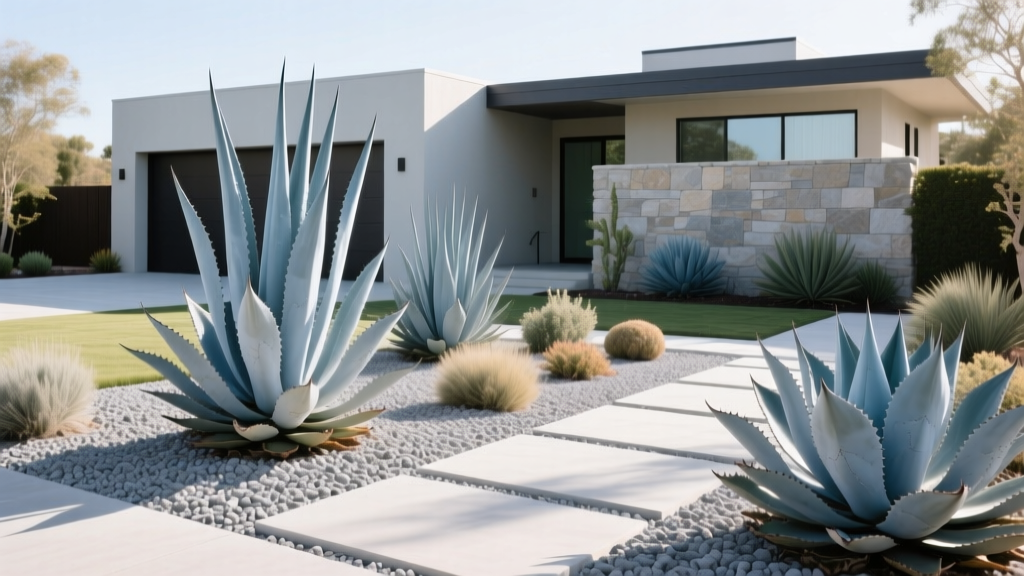
2026 Fire-Resistant Xeriscape: Agave and Decomposed Granite
Anna KowalskiPublished
The 2026 Standard: Fire-Resistant Xeriscaping
As we navigate the evolving climate realities of 2026, homeowners in the Wildland-Urban Interface (WUI) and suburban fire zones are fundamentally rethinking curb appeal through the lens of survival, sustainability, and water conservation. The traditional front lawn, with its high water demands and potential to become dry, combustible fuel during late-summer heat domes, is rapidly being replaced by intelligent, fire-resistant xeriscaping. Among the most striking, low-maintenance, and highly effective design combinations to emerge this year is the pairing of decomposed granite (DG) hardscaping with architectural agave specimens. This dynamic duo not only satisfies strict 2026 municipal defensible space ordinances but also creates a modern, desert-chic aesthetic that elevates property values while providing a robust line of defense against airborne embers.
Designing a front yard that prioritizes fire safety does not mean sacrificing beauty. In fact, the structural elegance of agave plants contrasted against the natural, earthy texture of compacted decomposed granite creates a sophisticated landscape that thrives in drought conditions while actively mitigating wildfire risks. According to the UC Agriculture and Natural Resources Fire Center, selecting plants with high moisture content and pairing them with non-combustible ground covers is one of the most effective strategies for creating a survivable space around your home. In this comprehensive guide, we will explore the science behind this landscaping strategy, break down the 2026 installation costs, and provide a step-by-step roadmap for transforming your front yard into a resilient, ember-resistant sanctuary.
Why Decomposed Granite and Agave Excel in Fire Zones
To understand why this specific combination is dominating 2026 landscape architecture in fire-prone regions, we must look at the combustion properties of the materials involved. Decomposed granite is an inorganic, naturally weathered rock that is entirely non-combustible. Unlike organic mulches—such as wood chips, pine straw, or rubber mulch, which can easily catch fire from wind-blown embers and carry flames directly to a home's siding—DG acts as a firebreak. When properly compacted, it leaves no air pockets or organic fuel for embers to ignite, making it the ultimate ground cover for the critical zero-to-five-foot zone immediately surrounding a structure.
Agaves, on the other hand, are succulents that have evolved to store massive amounts of water in their thick, fleshy leaves. This high internal water content gives them a naturally high ignition threshold. Furthermore, unlike highly flammable shrubs such as juniper, rosemary, or eucalyptus, agaves lack volatile resins, oils, and waxes that cause explosive combustion during a wildfire. Their low surface-area-to-volume ratio and smooth leaf architecture mean that airborne embers are likely to bounce off or extinguish upon contact with the moist leaf surface rather than catching in a tangled matrix of dry twigs and needles.
Designing Your Defensible Space Front Yard
When planning your xeriscape, it is crucial to align your design with modern defensible space principles. The official Defensible Space guidelines outline specific zones that dictate how vegetation and hardscaping should be managed to protect your home. Here is how to apply these zones using DG and agave:
Zone 0: The Ember-Resistant Zone (0 to 5 Feet)
This is the most critical area of your landscape. In 2026, many WUI building codes mandate that this zone be completely free of combustible materials. You should use a 3-inch layer of compacted decomposed granite as your sole ground cover. Avoid placing any plants directly against the house. If you must include greenery in this zone, use small, isolated, unarmed agave varieties planted in non-combustible containers or isolated within wide rings of bare DG to ensure no continuous fuel ladder exists.
Zone 1: The Lean, Clean, and Green Zone (5 to 30 Feet)
In this intermediate zone, you have more freedom to introduce larger landscape features. This is where you can plant mature, specimen-sized agaves directly into the soil, surrounded by expansive pathways and patios made of stabilized decomposed granite. The key here is spacing. Ensure that agave clusters are spaced widely apart, with DG filling the gaps between them. This horizontal spacing prevents fire from spreading laterally across your yard and ensures that if one plant is exposed to extreme radiant heat, the surrounding inorganic ground cover halts the progression of flames.
Top Agave Varieties for 2026 Fire-Resistant Landscapes
Not all agaves are created equal when it comes to landscape design and pedestrian safety. Here are the top varieties recommended by landscape architects this year:
- Agave americana 'Marginata' (Variegated Century Plant): A massive, striking specimen with bright yellow and green striped leaves. It serves as an excellent focal point in Zone 1. Its large size means you need fewer plants to make a visual impact, reducing overall maintenance.
- Agave vilmoriniana (Octopus Agave): Known for its soft, unarmed, tentacle-like leaves that lack the vicious terminal spines of other varieties. This makes it an incredibly safe choice for front yards near walkways, mailboxes, and driveways where pedestrians and pets frequent.
- Agave parryi (Parry's Agave): A highly cold-hardy, compact variety that forms beautiful, symmetrical rosettes with striking black-tipped spines. It is perfect for mass planting in geometric patterns along DG pathways, offering a formal, modern aesthetic.
- Agave desmettiana 'Smoothie': A virtually spineless variety with a graceful, urn-like shape. It thrives in partial shade and is ideal for front yards with mature, fire-resistant deciduous trees that provide a dappled canopy.
Step-by-Step Installation Guide
Achieving a professional, weed-free, and stable DG landscape requires meticulous preparation. Follow these steps to ensure your 2026 installation lasts for decades.
Step 1: Clearing, Grading, and Drainage
Begin by removing all existing combustible vegetation, organic mulch, and topsoil to a depth of at least four inches. Grade the soil so that it slopes away from your home's foundation at a minimum 5% drop over the first ten feet. Since agaves are highly susceptible to root rot in standing water, consider installing shallow French drains beneath the DG layer if your front yard has poor natural percolation.
Step 2: Laying the Geotextile Barrier
Never lay DG directly on bare dirt, as it will quickly mix with the soil and become a muddy, weed-filled mess. Install a heavy-duty, woven geotextile landscape fabric. Avoid solid plastic sheeting, which traps water and creates runoff issues. The woven fabric allows rainwater to permeate into the soil while preventing weeds from pushing up through the granite.
Step 3: Applying and Compacting the Decomposed Granite
Spread a 3-inch layer of DG over the fabric. For high-traffic areas like front walkways or driveways, use a mechanically stabilized DG mixed with an eco-friendly, non-toxic soil binder (such as Gator Dust or a natural plant-based resin). This binder locks the granite particles together, creating a surface that feels like concrete but remains permeable. Use a heavy plate compactor to tamp the DG down in 1-inch lifts, ensuring a rock-solid, ember-proof surface.
Step 4: Planting the Agave
Cut an 'X' into the geotextile fabric where you intend to plant your agave. Dig a hole twice as wide as the root ball but no deeper. Crucially, plant the agave slightly elevated on a small mound of well-draining, sandy loam. This ensures the crown of the plant sits above the surrounding DG grade, allowing water to run away from the base and preventing fatal crown rot.
2026 Cost Breakdown and Material Sourcing
Budgeting for a xeriscape renovation requires an understanding of current material and labor rates. Below is an estimated cost breakdown for a standard 500-square-foot front yard transformation in 2026.
| Material / Service | 2026 Estimated Cost | Notes & Specifications |
|---|---|---|
| Decomposed Granite (Bulk) | $65 - $90 per ton | 1 ton covers approx. 100 sq ft at 2 inches deep. Golden or Mojave gold colors are most popular. |
| Woven Geotextile Fabric | $0.45 - $0.75 per sq ft | Professional grade, 4-6 oz woven polypropylene. Do not use cheap spun-bond weed barrier. |
| Agave Specimens (15-Gallon) | $120 - $250 each | Price varies by rarity and size. A. americana is cheaper; rare variegated cultivars cost more. |
| DG Stabilizer / Binder | $35 - $50 per 50lb bag | Required for pathways. One bag typically covers 50-75 sq ft depending on application rate. |
| Professional Installation | $8.00 - $14.00 per sq ft | Includes demolition, grading, fabric, DG, compaction, and planting. Varies by regional labor rates. |
Essential Maintenance for Fire Safety
While a DG and agave front yard is exceptionally low-maintenance compared to a traditional turf lawn, it is not entirely zero-maintenance. To maintain its fire-resistant properties, you must actively manage organic debris. The NFPA Firewise USA program emphasizes that even the most fire-resistant landscape can become vulnerable if dead vegetation is allowed to accumulate. During the autumn and winter months, use a leaf blower to regularly clear fallen leaves, pine needles, and wind-blown debris from the surface of your decomposed granite. Organic matter resting on top of DG can dry out and become an ignitable fuel bed for embers.
Additionally, agaves require periodic grooming. As the lower leaves age and die, they dry out and become papery—creating a hidden fire hazard tucked beneath the green canopy. Once a year, use heavy leather gloves and long-handled pruners to carefully remove dead basal leaves. This not only eliminates a potential fuel source but also improves air circulation around the plant, deterring pests like the agave snout weevil, which targets stressed, decaying plant tissue. By combining the non-combustible nature of decomposed granite with the moisture-rich resilience of agave, your 2026 xeriscape will stand as a beautiful, sustainable, and fiercely protective barrier for your home.

