Gardening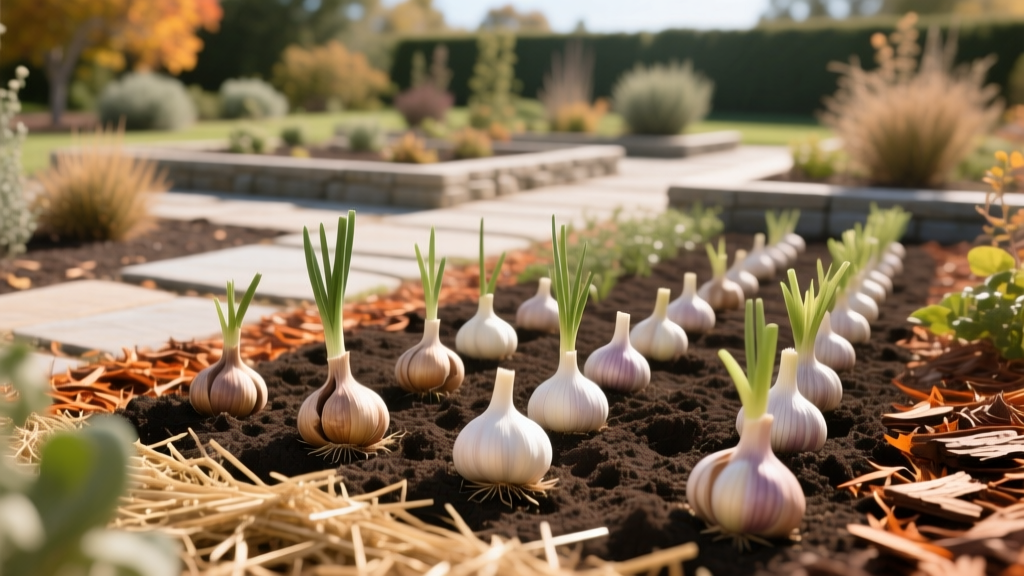
Fire-Resistant Fall Garlic Planting 2026: Hardneck vs Softneck
Mike RodriguezPublished
Integrating Garlic into Fire-Resistant Landscaping in 2026
As we navigate the extended heatwaves and prolonged dry spells characteristic of the 2026 growing season, fire-resistant landscaping has transitioned from a niche gardening trend to an absolute necessity for homeowners in fire-prone regions. When designing defensible space around your home, the goal is to eliminate highly flammable vegetation and replace it with low-growing, high-moisture, and herbaceous plants. Garlic is an exceptional candidate for this. Unlike woody shrubs or resinous ornamental grasses, garlic lacks the volatile oils and structural biomass that contribute to rapid fire spread. However, the traditional methods of growing garlic—specifically the heavy use of dry straw mulch and untreated wooden raised beds—directly contradict modern fire-safety protocols. This comprehensive guide will walk you through the precise fall planting timing, the critical differences between hardneck and softneck varieties, and how to adapt your mulching and bed construction techniques to maintain a beautiful, productive, and fire-safe garden in 2026.
Hardneck vs. Softneck Garlic: Selection Guide
Choosing the right garlic variety is the first step in a successful fall planting. Garlic is broadly categorized into two main types: hardneck (Allium sativum var. ophioscorodon) and softneck (Allium sativum var. sativum). Your selection should be dictated by your USDA Hardiness Zone, your winter chill hours, and your culinary preferences. According to the University of Minnesota Extension, hardneck varieties require a significant cold period (vernalization) to properly divide into cloves, making them ideal for northern climates. Softneck varieties, conversely, are more adaptable to milder winters and are the standard for commercial production due to their superior storage life.
| Feature | Hardneck Garlic | Softneck Garlic |
|---|---|---|
| Climate Preference | Cold winters (Zones 3-6) | Mild winters (Zones 7-9) |
| Scape Production | Yes (edible flower stalks) | No (rarely produces scapes) |
| Clove Size & Count | Fewer, larger cloves (4-12) | Many, varying sizes (10-40) |
| Storage Life | Shorter (4-6 months) | Longer (9-12 months) |
| Top 2026 Varieties | 'Music', 'Chesnok Red', 'German Red' | 'Inchelium Red', 'California Early' |
| Braiding Ability | No (stems become rigid) | Yes (stems remain pliable) |
For homeowners in transitional zones (Zone 6b to 7a), both types can be successfully cultivated. However, from a fire-landscaping perspective, softneck garlic's denser, lower-to-the-ground foliage profile can sometimes act as a slightly better ember-catchment trap if not properly spaced. Ensure you maintain a minimum of 6 inches between individual cloves and 12 inches between rows to promote airflow and reduce the accumulation of dry, dead leaf matter that could ignite from wind-blown embers.
Fall Planting Timing and Soil Temperature Metrics
Timing is everything when planting garlic in the fall. The objective is to plant the cloves early enough that they develop a robust root system before the ground freezes, but late enough that they do not push significant green top growth above the soil line. Excessive top growth in late autumn can be damaged by severe winter freezes, while planting too late results in shallow roots that heave out of the ground during freeze-thaw cycles.
In 2026, shifting climate patterns have delayed the first hard frosts in many regions. Relying on calendar dates alone is no longer sufficient. Instead, use a soil thermometer. The ideal time to plant garlic is when the soil temperature at a depth of 2 inches consistently drops below 60°F (15°C) but remains above 40°F (4°C). For most of the northern United States, this window falls between mid-October and early November. In warmer, fire-prone regions like Southern California or the Pacific Northwest, planting may be delayed until late November or even early December. Plant the cloves 2 inches deep, measured from the base of the clove to the soil surface, with the pointed end facing strictly upward.
Soil Preparation and Fire-Safe Irrigation
Garlic demands well-draining, loamy soil with a pH between 6.0 and 7.0. Before planting, incorporate 2 to 3 inches of fully composted organic matter into the top 8 inches of the soil bed. Avoid using raw or partially composted wood chips in your soil amendment, as these can tie up nitrogen and, more importantly, pose a subterranean fire risk if they dry out and are exposed to deep-burning embers.
Irrigation is another critical component of fire-resistant landscaping. Overhead sprinklers leave foliage wet, which is good for fire prevention but terrible for garlic, as it promotes fungal diseases like downy mildew and white rot. Instead, install a fire-safe drip irrigation system. Use metal-staked drip lines rather than plastic stakes, which can melt during a surface fire. Drip irrigation keeps the soil consistently moist, reducing the ambient dry fuel load in your garden beds while delivering water directly to the root zone.
The Mulch Dilemma: Fire-Safe Alternatives to Straw
The most significant conflict between traditional garlic cultivation and fire-resistant landscaping is mulch. Conventionally, garlic is heavily mulched with 4 to 6 inches of dry straw to insulate the soil, suppress weeds, and retain moisture. However, dry straw is essentially tinder. In a wildfire scenario, wind-blown embers can easily ignite straw mulch, carrying the fire directly to your home's foundation. The CAL FIRE Defensible Space guidelines explicitly warn against using flammable mulches within the critical 0-to-5-foot zone immediately surrounding structures.
To grow garlic safely in 2026, you must abandon straw and adopt fire-resistant mulching alternatives:
- Crushed Pumice or Scoria: A 2-inch layer of crushed volcanic rock provides excellent thermal insulation for the garlic roots during winter. It retains moisture, suppresses weeds, and is completely non-combustible. Pumice also improves soil aeration as it slowly breaks down over decades.
- Composted Green Waste (Screened): If you prefer an organic mulch, use only fully composted, finely screened green waste. Unlike raw wood chips or straw, properly composted material has a high moisture-holding capacity and lacks the volatile gases required for rapid ignition. Apply no more than 2 inches to prevent smoldering risks.
- Bare Soil Cultivation: In the highest-risk fire zones (Zone 0), the safest option is to forgo mulch entirely. Rely on frequent, shallow mechanical weeding and your drip irrigation system to maintain soil moisture. Crusting on the soil surface can be mitigated by lightly scoring the topsoil with a hand cultivator after heavy rains.
Designing Defensible Garden Beds
The physical structure of your garlic beds plays a vital role in your overall fire-resistant landscape design. Traditional wooden raised beds, especially those made from untreated pine or cedar, are highly combustible. As they age and dry out, they become significant fuel sources. According to the National Fire Protection Association (NFPA) Firewise USA program, hardscaping materials should be prioritized in the immediate vicinity of the home.
For your 2026 garlic crop, construct raised beds using non-combustible materials. Corrugated galvanized steel beds with metal framing are incredibly popular, highly durable, and completely fireproof. Alternatively, use mortared stone, cinder blocks, or poured concrete. If you must plant in-ground, ensure your garlic beds are situated in "Zone 2" of your defensible space (5 to 30 feet from the home), keeping the immediate 5-foot perimeter of your house clear of all vegetation and organic mulches. Surround the garlic beds with gravel pathways or flagstone walkways, which act as natural firebreaks and prevent ground-level flames from spreading continuously across your property.
Spring Maintenance and Fuel Load Reduction
As your garlic resumes growth in the spring of 2026, maintenance shifts toward managing the green fuel load. Hardneck varieties will produce scapes (flower stalks) in early summer. Removing these scapes is standard practice to direct the plant's energy back into the bulb, but it also serves a fire-safety purpose. By harvesting the scapes, you prevent the formation of dry, papery bulbils that can drop onto the soil and create fine, combustible litter. Furthermore, as the summer heat intensifies and the garlic begins to senesce (die back) in preparation for harvest, the foliage will turn brown and dry. Do not allow this dry biomass to accumulate. Harvest your garlic promptly once the lower three to four leaves have browned, and immediately clear all plant debris from the beds to eliminate late-summer fire fuels.
Conclusion
Growing garlic in a fire-resistant landscape requires a paradigm shift from traditional agricultural methods. By carefully selecting the appropriate hardneck or softneck variety for your specific microclimate, monitoring soil temperatures for precise fall planting, and replacing hazardous straw with inorganic or highly composted mulches, you can enjoy a bountiful harvest without compromising your home's safety. As wildfire seasons continue to challenge homeowners in 2026, integrating low-fuel, high-yield crops like garlic into your defensible space design proves that productivity and protection can successfully coexist in the modern garden.
