
Landscaping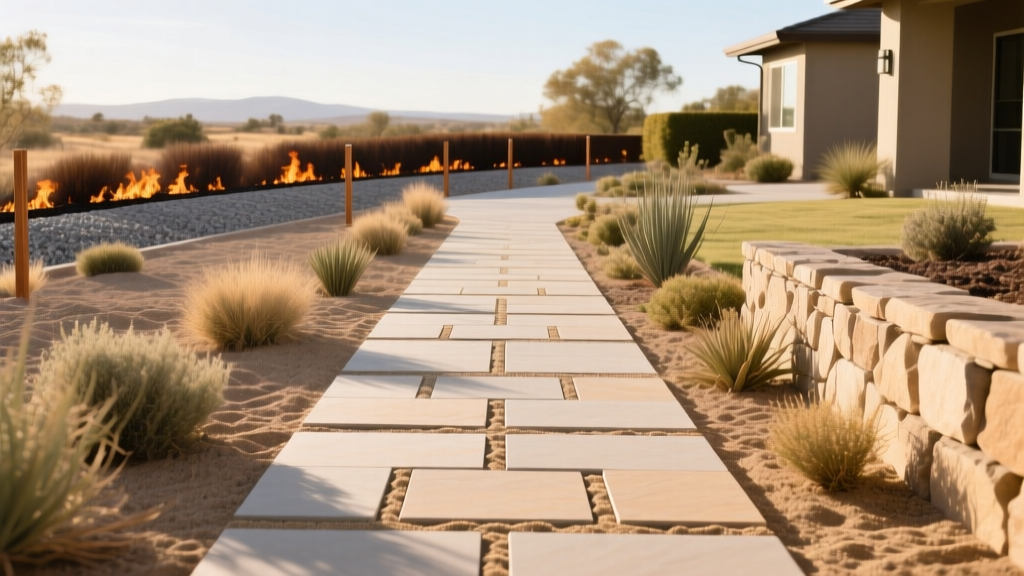
Fire-Safe Flagstone Walkways: 2026 Polymeric Sand Installation
Anna KowalskiPublished
The Critical Role of Hardscaping in 2026 Fire-Resistant Landscaping
As we navigate the 2026 wildfire season, homeowners in high-risk zones are increasingly recognizing that landscaping is no longer just about curb appeal; it is a vital survival strategy. The concept of 'defensible space' has evolved, with a heavy emphasis on the 'Zone 0' or 'Ember-Resistant Zone'—the critical zero-to-five-foot perimeter immediately surrounding your home. According to the National Fire Protection Association (NFPA), wind-blown embers are the leading cause of home ignitions during wildfires. These embers can travel miles ahead of the main fire front, landing on combustible mulch, dry vegetation, or wooden boardwalks.
To combat this, fire-resistant hardscaping has become a cornerstone of modern landscape design. Replacing combustible pathways with non-combustible alternatives like flagstone walkways creates a physical firebreak that stops ember intrusion in its tracks. However, simply laying down stone is not enough. The joints between the stones must be meticulously sealed to prevent the growth of dry, combustible weeds. This is where the installation of flagstone with polymeric sand joints becomes an essential project for any fire-conscious homeowner in 2026.
Why Polymeric Sand is Crucial for Fire-Safe Joints
Traditional masonry sand or loose gravel used in pathway joints leaves tiny gaps where wind-blown seeds can settle. In the dry, hot months of late summer, these seeds sprout into weeds that quickly dry out, effectively creating a continuous line of kindling leading directly to your home's foundation. Polymeric sand is a specialized mixture of fine sand and advanced polymer binders. When activated with water, these polymers cross-link, creating a flexible, solid matrix that locks the flagstones in place while completely sealing the joints against weed growth and insect infiltration.
In 2026, the latest formulations of polymeric sand have introduced dust-free technology and eco-friendly, non-toxic binders that prevent soil leaching, aligning perfectly with sustainable landscaping practices. By eliminating the weed-growth vector, polymeric sand ensures your flagstone walkway maintains its Class A non-combustible rating year-round, requiring minimal maintenance while maximizing your home's fire defense.
Choosing the Right Flagstone for Extreme Heat
Not all natural stones react the same way to extreme radiant heat. When planning your fire-resistant walkway, selecting the right type of flagstone is paramount to prevent cracking or 'spalling' (where the surface of the stone flakes off due to rapid temperature changes).
- Quartzite: The gold standard for fire-prone areas in 2026. It is incredibly dense, non-porous, and highly resistant to thermal shock. It will not spall under extreme heat.
- Slate: A popular choice for its beautiful natural cleavage planes, but some lower-grade slates can delaminate or flake when exposed to intense, direct wildfire heat.
- Sandstone: Offers a rustic look but is highly porous. If water gets trapped inside the pores and is subjected to sudden extreme heat, the stone can crack or explode.
- Limestone: Dense and generally fire-resistant, though it can be susceptible to acidic runoff from nearby ash.
For the ultimate fire-safe walkway, opt for high-density quartzite or premium architectural-grade slate sourced from reputable local quarries to minimize your carbon footprint.
Step-by-Step Flagstone Walkway Installation Guide
Building a fire-resistant walkway requires a solid foundation to ensure the polymeric sand joints do not crack over time. Follow these precise measurements and steps for a professional-grade installation.
Step 1: Site Preparation and Base Excavation
Mark the perimeter of your walkway using landscaping paint. For a comfortable walking surface, the path should be at least 36 to 48 inches wide. Excavate the soil to a depth of 7 to 9 inches below your desired finished grade. Ensure the trench has a slight slope (about 1/8 inch per foot) away from your home's foundation to promote proper drainage and prevent water from pooling near the structure.
Step 2: Laying the Gravel Base
A stable base is critical to prevent the flagstones from shifting, which would crack the polymeric sand joints. Add 4 to 6 inches of Class II road base (3/4-inch minus crushed gravel). Spread the gravel evenly and compact it thoroughly using a mechanical plate compactor. You may need to do this in two 3-inch lifts to achieve maximum density. A solid base ensures the walkway survives freeze-thaw cycles and heavy foot traffic without settling.
Step 3: Bedding and Stone Placement
Over the compacted gravel, add a 1 to 2-inch layer of coarse concrete sand. Do not use masonry sand, as it is too fine and can wash away. Screed the sand level using a straight 2x4 board. Begin placing your flagstones, starting from the bottom of the slope and working your way up. Leave a consistent joint spacing of 1/2 inch to 1 inch between the stones. This specific gap width is the optimal size for 2026 polymeric sand formulations to penetrate deeply and bind effectively.
Step 4: Applying and Activating Polymeric Sand
Ensure the flagstones and joints are completely bone-dry before beginning this step. Pour the polymeric sand over the walkway and use a stiff push broom to sweep it into the joints at a 45-degree angle. Compact the sand into the joints using a plate compactor with a protective urethane pad (or a hand tamper for smaller areas), then add more sand until the joints are filled to about 1/8 inch below the stone surface.
Next, activate the polymers using a garden hose with a gentle 'shower' nozzle. Mist the surface lightly to settle the sand, wait 10 minutes, and then apply a slightly heavier shower to fully activate the binders. Be extremely careful not to use a high-pressure jet, which will wash the sand out of the joints. Finally, sweep off any residual sand from the surface of the stones before it dries to prevent a stubborn polymer haze.
2026 Pathway Material Comparison for Fire Zones
When evaluating materials for your defensible space, it is helpful to compare the fire resistance, maintenance, and current market costs of various pathway options.
| Pathway Material | Fire Resistance Rating | Ember Ignition Risk | Estimated 2026 Cost (Per Sq. Ft.) |
|---|---|---|---|
| Flagstone with Polymeric Sand | Class A (Non-combustible) | Zero | $18 - $28 |
| Wood Boardwalk (Treated) | Class C | High | $22 - $35 |
| Loose Gravel | Class A (Non-combustible) | Low (Weed risk in gaps) | $4 - $8 |
| Concrete Pavers | Class A (Non-combustible) | Zero | $12 - $20 |
| Decomposed Granite (DG) | Class A (Non-combustible) | Low (Can wash out) | $6 - $12 |
As the data illustrates, while loose gravel and decomposed granite are cheaper upfront, they require constant weeding and raking to maintain their fire-safe integrity. Flagstone with polymeric sand offers the best long-term return on investment for fire-resistant landscaping, combining zero ignition risk with near-zero maintenance.
Common Polymeric Sand Mistakes to Avoid
Even experienced DIYers can run into issues if they ignore the environmental conditions required for polymeric sand to cure properly. Here are the most common mistakes to avoid in 2026:
- Applying in Damp Conditions: If the base sand or the flagstones have any moisture in them, the polymeric sand will activate prematurely, clumping on the surface rather than hardening inside the joint. Always check the weather forecast and ensure no rain is expected for at least 48 hours.
- Overwatering During Activation: Flooding the joints will wash the polymer binders to the top, leaving the bottom of the joint weak and sandy. Use a fine mist and multiple light passes.
- Ignoring the Haze: If you fail to sweep and blow off the excess dust from the surface of the flagstone before wetting it, the polymers will bind to the stone, creating a milky white haze that is incredibly difficult to remove once cured.
Maintaining Your Fire-Resistant Walkway
While polymeric sand drastically reduces maintenance, a fire-safe landscape requires ongoing vigilance. According to guidelines from Ready.gov, maintaining defensible space is an active, seasonal process. During the fall, use a leaf blower to keep the walkway completely clear of dry leaves and pine needles, which can act as fuel if an ember lands on them. Inspect the joints annually in early spring; if you notice any minor cracking due to ground heave, simply clean out the damaged section, ensure it is dry, and apply a flexible polymeric sand touch-up compound to maintain the continuous firebreak.
By investing in a flagstone walkway with properly installed polymeric sand joints, you are not just enhancing the aesthetic value of your property—you are fortifying your home against the growing threat of wildfires. In 2026, smart landscaping means designing with resilience, and a well-built, weed-free stone pathway is one of the most effective tools in your fire-defense arsenal.

