
Landscaping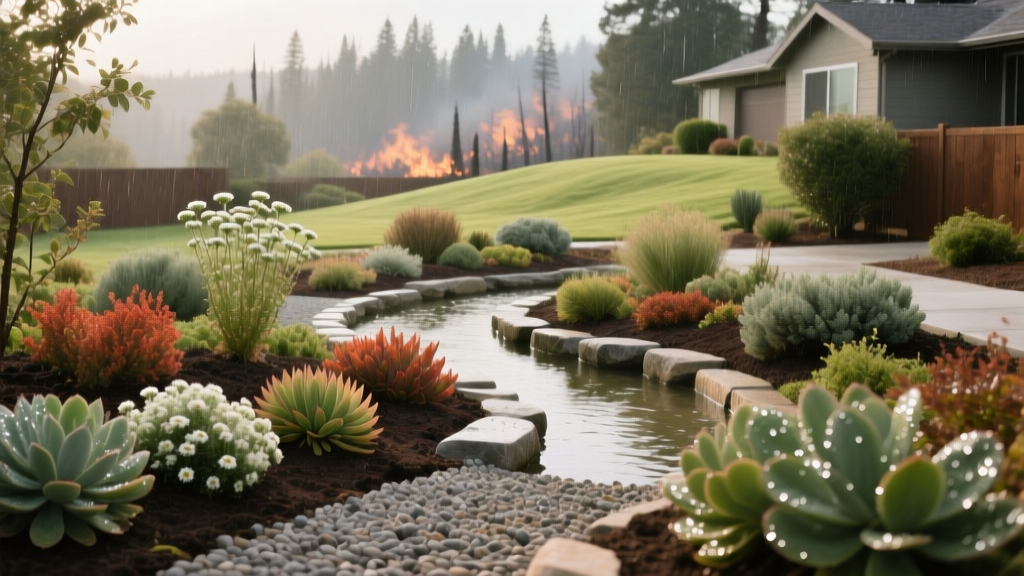
Fire-Resistant Rain Garden Installation Guide 2026
Mike RodriguezPublished
The Intersection of Stormwater Management and Wildfire Defense
In 2026, homeowners are increasingly facing a volatile climate paradox: intense, concentrated atmospheric rivers that cause severe localized flooding, followed by prolonged, arid dry spells that elevate wildfire risks to extreme levels. Traditional landscaping often addresses only one of these issues, but modern sustainable design demands a dual-purpose approach. Enter the fire-resistant rain garden. By strategically designing a stormwater capture system that also functions as a hydrated, non-combustible defensible space, you can protect your property from both water damage and encroaching flames.
A standard rain garden is a shallow depression planted with deep-rooted native species designed to absorb and filter runoff. However, a fire-resistant rain garden modifies this concept by strictly utilizing high-moisture, low-resin plants, non-combustible hardscaping materials, and strategic placement to break up fuel continuity. This comprehensive guide will walk you through the design, material selection, and installation of a fire-safe rain garden tailored for the 2026 landscape.
Strategic Placement: Defensible Space Zoning
Before digging, you must understand where a rain garden belongs within the context of wildfire defensible space. According to the Ready for Wildfire defensible space guidelines, the area immediately surrounding your home is divided into distinct zones to slow the spread of fire.
- Zone 1 (0 to 5 feet from the home): This area must be entirely non-combustible. Do not place a rain garden here, as the moisture can damage your foundation, and the organic matter in the soil can smolder during extreme heat events.
- Zone 2 (5 to 30 feet from the home): This is the ideal location for a fire-resistant rain garden. By placing your stormwater capture system in Zone 2, you create a lush, hydrated "fuel break" that interrupts the continuous path of dry grass or combustible mulch leading to your home.
- Zone 3 (30 to 100 feet): Rain gardens can also be placed here to manage larger swaths of runoff, provided they are maintained to prevent the buildup of dead, dry vegetation.
Ensure your rain garden is positioned at least 10 feet away from your home's foundation to prevent structural water damage, and always route downspouts into the garden using buried PVC or metal piping rather than flammable plastic corrugated tubing.
The Mulch Dilemma: Combustible vs. Non-Combustible Materials
The most critical adjustment when converting a traditional rain garden into a fire-resistant one is the elimination of flammable mulches. In a standard garden, pine straw, cedar bark, or rubber mulch are often used to retain moisture. In a fire-prone area, these materials act as highly volatile kindling. Embers can travel up to a mile ahead of a wildfire front, easily igniting dry bark mulch and carrying the fire directly to your home's siding.
For a fire-safe rain garden in 2026, you must use inorganic or highly composted materials:
| Mulch Material | Fire Resistance Rating | Estimated 2026 Cost (Per Cubic Yard) | Best Use in Rain Garden |
|---|---|---|---|
| Crushed Granite / Decomposed Granite | Excellent (Non-Combustible) | $65 - $85 | Top dressing, overflow pathways |
| River Rock (1-3 inch) | Excellent (Non-Combustible) | $70 - $90 | Perimeter borders, deep water zones |
| Composted Wood Chips (Aged 1+ Year) | Moderate (Resists Ignition) | $35 - $50 | Soil amendment, deep planting pockets |
| Pine Bark / Straw | Poor (Highly Flammable) | N/A | NEVER use in fire-prone zones |
When applying your non-combustible mulch, maintain a depth of 2 to 3 inches. This is thick enough to suppress weeds and retain soil moisture, but shallow enough to allow the rain garden to capture water efficiently without pooling on top of the rocks.
Selecting Fire-Resistant, Water-Tolerant Plants
Plant selection for a fire-safe rain garden requires balancing two opposing needs: the ability to survive temporary inundation (flooding) and the ability to resist ignition during a drought. Fire-resistant plants typically share specific characteristics: they have high moisture content in their leaves, lack volatile resins or saps (like those found in pines or eucalyptus), and feature open, airy branching structures that do not trap dry debris.
According to research from the University of Minnesota Extension on rain garden installation, selecting the right root structures is also vital for soil stabilization and water filtration. Here are top-tier plant choices that thrive in rain garden environments while maintaining high fire resistance:
- Daylilies (Hemerocallis): These feature fleshy, moisture-rich roots and thick leaves that resist catching fire. They tolerate both the wet center and the dry edges of a rain garden.
- Coral Bells (Heuchera): Excellent for the shadier edges of the garden. Their broad, water-dense leaves are highly resistant to ember ignition.
- Blue Flag Iris (Iris versicolor): A native powerhouse that thrives in standing water. The high water content in its sword-like leaves makes it a fantastic firebreak plant.
- Yarrow (Achillea millefolium): While the foliage is fine, it lacks the volatile oils found in other fern-like plants (such as juniper). It is highly drought-tolerant once established and handles periodic flooding well.
- Sedum 'Autumn Joy': As a succulent, sedum stores water directly in its leaves, making it virtually impossible to ignite under normal wildfire conditions. It is best planted on the upper, drier berms of the rain garden.
Pro Tip: Avoid planting ornamental grasses in or immediately adjacent to your rain garden. While they love the water, they dry out completely in late summer and become some of the most dangerous, fast-burning fuels in a landscape.
Step-by-Step Installation Guide
Building your fire-resistant rain garden requires precise grading and soil engineering to ensure water is captured without creating a mosquito breeding ground or a fire hazard.
Step 1: Excavation and Grading
Mark out the shape of your garden. A kidney or teardrop shape works best for capturing natural water flow. Dig the basin to a depth of 6 to 8 inches. Create a flat bottom to allow water to spread evenly, and use the excavated soil to build a berm on the downhill side. Ensure the berm is gently sloped and covered in river rock to prevent erosion during heavy 2026 storm events.
Step 2: Soil Amendment
Native soil is often too dense (clay) or too porous (sand) for a rain garden. The ideal fire-safe rain garden soil mix promotes rapid drainage while retaining enough moisture to keep your fire-resistant plants hydrated during dry spells. Mix 50% coarse sand, 25% high-quality compost, and 25% native topsoil. The compost acts as a sponge, holding water that keeps the plant foliage plump and fire-resistant.
Step 3: Strategic Planting
Place your moisture-loving plants (like Iris and Daylilies) in the deepest part of the basin. Place drought-tolerant, succulent plants (like Sedum) on the upper berms. Crucial Fire-Safety Step: Do not plant in a dense, continuous canopy. Leave 12 to 18 inches of space between mature plant crowns. This "island planting" technique ensures that if one plant does catch an ember, the fire cannot easily jump to the next plant.
Step 4: Inorganic Mulching and Edging
Edge the perimeter of the rain garden with metal landscape edging or large river rocks to create a hard, non-combustible boundary. Apply your 2-inch layer of crushed granite or river rock over the soil surface, keeping the mulch pulled back 2 inches from the base of your plants to prevent rot.
Ongoing Maintenance for Fire Safety
A rain garden is only fire-resistant if it is properly maintained. In 2026, automated irrigation systems with soil moisture sensors are highly recommended to ensure plants remain hydrated during unexpected late-season heatwaves, keeping their internal moisture levels high enough to resist ignition.
Furthermore, you must practice rigorous "fuel reduction" maintenance. This involves deadheading spent flowers, pruning dead foliage from the center of the plants, and raking out any wind-blown debris (like dry oak leaves or pine needles) that accumulate in the rock mulch. During peak fire season, flush the rain garden rocks with a hose to remove fine, dry dust and organic matter that could potentially smolder if struck by an ember.
Conclusion
Installing a fire-resistant rain garden is one of the smartest investments you can make for your property in 2026. By merging advanced stormwater management techniques with stringent defensible space principles, you create a landscape feature that protects your home from the devastating extremes of modern weather patterns. Through careful material selection, strategic zoning, and the use of high-moisture flora, your garden will serve as a beautiful, functional, and life-saving asset for decades to come.

