Gardening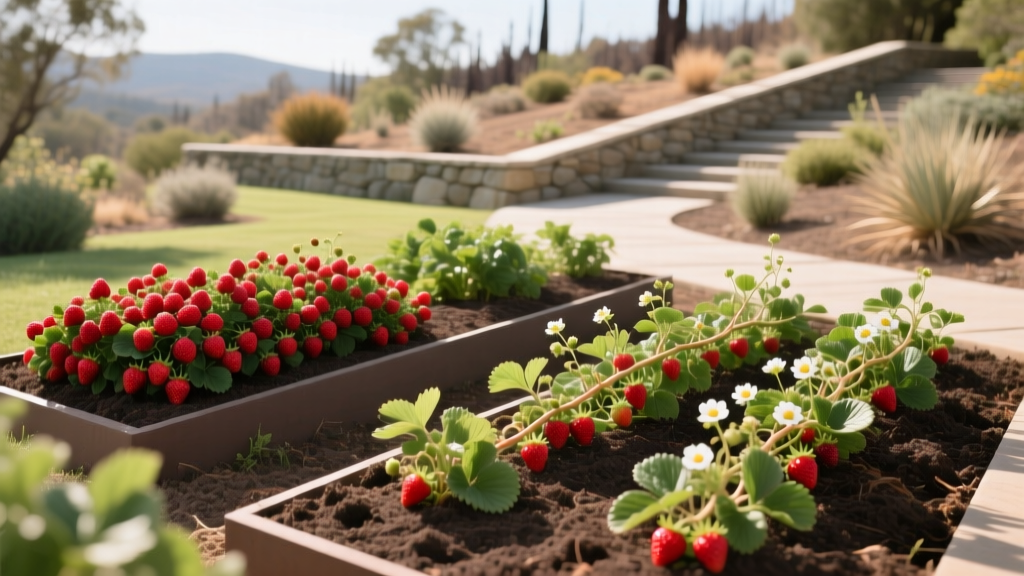
Fire-Resistant Garden 2026: June-Bearing vs Everbearing Strawberries
Lisa ThompsonPublished
The Role of Edible Groundcovers in Fire-Resistant Landscaping
As wildfire seasons continue to extend and intensify across many regions in 2026, homeowners in the Wildland-Urban Interface (WUI) are rethinking their landscaping strategies. The traditional approach of maintaining vast, water-thirsty lawns is being replaced by functional, fire-resistant, and edible landscapes. When designing a defensible space around your home, selecting the right plants is critical. You need vegetation that is low-growing, retains high moisture content, and lacks the woody, resinous stems that act as ladder fuels. This is where the humble strawberry plant becomes an unsung hero of the firewise garden.
Strawberries form a dense, low-lying mat of foliage that hugs the soil, effectively shading the ground, retaining soil moisture, and preventing the growth of tall, dry, and highly flammable weeds. However, not all strawberries behave the same way. Choosing between June-bearing and everbearing varieties requires an understanding of their growth habits, maintenance needs, and how they interact with the principles of fire-resistant landscaping. According to the National Interagency Fire Center (NIFC), managing vegetation in the immediate zones around your home is the most effective way to protect your property from radiant heat and flying embers.
Understanding Defensible Space Zones for Edibles
Before diving into strawberry varieties, it is essential to understand where they belong in your landscape. Defensible space is typically divided into three zones:
- Zone 0 (0-5 feet): The immediate perimeter of the home. This area must be completely free of combustible materials, including plants, mulch, and wooden planters. Strawberries should not be planted here unless grown in isolated, non-combustible containers on concrete or stone patios.
- Zone 1 (5-30 feet): The lean, clean, and green zone. This is the ideal location for a strawberry patch. The goal is to maintain a well-irrigated, low-growing, and high-moisture landscape that breaks up fuel continuity.
- Zone 2 (30-100 feet): The reduced fuel zone. Strawberries can be used here as a groundcover to suppress dry brush, provided they are integrated into a broader, water-wise irrigation system.
By utilizing strawberries in Zone 1, you create a moist, green firebreak that is both beautiful and productive. The University of California Agriculture and Natural Resources (UC ANR) highly recommends using high-moisture, low-growing groundcovers in these zones to reduce the risk of surface fires spreading toward structures.
June-Bearing Strawberries: The Spring Flush
June-bearing strawberries, such as the popular 'Chandler' and 'Camarosa' varieties, produce one massive, concentrated crop of fruit over a three-to-four-week period in late spring or early summer. From a firewise perspective, their growth habit presents both unique advantages and specific maintenance challenges.
Firewise Advantages
During the spring, June-bearing varieties push out vigorous, dense foliage and extensive runner networks. This rapid growth creates a thick, moisture-rich canopy that effectively shades the soil, drastically reducing the chance of dry, flammable weeds taking root. In early summer, when fire risks begin to climb in many climates, a well-watered June-bearing patch acts as a lush, green carpet that resists ignition from wind-blown embers.
Maintenance and Thatch Risks
The primary drawback of June-bearing varieties in a fire-resistant landscape is their post-harvest behavior. After fruiting, these plants produce an aggressive network of runners and daughter plants. If left unmanaged, this dense mat can choke itself out, leading to a buildup of dead, dry thatch beneath the living canopy. In a WUI environment, dry thatch is a significant fire hazard. To maintain their fire-resistant properties, June-bearing beds require annual 'renovation'—a process of mowing the foliage, thinning the crowns, and removing dead organic matter immediately after the harvest. If you are unwilling to commit to this rigorous mid-summer maintenance, the dry thatch could compromise your defensible space.
Everbearing Strawberries: The Continuous Canopy
Everbearing (and day-neutral) strawberries, such as 'Albion' and 'Seascape', produce fruit continuously in two or three flushes from late spring through the first hard frost of autumn. Their growth habit is fundamentally different from June-bearing types, making them highly suitable for specific firewise applications.
Firewise Advantages
Unlike their June-bearing cousins, everbearing strawberries produce far fewer runners. Instead, they focus their energy on developing large, robust crowns and continuous fruit production. Because they are constantly flowering and fruiting, they require consistent moisture and regular harvesting throughout the entire fire season. This continuous cycle of growth and watering ensures that the plant canopy remains succulent, green, and highly resistant to fire from early summer well into the autumn months, which is often the peak of wildfire danger.
Maintenance and Longevity
Because everbearing varieties do not produce thick mats of runners, the risk of hidden, dry thatch buildup is significantly lower. However, their constant fruiting demands a more rigorous and consistent irrigation schedule. If an everbearing patch is allowed to dry out in August, the stressed, crispy foliage can become a fuel source. Therefore, they are best suited for gardeners who have reliable, automated irrigation systems and are committed to keeping the soil consistently moist.
Head-to-Head Comparison: Firewise Strawberry Chart
To help you decide which variety best suits your defensible space strategy in 2026, refer to the comparison table below:
| Feature | June-Bearing | Everbearing / Day-Neutral |
|---|---|---|
| Harvest Window | 3-4 weeks in early summer | Continuous from spring to fall |
| Runner Production | Heavy (requires thinning) | Light to moderate |
| Thatch / Fuel Buildup Risk | High (if not renovated annually) | Low (crowns stay open) |
| Irrigation Needs | Heavy in spring, moderate in fall | Consistent and heavy all season |
| Best Defensible Space Zone | Zone 2 (30-100 ft) | Zone 1 (5-30 ft) |
| Recommended 2026 Varieties | 'Chandler', 'Sequoia' | 'Albion', 'San Andreas' |
Hardscaping and Bed Construction for the WUI
When integrating strawberries into a fire-resistant landscape, the materials you use to construct your planting beds are just as important as the plants themselves. Traditional timber or railroad tie raised beds are highly combustible and should be avoided in Zone 1. In 2026, the gold standard for firewise edible gardens is the use of corrugated galvanized steel or powder-coated aluminum raised beds. Brands like Birdies and Vego Garden offer modular metal beds that are entirely non-combustible, long-lasting, and excellent at retaining soil moisture.
If planting directly in the ground, border your strawberry patch with a 12-inch strip of crushed gravel or decomposed granite. This inorganic border acts as a miniature firebreak, preventing ground-level surface fires from creeping into the bed from adjacent wild areas.
Mulching Safely in the Wildland-Urban Interface
Mulch is essential for strawberry cultivation to retain moisture and suppress weeds, but organic mulches like wood chips, pine straw, or bark are severe fire hazards. According to guidelines outlined by FEMA's Ready.gov, combustible mulches should never be used within 30 feet of a structure.
For your strawberry beds in Zone 1, opt for inorganic mulches such as pea gravel, crushed volcanic rock, or clean river stones. While stones do not add organic matter to the soil, they will not ignite from flying embers. If you prefer an organic approach to feed your strawberries, use a very finely screened, fully decomposed compost applied thinly, and keep it consistently moist via drip irrigation. Avoid any mulch that contains large, dry, woody particles.
Smart Irrigation for 2026
A fire-resistant strawberry patch is only effective if it remains hydrated. Overhead sprinklers are inefficient, waste water, and can promote fungal diseases on the foliage. Instead, utilize Subsurface Drip Irrigation (SDI) or inline emitter tubing, such as Netafim Techline CV, buried just beneath the soil surface. This delivers water directly to the root zone, keeping the surface soil and mulch relatively dry while the plant roots and crowns remain fully hydrated.
Pair your drip system with a 2026 smart irrigation controller, like the Rachio 4 or Orbit B-hyve XR, which uses hyper-local weather data and soil moisture sensors to adjust watering schedules automatically. This ensures your strawberry patch remains a lush, fire-resistant barrier even during late-summer heat domes and water-restriction periods.
Conclusion
Strawberries are a phenomenal, dual-purpose addition to the fire-resistant landscape. By carefully selecting between June-bearing and everbearing varieties based on your maintenance capacity and specific defensible space zone, you can cultivate a garden that is both highly productive and inherently protective. In 2026, embrace the shift toward resilient, edible landscaping, and let your strawberry patch serve as a delicious, moisture-rich shield for your home.
