Home & Garden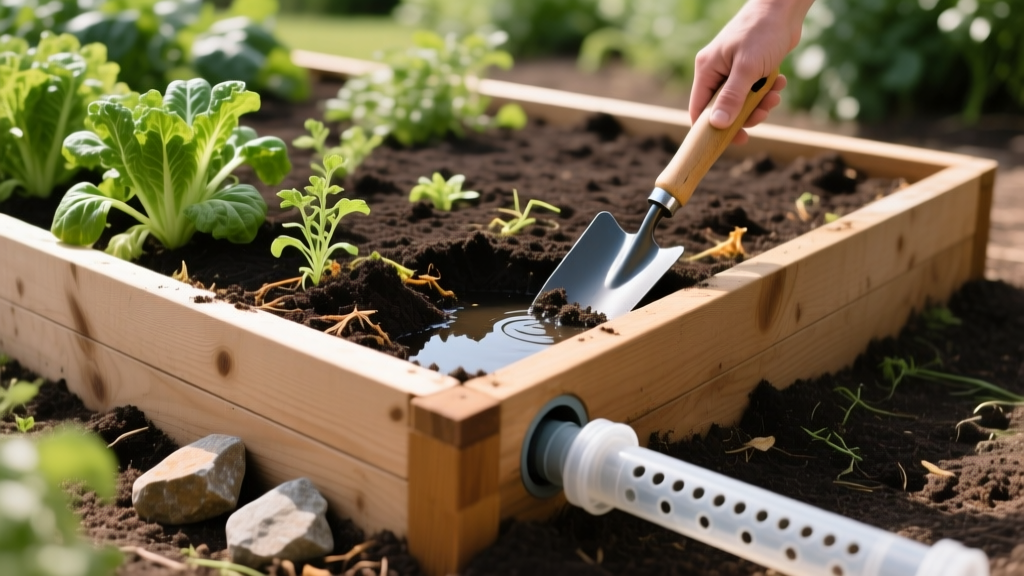
Diagnose and Fix Poor Drainage in Raised Garden Beds
Mike RodriguezPublished
The Hidden Danger of Waterlogged Raised Beds
For garden-to-table enthusiasts, the secret to a bountiful, flavorful harvest lies beneath the soil surface. Raised garden beds are celebrated for their superior drainage, warmer soil temperatures, and ergonomic benefits. However, when poor drainage strikes a raised bed, the consequences are immediate and devastating. Waterlogged soil displaces oxygen, leading to root hypoxia, stunted growth, and the rapid onset of soil-borne diseases like Phytophthora root rot.
If your tomatoes are developing blossom end rot, your carrots are forking and decaying, or you notice a persistent layer of green algae on the soil surface, you are likely dealing with a drainage failure. Diagnosing the root cause of poor drainage requires a systematic approach, moving beyond guesswork to implement targeted, science-backed solutions. This guide will walk you through diagnosing the problem, debunking common landscaping myths, and applying actionable fixes to restore your garden's productivity.
Step 1: Diagnose the Problem with a Percolation Test
Before amending your soil or altering your bed's structure, you must quantify the drainage issue. A simple DIY percolation (perc) test will reveal how quickly water moves through your soil profile.
How to Perform a Raised Bed Perc Test
- Using a hand trowel or bulb planter, dig a hole 12 inches deep and 4 inches wide in the center of the raised bed.
- Fill the hole with water and allow it to drain completely. This pre-soaks the soil, mimicking a heavy rainfall event.
- Refill the hole with water to the top.
- Place a ruler in the hole and measure the water level drop every 15 minutes for one hour.
Ideal Drainage Rate: Water should drop at a rate of 1 to 2 inches per hour. If the water drops less than 1 inch per hour, your soil is heavily compacted or contains too much fine-textured material (like clay or excessive peat moss). If it drops faster than 4 inches per hour, your soil is too sandy and will fail to retain necessary moisture and nutrients for vegetable production.
Step 2: Beware the 'Gravel at the Bottom' Myth
One of the most pervasive and damaging myths in home gardening is the idea that adding a layer of gravel, rocks, or broken pottery to the bottom of a raised bed or container improves drainage. In reality, this practice creates a severe drainage problem.
'The addition of coarse material to the bottom of containers or raised beds does not improve drainage. Instead, it creates a textural discontinuity that leads to a perched water table. Water will not cross the boundary from fine soil to coarse gravel until the fine soil is completely saturated, leading to waterlogged roots.'
— Dr. Linda Chalker-Scott, Ph.D., Washington State University Extension
The Solution: If you have already built a bed with a gravel base, you must remove the soil and the gravel. The entire depth of the raised bed should be filled with a uniform, well-draining soil mix to allow gravity to pull water evenly through the profile and into the native earth below.
Step 3: Actionable Solutions for Poor Drainage
Once you have confirmed poor drainage and eliminated the gravel myth, it is time to implement structural and chemical solutions.
A. Amending the Soil Profile
If your perc test revealed slow drainage, your soil mix likely contains too much topsoil or fine compost. You need to introduce macro-pores. Avoid fine play sand, which can mix with clay to create a concrete-like texture. Instead, use coarse inorganic amendments.
- Perlite: A lightweight volcanic glass that expands when heated. It is highly effective at increasing aeration. Cost: ~$30 per 4 cubic foot bag.
- Pumice: Heavier than perlite, meaning it won't float to the surface over time. It holds moisture in its porous structure while maintaining excellent drainage. Cost: ~$45 per cubic yard (bulk).
- Coarse Builder's Sand: Must be sharp and coarse (1-2mm particle size). Cost: ~$35 per ton.
Application Rate: For a standard 4x8 foot raised bed that is 12 inches deep (32 cubic feet), incorporate 4 to 6 cubic feet of pumice or perlite into the top 8 inches of soil using a broadfork or garden fork. Do not use a rototiller, as it destroys soil structure and creates a hardpan layer at the base.
B. Breaking the Hardpan Base
Sometimes the raised bed soil is perfect, but the native soil beneath it is compacted clay, creating a 'bathtub' effect. Before filling a new raised bed, or when renovating an old one, use a digging fork to fracture the native soil 6 to 8 inches deep directly beneath where the bed will sit. This bridges the textural gap and allows water to escape into the subsoil.
C. Elevating the Bed
If your yard has a high water table, heavy clay subsoil that cannot be fractured, or poor grading that directs runoff into your garden, elevating the bed is the ultimate hardware solution. By raising the bed 12 to 18 inches off the ground on cedar 4x4 legs or concrete cinder blocks, you completely bypass the native soil's drainage limitations. Ensure the bottom of the bed is lined with heavy-duty hardware cloth (1/2 inch galvanized steel, ~$25 per roll) to keep out burrowing pests while allowing unrestricted water flow.
Soil Amendment Comparison Chart
Use the following table to select the correct drainage amendment based on your specific garden needs, budget, and physical constraints.
| Amendment | Drainage Impact | Weight / Longevity | Best Use Case | Estimated Cost |
|---|---|---|---|---|
| Horticultural Pumice | Excellent (High macro-porosity) | Heavy / Permanent | Permanent raised beds, root crops | $45 / cu. yard (bulk) |
| Coarse Perlite | Very Good (High aeration) | Lightweight / Floats over time | Container gardening, lightweight beds | $30 / 4 cu. ft. bag |
| Coarse Builder's Sand | Good (If particle size >1mm) | Very Heavy / Permanent | Large in-ground amendments, heavy clay | $35 / ton |
| Wood Chips (Arborist) | Moderate (Improves structure over time) | Light / Decomposes in 2-3 years | Pathways, top-dressing, fungal networks | $15 - $25 / cu. yard |
Seasonal Maintenance to Prevent Future Compaction
Fixing drainage is not a one-time event; soil naturally settles and compacts over time due to gravity, rainfall, and foot traffic. To maintain optimal percolation rates year after year, integrate these seasonal maintenance routines:
1. Utilize Tillage Radishes (Daikon)
For a biological approach to deep soil compaction, plant tillage radishes in late summer or early fall. These radishes grow thick, deep taproots that physically fracture compacted soil layers. When winter temperatures drop, the radishes die and decompose, leaving behind deep, organic-rich channels that drastically improve spring drainage and aeration. Seed cost: ~$10 per pound; plant at a rate of 10 lbs per acre (or roughly 1 ounce per 100 square feet).
2. Annual Top-Dressing
Because organic matter oxidizes and breaks down, raised beds will lose volume and structure. Every early spring, top-dress your beds with 2 inches of high-quality, coarse compost. This replenishes the micro-pores necessary for water retention while maintaining the crumb structure that facilitates drainage.
3. Never Step in the Bed
The primary advantage of a raised bed is the ability to reach the center from the perimeter. Stepping inside a raised bed compresses the soil, collapsing the vital macro-pores you worked so hard to establish. If your beds are wider than 4 feet, install stepping stones or a central wooden boardwalk to distribute weight and protect the soil structure.
Conclusion
Poor drainage in raised garden beds is a solvable problem, provided you approach it with a diagnostic mindset. By performing a percolation test, avoiding the perched water table created by gravel bases, and strategically incorporating inorganic amendments like pumice or perlite, you can transform a waterlogged, disease-prone bed into a thriving, high-yield environment. Implement these solutions this season, and your garden-to-table harvests will benefit from the deep, healthy root systems that only well-aerated soil can produce.
