Home & Garden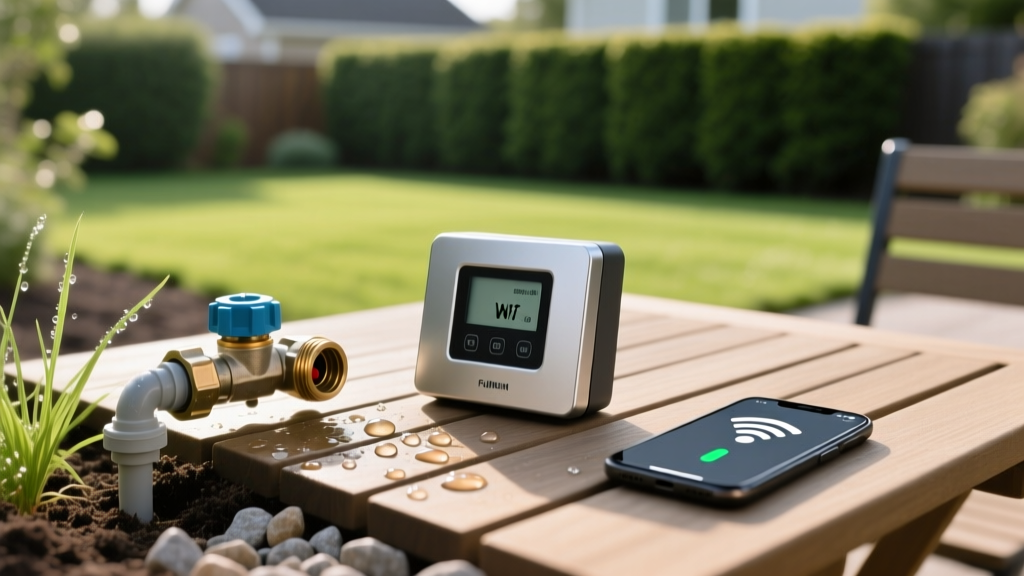
Diagnosing and Fixing Smart Irrigation System Leaks and Wi-Fi Errors
Robert HayesPublished
Bridging the Gap: Smart Home Tech Meets Outdoor Plumbing
Upgrading to a smart irrigation controller like the Rachio 3, Orbit B-hyve, or Rain Bird ST8I-2.0 is one of the best energy-efficient landscaping decisions a homeowner can make. By leveraging local weather data and soil moisture sensors, these devices optimize watering schedules, promote deep root growth, and lower utility bills. However, bridging the gap between indoor smart home integration and outdoor plumbing often leads to frustrating technical and mechanical failures. When your app says the system is running, but your garden is bone dry—or worse, your lawn is flooding at 3:00 AM—you need a systematic approach to problem diagnosis.
This guide provides actionable, step-by-step solutions for the most common smart irrigation failures, complete with specific product recommendations, cost estimates, and expert-backed maintenance protocols.
Problem 1: The Controller Keeps Dropping Offline
Diagnosis: The 2.4 GHz Bottleneck and Signal Degradation
The most frequent complaint among smart irrigation users is the controller frequently showing as 'Offline' in the mobile app. Unlike smart TVs or laptops, outdoor irrigation controllers almost exclusively operate on the 2.4 GHz Wi-Fi band because it offers better range and wall penetration than the 5 GHz band. However, if your router is located on the opposite side of your home, or if the controller is housed inside a metal shed or thick stucco garage, the signal will degrade, causing missed watering cycles and failed weather-based adjustments.
Solutions: Extending the Network to the Garden
- Network Band Separation: Access your router settings and ensure the 2.4 GHz and 5 GHz bands are separated into distinct SSIDs (e.g., 'HomeNetwork_2G' and 'HomeNetwork_5G'). Force the smart controller to connect only to the 2.4 GHz network.
- Install an Outdoor-Rated Wi-Fi Extender: If the signal is weak, install a weatherproof Wi-Fi extender halfway between your router and the controller. The TP-Link N300 Outdoor Extender (approx. $45) is a reliable choice that can be mounted to an exterior wall, bridging the gap through brick or siding.
- Hardwire an Ethernet Adapter: For controllers located in detached garages or sheds with severe signal blocking, consider running a buried Cat6 Ethernet cable to a waterproof junction box, or use a Powerline Ethernet Adapter kit ($50-$70) to send the network signal through your home's existing electrical wiring.
Problem 2: Ghost Watering and Leaking Zone Valves
Diagnosis: Debris, Solenoid Failure, or Diaphragm Tears
'Ghost watering' occurs when a zone continues to leak or run even after the smart controller has sent the signal to close. This is rarely a software issue; it is almost always a mechanical failure at the valve box. When the smart controller energizes the solenoid, it opens the valve. If the valve fails to close, the culprit is usually a piece of grit trapped under the rubber diaphragm, a worn-out diaphragm, or a failing solenoid that is stuck in the open position.
Solutions: Step-by-Step Valve Repair
You do not need to replace the entire valve manifold to fix a leak. You can rebuild the valve for under $20 in about 20 minutes.
- Shut Off the Water: Locate the main irrigation shut-off valve (usually a brass ball valve near the water meter or backflow preventer) and turn it 90 degrees to stop water flow.
- Release Pressure: Open the bleed screw on the leaking valve a half-turn to release trapped water pressure.
- Remove the Bonnet: Using a Phillips-head screwdriver, remove the 6 to 8 screws holding the valve bonnet (the top half of the valve) to the body. Popular models like the Hunter PGV or Rain Bird DAS use standard stainless steel screws.
- Inspect and Clean: Lift out the bonnet, spring, and rubber diaphragm. Rinse all parts in a bucket of clean water. Use your finger to feel the plastic valve seat inside the body for any trapped gravel or sand. Flush the line briefly by turning the main water on for 3 seconds with the valve open.
- Replace Worn Parts: If the rubber diaphragm is torn or the spring is heavily corroded, install a replacement diaphragm kit (approx. $8-$12). If the solenoid (the black cylinder with two wires) is cracked or fails a multimeter continuity test, twist it counterclockwise to remove and replace it (approx. $15-$20).
- Reassemble: Ensure the diaphragm pin aligns with the bonnet port, tighten the screws in a star pattern to ensure an even seal, and restore water pressure.
Problem 3: Drip Emitters Popping Off or Spraying Mist
Diagnosis: Unregulated High Water Pressure
Smart controllers are excellent at managing when to water, but they cannot control how water exits the pipe. Drip irrigation zones are designed to operate at low pressure (15 to 30 PSI). If your home's municipal water pressure is 60 to 80 PSI, the high force will cause drip tubing to blow apart at the fittings, and emitters will fog or mist, leading to massive water loss via wind evaporation.
Solutions: Regulating and Filtering the Zone
Every drip zone connected to a smart valve must have a pressure regulator and a filter installed immediately downstream of the valve.
- Install a 25 PSI Pressure Regulator: Purchase a 3/4-inch FPT (Female Pipe Thread) pressure regulator (approx. $12). Wrap the threads with Teflon tape and screw it directly into the valve outlet.
- Add a 200-Mesh Filter: Drip emitters have microscopic pathways that clog easily with hard water scale or pipe sediment. Install a 200-mesh screen filter ($15) downstream of the regulator to protect your emitters.
- Flush the Lines: Once a season, open the end caps of your drip lines and let the system run for 2 minutes to flush out accumulated debris before resealing them.
Smart Irrigation Troubleshooting Matrix
| Symptom | Probable Cause | Actionable Fix | Estimated Cost |
|---|---|---|---|
| Controller shows 'Offline' | Weak 2.4 GHz Wi-Fi signal | Install outdoor Wi-Fi extender | $30 - $50 |
| Zone runs continuously | Debris in valve diaphragm | Disassemble, clean, and flush valve | $0 (Labor only) |
| Zone won't turn on via app | Blown solenoid or cut wire | Test with multimeter; replace solenoid | $15 - $25 |
| Drip tubing blows apart | Municipal pressure > 50 PSI | Install 25 PSI pressure regulator | $12 - $18 |
| Uneven spray pattern | Clogged rotary nozzle | Clean filter screen on nozzle head | $0 (Labor only) |
Preventative Maintenance: Winterizing to Avoid Spring Disasters
Many smart irrigation failures diagnosed in the spring are actually the result of improper winterization. Water left inside PVC pipes, valves, and backflow preventers will freeze, expand, and crack the plastic housings. When the system pressurizes in April, you will experience catastrophic underground leaks that the smart controller cannot detect.
The Blow-Out Method: In freezing climates, you must use an air compressor to evacuate water from the lines. Connect a compressor to the blow-out port on your backflow preventer. Crucial Safety Warning: Never exceed 50 PSI of air pressure for PVC pipes, or 80 PSI for polyethylene pipes, as high-pressure air can cause pipes to shatter explosively. Always wear ANSI-rated safety goggles. If you do not own a high-CFM compressor, hire a licensed irrigation professional for an annual blow-out service, which typically costs between $75 and $125 depending on the number of zones.
Expert Insights and Authoritative Guidelines
Integrating smart home technology with landscape management requires an understanding of both software and horticulture. According to the University of Florida IFAS Extension, routine irrigation system audits and physical maintenance can reduce landscape water waste by up to 30%, ensuring that the water scheduled by your smart controller actually reaches the root zone efficiently.
'Smart controllers are only as effective as the hardware they command. A Wi-Fi-enabled controller attached to a leaking valve or a clogged nozzle will only serve to automate water waste. Seasonal auditing of the physical distribution system is mandatory for true water conservation.' — Adapted from EPA WaterSense Irrigation Guidelines.
The EPA WaterSense program notes that properly calibrated smart controllers can save the average home nearly 7,600 gallons of water annually. To achieve these savings, homeowners must pair their digital scheduling with rigorous physical diagnostics, ensuring that every drop of water is delivered precisely when and where the landscape needs it.
Conclusion
Diagnosing smart irrigation problems requires a dual mindset: thinking like an IT technician when addressing network connectivity, and thinking like a plumber when addressing valves and pressure. By maintaining a clean 2.4 GHz network path, keeping valve diaphragms free of debris, and strictly regulating drip zone pressure, you can ensure your garden-to-table crops and ornamental landscapes receive flawless, energy-efficient hydration all season long.
