Home & Garden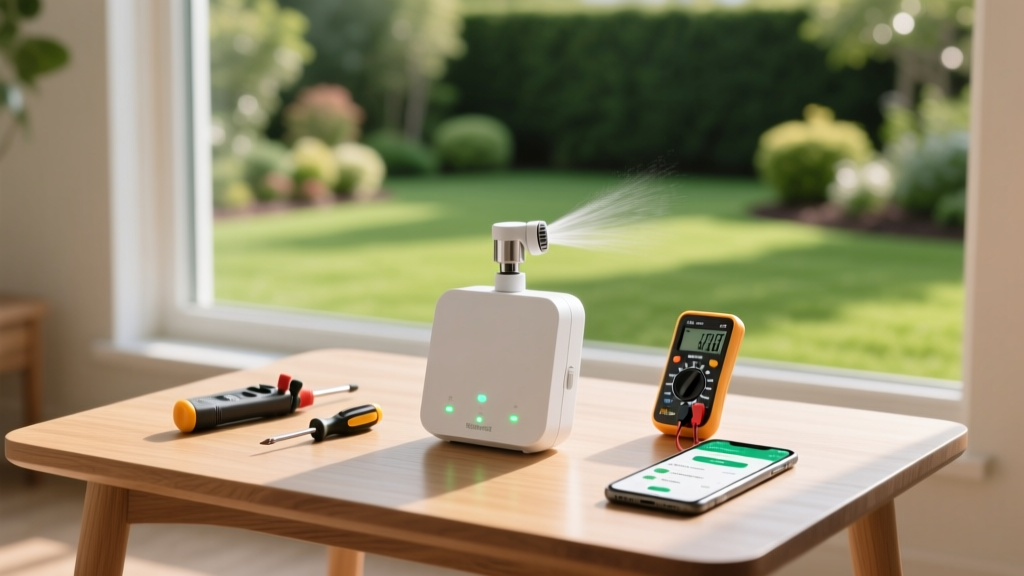
Troubleshooting Smart Sprinkler Controllers: Fix Wi-Fi & Zone Errors
Emily WatsonPublished
Smart Irrigation: When Convenience Meets Complexity
Smart irrigation controllers have transformed how we manage our landscapes, bridging the gap between outdoor maintenance and indoor smart home ecosystems. By leveraging hyper-local weather data, soil moisture sensors, and seasonal adjustments, devices like the Rachio 3, Orbit B-hyve, and Rain Bird ESP-TM2 optimize water usage and keep lawns pristine. However, when a Wi-Fi-enabled controller goes offline or a specific zone fails to activate, the convenience quickly turns into frustration. Diagnosing these issues requires a systematic approach, blending digital troubleshooting with physical landscape maintenance.
According to the Environmental Protection Agency (EPA), smart irrigation controllers can reduce outdoor water use by up to 15 percent compared to standard clock-based timers, making them a vital component of energy-efficient landscaping. When they malfunction, both your lawn health and your water bill suffer. This comprehensive troubleshooting guide will help you diagnose and resolve the most common smart sprinkler controller issues, from network drops to solenoid failures.
Common Smart Controller Problems & Quick Diagnostics
Before grabbing a shovel or resetting your router, use this diagnostic table to identify the root cause of your irrigation failure.
| Symptom | Potential Cause | Diagnostic Tool Needed |
|---|---|---|
| Controller offline in app | 2.4GHz Wi-Fi drop or router reset | Smartphone / Wi-Fi Analyzer |
| Single zone will not turn on | Blown solenoid or cut field wire | Digital Multimeter |
| All zones fail to start | Master valve failure or bad common wire | Multimeter / Wire Tracker |
| System skips scheduled watering | Weather API glitch or frozen sensor | App Logs / Soil Sensor Check |
| Low pressure in one zone | Debris in valve diaphragm or leak | Visual Inspection / Valve Kit |
Troubleshooting Wi-Fi and Connectivity Drops
The most frequent complaint among smart irrigation users is the device showing as 'offline' in the companion app. This rarely means the controller is broken; it usually points to a network configuration issue.
The 2.4GHz vs. 5GHz Dilemma
Almost all smart sprinkler controllers, including the Rachio and Orbit lines, operate exclusively on the 2.4GHz Wi-Fi band because it offers better range and wall penetration. Modern mesh routers often combine 2.4GHz and 5GHz bands under a single network name (SSID). If your controller attempts to connect to the 5GHz band or gets confused by band steering, it will drop offline.
- Fix: Log into your router settings and temporarily separate the bands, or create a dedicated 2.4GHz IoT (Internet of Things) network specifically for your outdoor devices.
- Range Issues: If your controller is mounted in a metal utility box or a detached garage, the signal will be blocked. Install a weatherproof Wi-Fi extender (Cost: $25-$40) or move the router closer. Avoid mounting controllers inside metal enclosures without an external antenna.
- LED Status Codes: Consult your manual for LED blinks. For example, a blinking red light on a Rachio typically indicates a failed network handshake, while a solid red light suggests a boot failure requiring a factory reset (hold the 'Stop' and 'Zone' buttons for 10 seconds).
Diagnosing Zone Failures: Valves, Solenoids, and Wiring
If your app shows a zone is running, but no water is spraying, the issue is physical. According to the University of Florida IFAS Extension, electrical and mechanical valve failures account for the majority of localized irrigation outages.
Step 1: The Manual Bleed Test
Locate the valve box for the failing zone. Find the solenoid (the cylindrical component with two wires) and turn it counterclockwise by hand, or use the manual bleed screw to release water pressure. If the zone turns on manually, your plumbing is fine, and the issue is electrical (solenoid or wiring). If it does not turn on, the valve diaphragm is likely torn or clogged with debris.
Step 2: Testing the Solenoid with a Multimeter
Set your digital multimeter to the Ohms (Ω) setting. Disconnect the two wires from the solenoid and touch the probes to the wires.
- Normal Reading: 20 to 60 ohms. The solenoid is healthy.
- Zero or Near-Zero: Internal short circuit. Replace the solenoid.
- Infinite (OL): Broken internal copper coil. Replace the solenoid.
Replacement Costs: A standard Hunter or Rain Bird replacement solenoid costs between $15 and $25. Always use waterproof grease-filled wire connectors (Cost: $5 for a 10-pack) when splicing wires underground to prevent copper corrosion.
Total System Failure: Master Valves and Common Wires
If your controller is online, the app says zones are running, but no zones are producing water, you likely have a common wire failure or a master valve issue.
The Common Wire (C)
The common wire completes the electrical circuit for every zone. If a landscaping edger or aeration tool severed the common wire, the entire system will fail. Use a multimeter set to VAC (Volts Alternating Current). Test the voltage between the Common (C) terminal and any Zone terminal on the controller while it is calling for water. You should read 24 to 28 VAC. If you read 0 VAC, check the controller's internal fuse or transformer.
Master Valve (MV) Diagnostics
Many municipal codes require a Master Valve, which acts as a main shut-off to prevent flooding if a downstream pipe breaks. If your controller has an MV terminal, ensure it is properly wired. A failed master valve solenoid will starve the entire system of water pressure. Replacing a master valve solenoid follows the exact same multimeter diagnostic steps outlined above.
Weather Intelligence Glitches and Skip Cycles
Smart controllers use hyper-local weather data to skip watering during or after rain. However, users often report their systems skipping watering during dry spells. This is usually caused by a faulty Personal Weather Station (PWS) in your neighborhood reporting erroneous data to the controller's API.
- Diagnosis: Check the 'Activity Feed' or 'Watering History' in your app. It will explicitly state if a cycle was skipped due to 'Rain,' 'Freeze,' or 'Seasonal Shift.'
- Fix: In the app settings, change your weather intelligence source from 'Local Weather Station' to 'Nearest Airport' or 'National Weather Service' for more reliable, albeit slightly less localized, data.
- Soil Moisture Sensors: If you use a wireless soil moisture sensor, ensure the probes are not buried in a localized dry spot or a heavily shaded area that skews the evapotranspiration (ET) data. Recalibrate the sensor according to the manufacturer's seasonal guidelines.
Essential Tools and Maintenance Costs
To effectively troubleshoot and maintain your smart irrigation system, keep the following kit in your garage. The Colorado State University Extension recommends annual spring startup inspections to catch these issues before the peak summer heat.
- Digital Multimeter: ($20 - $40) Essential for testing 24 VAC transformer output and solenoid resistance.
- Wire Strippers & Grease Connectors: ($15) Crucial for repairing field wires severed by lawn equipment.
- Spare Solenoids: ($15 - $25 each) Keep one compatible with your specific valve brand (Hunter, Rain Bird, or Orbit) on hand.
- Valve Diaphragm Kits: ($10 - $15) For fixing zones that leak continuously or fail to close due to debris.
- Wi-Fi Range Extender: ($25 - $40) For controllers mounted in basements, garages, or thick stucco exteriors.
Conclusion
Troubleshooting a smart sprinkler controller requires a dual approach: verifying digital connectivity and testing physical hydraulic components. By understanding the limitations of 2.4GHz networks, mastering basic multimeter diagnostics, and keeping a small inventory of replacement solenoids and waterproof connectors, you can resolve 95% of irrigation failures without calling a professional. Regular maintenance during your spring startup and winterization routines will ensure your smart home integration continues to save water and protect your landscape for years to come.
