Gardening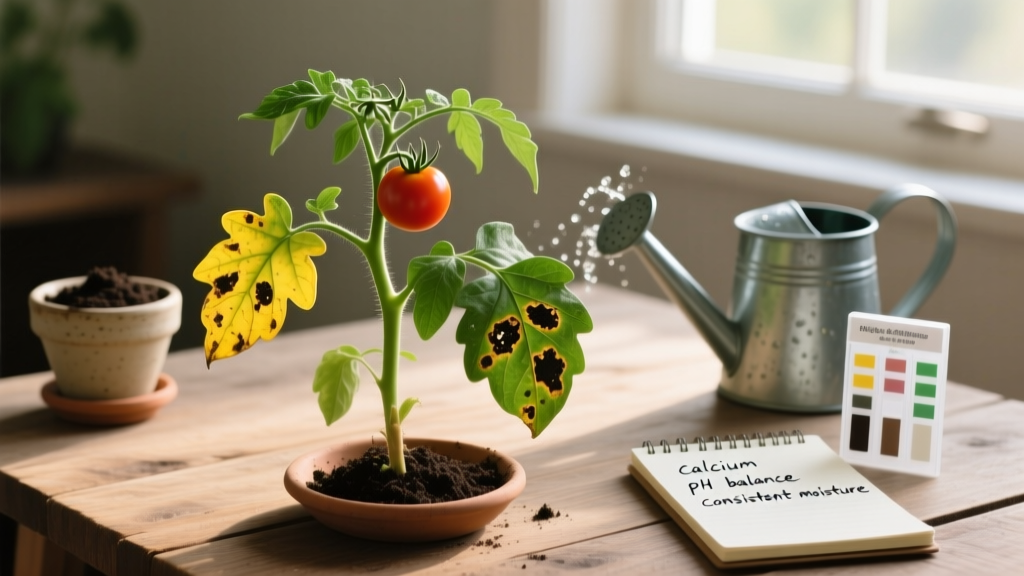
Diagnosing and Fixing Tomato Blossom End Rot and Yellow Leaves
James MillerPublished
Understanding the Physiology of Tomato Stress
Tomatoes (Solanum lycopersicum) are the crown jewels of the home vegetable garden, yet they are notoriously prone to a variety of physiological and pathological issues. For home gardeners, few things are more frustrating than watching a promising crop succumb to mysterious blemishes and fading foliage. The two most frequent complaints submitted to extension offices are Blossom End Rot (BER) and various forms of leaf yellowing (chlorosis). While both can devastate your yield, they stem from entirely different root causes. This comprehensive diagnostic guide will help you identify the exact stressors affecting your tomato plants and provide actionable, science-backed solutions to save your harvest.
Problem 1: Blossom End Rot (BER)
Diagnosing BER
Blossom End Rot is arguably the most misunderstood issue in vegetable gardening. Visually, BER presents as a water-soaked, light brown to black leathery spot on the blossom end (the bottom) of the fruit. It typically appears when the fruit is about one-third to one-half of its final size. Unlike fungal diseases, BER does not spread from plant to plant, nor is it caused by an insect or bacterial pathogen. It is strictly an environmental and physiological disorder.
The Science of Calcium Mobility
According to the University of California Integrated Pest Management (UC IPM) program, Blossom End Rot is a physiological disorder caused by a localized calcium deficiency in the developing fruit. It is crucial to understand that this rarely means your soil lacks calcium. Calcium is transported through the plant's xylem via the transpiration stream. Because leaves transpire much more water than the fruit does, calcium is naturally pulled toward the foliage. When the plant experiences water stress, or when rapid growth outpaces the root system's ability to uptake calcium, the fruit is starved of this essential nutrient, leading to cellular collapse at the blossom end.
According to UC Davis Agriculture and Natural Resources: 'Blossom end rot is caused by a calcium deficiency in the developing fruit, often exacerbated by wide fluctuations in soil moisture, excessive nitrogen fertilization, or root damage.'
Actionable Solutions and Product Recommendations
To cure and prevent BER, you must focus on moisture consistency and root health rather than blindly dumping calcium additives into the soil.
- Consistent Moisture via Drip Irrigation: Tomatoes require 1 to 1.5 inches of water per week. Overhead watering leads to evaporation and fungal issues. Install a drip irrigation kit (such as the Rain Bird Drip Irrigation Starter Kit, approx. $35 for a 50-foot setup). Run the system on a timer for 30-45 minutes every other day, adjusting based on rainfall.
- Organic Mulching: Apply a 3-inch layer of organic straw or arborist wood chips around the base of the plant, keeping it 2 inches away from the main stem to prevent rot. A standard bale of straw costs about $8 to $12 and will cover a 4x8 foot raised bed. Mulch buffers soil temperature and drastically reduces moisture evaporation.
- Avoid Excessive Nitrogen: High-nitrogen fertilizers (like synthetic 10-10-10 blends) promote rapid leafy growth, which hijacks calcium away from the fruit. Switch to a balanced, slow-release organic fertilizer like Jobe's Organics Tomato Fertilizer (2-5-3 NPK), which costs around $12 for a 3 lb bag. Apply at planting and side-dress lightly every 4 weeks.
- Calcium Supplementation (Only if tested): If a professional soil test (approx. $20 via your local university extension) confirms low calcium AND acidic soil (pH below 6.2), apply Pelletized Garden Lime (e.g., Espoma Organic Garden Lime, $12 for 5 lbs) at a rate of 5 lbs per 100 square feet in the fall prior to planting. Do not apply lime during the active growing season, as it takes months to break down and alter soil pH.
Problem 2: Yellowing Leaves (Chlorosis)
Yellowing leaves can indicate a spectrum of issues ranging from simple nutrient deficiencies to aggressive fungal pathogens. Accurate diagnosis requires you to look at exactly where the yellowing is occurring and the specific pattern of the discoloration.
Diagnostic Chart: Yellowing Patterns
| Symptom Pattern | Likely Cause | Quick Fix and Estimated Cost |
|---|---|---|
| Bottom leaves yellowing uniformly | Nitrogen Deficiency | Fish Emulsion (1 tbsp/gal) - $15/bottle |
| Bottom leaves yellow with green veins | Magnesium Deficiency | Epsom Salt Foliar Spray (1 tbsp/gal) - $5/box |
| Top or new leaves pale yellow | Iron Deficiency or High Soil pH | Chelated Iron or Soil Sulfur - $12/bag |
| Yellowing with brown concentric spots | Early Blight (Fungal Pathogen) | Copper Fungicide and Pruning - $18/bottle |
Targeted Treatments for Nutrient Deficiencies
If your diagnostic chart points to a nutrient issue, targeted amendments can reverse the chlorosis quickly. For nitrogen deficiency, which is common in heavily leached sandy soils or after prolonged periods of heavy rain, apply an organic liquid fish emulsion (such as Alaska Fish Fertilizer 5-1-1). Mix 1 tablespoon per gallon of water and apply as a soil drench every two weeks. The cost is roughly $15 for a quart, which lasts an entire season for a small garden.
For magnesium deficiency, characterized by interveinal chlorosis on older leaves, a foliar spray of Epsom salts (magnesium sulfate) provides an immediate bypass to the root system. Dissolve 1 tablespoon of Epsom salts in a gallon of water and spray the foliage in the early morning or late evening to avoid leaf burn. This is an incredibly cost-effective solution, with a standard box costing under $5 at any pharmacy or garden center.
Managing Fungal Pathogens
If the yellowing is accompanied by necrotic, target-like brown spots, you are likely dealing with Early Blight (Alternaria solani). This fungal disease thrives in humid conditions and spreads via soil splash. Immediately prune and destroy (do not compost) all affected lower leaves. Sterilize your pruning shears with 70% isopropyl alcohol between cuts to prevent cross-contamination. Follow up with an application of a copper-based fungicide (like Bonide Copper Fungicide, approx. $18). Apply every 7 to 10 days during wet weather, ensuring you coat both the tops and bottoms of the leaves.
Long-Term Prevention: Soil and Water Management
The best way to manage tomato problems is to prevent them through rigorous soil preparation. Before planting your next season's crop, perform a simple soil percolation test to ensure your garden beds drain adequately. Dig a hole 12 inches deep and 12 inches wide, fill it with water, and let it drain completely. Fill it a second time and measure how long it takes to drain. Ideal soil should drain at a rate of 1 to 2 inches per hour. If it drains slower, your tomatoes are sitting in waterlogged conditions that suffocate roots and inhibit calcium uptake.
To improve drainage and build long-term resilience, incorporate 2 to 3 inches of high-quality compost into the top 6 inches of your soil annually. Compost acts as a sponge, holding moisture during dry spells while improving soil structure for drainage during heavy rains. Additionally, practice strict crop rotation. Never plant tomatoes, peppers, or eggplants in the same bed more than once every three years to break the life cycles of soil-borne pathogens and nematodes.
Companion Planting for Pest and Disease Deterrence
While companion planting will not cure a severe calcium deficiency or fungal outbreak, it can reduce the secondary stressors that make tomatoes vulnerable. Planting French Marigolds (Tagetes patula) densely around the perimeter of your tomato beds has been shown to suppress root-knot nematodes, microscopic worms that damage tomato roots and severely restrict their ability to uptake water and calcium. Additionally, interplanting basil and alyssum attracts beneficial predatory insects like parasitic wasps, which keep hornworm populations in check. A healthy, unstressed root system and intact foliage canopy are your first lines of defense against physiological disorders.
Conclusion
Diagnosing tomato stress requires a keen eye and an understanding of plant physiology. By recognizing that Blossom End Rot is a moisture-calcium transport issue rather than a simple soil deficiency, and by accurately reading the visual cues of yellowing leaves, you can pivot from reactive panic to proactive garden management. Implement consistent drip irrigation, utilize organic mulches, and rely on targeted, science-backed amendments to ensure your tomato plants remain vigorous and productive from seedling to final harvest.
