Home & Garden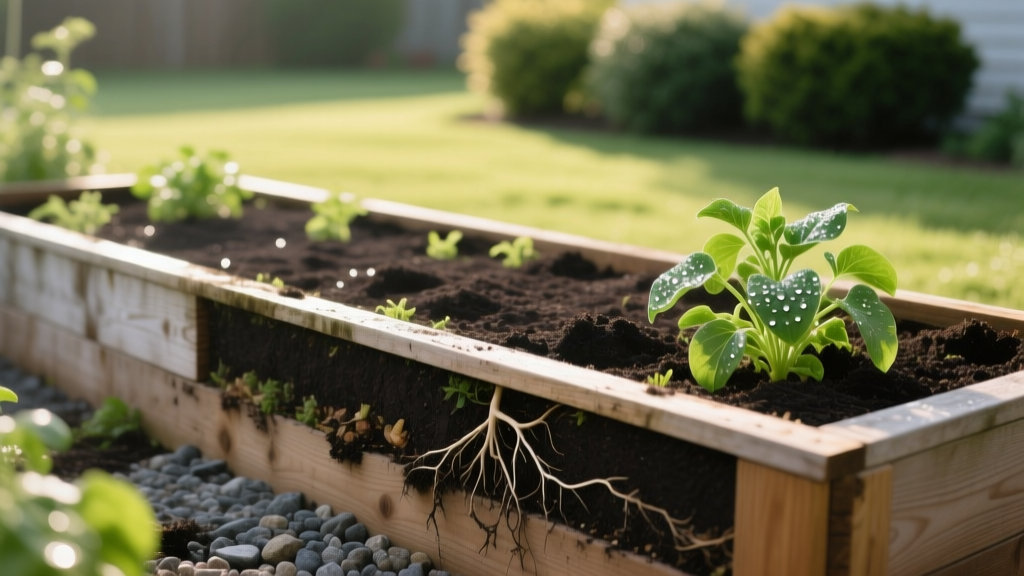
How to Diagnose and Fix Waterlogged Raised Garden Beds
Sarah ChenPublished
The Hidden Threat of Waterlogged Raised Garden Beds
Raised garden beds are widely celebrated as the ultimate solution for home gardeners dealing with poor native soil, compacted clay, or limited mobility. By elevating the planting zone, you gain control over the soil composition, temperature, and weed pressure. However, a common and highly destructive problem often emerges after the first heavy spring rains or during the peak of summer irrigation: waterlogged soil. When a raised bed fails to drain properly, it creates an anaerobic environment that suffocates plant roots, invites fungal pathogens, and ultimately destroys your garden-to-table harvest. Diagnosing the root cause of this poor drainage is the first step toward reclaiming your outdoor living space and ensuring a bountiful yield.
Recognizing the Symptoms of Poor Soil Drainage
Before you start digging up your carefully arranged vegetable patches, it is crucial to confirm that waterlogging is indeed the culprit. Plants exhibit several distinct distress signals when their root zones are deprived of oxygen due to excessive moisture retention.
- Yellowing Leaves (Chlorosis): Lower leaves turn yellow and drop prematurely as roots fail to absorb essential nutrients like nitrogen and magnesium in anaerobic conditions.
- Stunted Growth and Wilting: Paradoxically, plants in waterlogged soil often wilt. The rotting roots lose their ability to take up water, causing the foliage to droop even when the soil is soaking wet.
- Foul Odors: A sour, sulfurous, or rotten egg smell emanating from the soil surface indicates the presence of anaerobic bacteria breaking down organic matter without oxygen.
- Standing Water: Puddles that remain on the surface for more than a few hours after a rainstorm or deep watering cycle are a glaring red flag.
- Presence of Fungus Gnats and Mold: Excessive surface moisture creates an ideal breeding ground for fungus gnats and white, crusty fungal growths on the soil and lower plant stems.
The Science: Why Raised Beds Hold Too Much Water
To effectively solve the problem, you must understand the physics of container and raised bed drainage. Many gardeners mistakenly believe that placing a layer of gravel or rocks at the bottom of a raised bed will improve drainage. In soil science, this is known as the perched water table effect. According to research from the Cornell University Cooperative Extension, water moving through a fine-textured soil layer like topsoil or compost will not easily cross the boundary into a coarser-textured layer like gravel until the fine layer is completely saturated. The gravitational pull is overpowered by the capillary action of the fine soil particles. As a result, the water perches right above the gravel layer, keeping the bottom inches of your raised bed in a state of perpetual, suffocating mud. True drainage relies on a uniform soil profile that allows water to move seamlessly through the entire matrix and out into the native earth below.
Step-by-Step Diagnosis: The Percolation Test
Before investing in soil amendments or structural modifications, perform a simple percolation test to measure exactly how fast water moves through your raised bed.
- Dig a Test Hole: Using a post-hole digger or trowel, dig a hole approximately 12 inches deep and 6 inches wide in the center of the raised bed.
- Pre-Soak the Area: Fill the hole with water and let it drain completely. This step ensures the surrounding soil is saturated, mimicking real-world conditions after a heavy rain.
- Measure the Drainage Rate: Refill the hole with water to the top. Place a ruler in the hole and measure how many inches the water level drops in one hour.
- Evaluate the Results: Ideal drainage for most vegetables and ornamental plants is between 1 and 2 inches per hour. If the water drops less than 1 inch per hour, your soil is heavily compacted or lacks sufficient macropores. If it drops more than 4 inches per hour, your soil is too sandy and will struggle to retain moisture and nutrients.
Proven Solutions to Restore Drainage
Once you have confirmed that your raised bed suffers from slow percolation, you can implement targeted solutions based on the severity of the issue and your budget.
1. Retrofitting the Base Layer
If your raised bed was built with a gravel base or a solid wooden bottom, you must address the physical barrier. For beds with a gravel base, use a broadfork or deep-rooting tiller to fracture the boundary between the soil and the gravel, mixing the two layers to eliminate the perched water table. If your bed sits on a hard surface like a concrete patio, you must drill half-inch weep holes every 12 inches along the baseboards and elevate the bed slightly on wooden shims to allow lateral water escape.
2. Amending the Existing Soil Matrix
The most common fix for compacted raised bed soil is the aggressive incorporation of coarse, bulky organic and inorganic amendments. You need to create macropores, which are large spaces between soil particles that allow gravity to pull water downward. Avoid using fine materials like peat moss or cheap topsoil, which only exacerbate compaction over time. Instead, fold in a mixture of coarse horticultural sand, pumice, and chunky composted pine bark. Aim for a final volume ratio of 40 percent existing soil, 30 percent compost, 20 percent pine bark fines, and 10 percent pumice or perlite.
3. Installing an Internal French Drain
For large, permanent raised beds that cannot be easily emptied and refilled, consider installing a perforated PVC pipe drain. Dig a trench diagonally across the bed, sloping slightly toward one corner. Lay a 3-inch perforated PVC pipe wrapped in landscape fabric into the trench, and extend the solid pipe out through a hole drilled in the wooden retaining wall. Backfill the trench with coarse gravel. This creates an artificial escape route for excess water at the root zone level.
Soil Amendment Comparison Chart
Choosing the right amendment is critical for long-term soil structure. Below is a comparison of common drainage amendments used in raised garden beds.
| Amendment Material | Average Cost (per cu. ft.) | Drainage Improvement | Longevity and Breakdown Rate | Best Use Case |
|---|---|---|---|---|
| Coarse Pumice | $12.00 - $18.00 | Excellent | Permanent (Inorganic) | Permanent raised beds, succulent mixes |
| Horticultural Perlite | $8.00 - $12.00 | Very Good | Permanent (Floats over time) | Lightweight container gardens, budget beds |
| Composted Pine Bark | $5.00 - $8.00 | Good | 3-5 Years (Slow breakdown) | Acid-loving plants, woody perennials |
| Coarse Builder Sand | $4.00 - $6.00 | Good | Permanent (Heavy, may compact) | Large volume beds, root vegetables |
| Rice Hulls (Parboiled) | $10.00 - $15.00 | Moderate | 1-2 Years (Fast breakdown) | Annual vegetable beds, soil aeration |
Expert Insights on Soil Structure
Soil health is an ongoing biological process, not just a physical medium. According to the University of California Agriculture and Natural Resources (UC ANR) division, the addition of organic matter improves soil structure, increasing the number of macropores that facilitate drainage and aeration, while also providing a slow-release food source for beneficial soil microbes. This highlights why relying solely on inorganic materials like perlite is insufficient; a balanced approach that feeds the soil web ensures that earthworms and fungal hyphae continually create natural drainage channels for you.
Seasonal Maintenance for Long-Term Permeability
Fixing a waterlogged raised bed is only half the battle; maintaining the soil structure requires seasonal vigilance. To prevent your soil from reverting to a compacted, anaerobic state, adopt the following maintenance protocols:
- Never Step in the Bed: The primary cause of soil compaction is physical pressure. Always design your raised beds to be no wider than 4 feet so you can reach the center from the perimeter pathways without ever stepping on the growing medium.
- Plant Deep-Rooted Cover Crops: During the off-season, plant cover crops like daikon radish or annual ryegrass. As these plants grow, their taproots penetrate deep into the soil profile. When they die back in the spring, they leave behind decaying organic matter and open channels that dramatically improve water percolation.
- Annual Top-Dressing: Each spring, apply a 1-inch layer of chunky compost and a light dusting of worm castings to the surface. As you water, these materials will filter down into the soil, replenishing the organic matter that decomposes over the year.
- Audit Your Smart Irrigation: If you utilize smart home integration for your garden, ensure your soil moisture sensors are calibrated correctly. Overwatering is a frequent byproduct of poorly programmed irrigation schedules that fail to account for seasonal rainfall and evapotranspiration rates. Adjust your smart controllers to skip watering cycles when the soil moisture probe reads above 60 percent volumetric water content.
