
Landscaping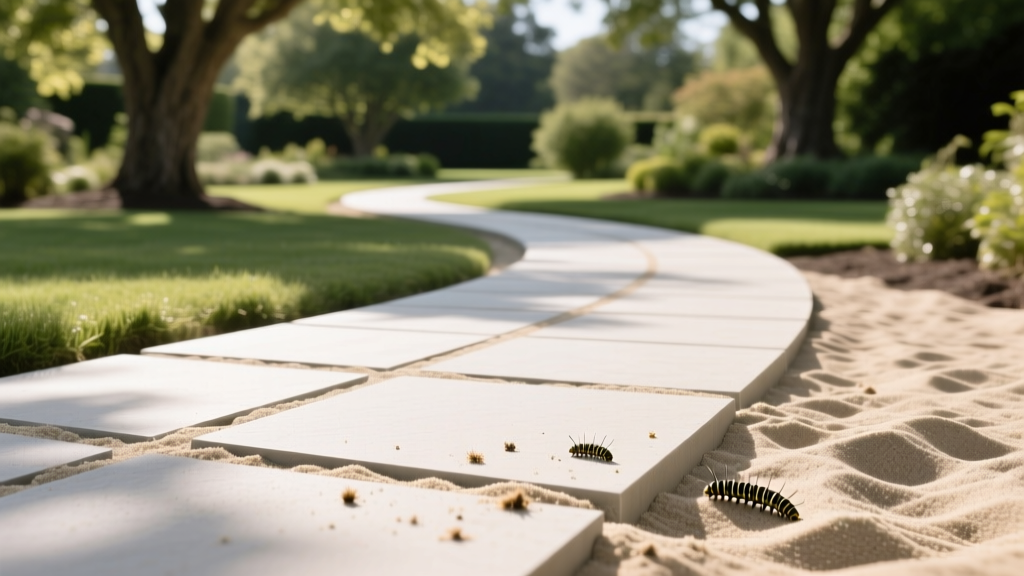
Flagstone Walkway Polymeric Sand 2026: Webworm Control Guide
David ParkPublished
The Intersection of Hardscaping and Pest Management
Landscaping beneath mature deciduous trees offers unparalleled shade and aesthetic appeal, but it introduces unique maintenance challenges. Among the most notorious of these challenges are tree web worms—specifically the Fall Webworm (Hyphantria cunea) and the Eastern Tent Caterpillar (Malacosoma americanum). When these pests infest the canopy above your outdoor living spaces, they drop frass (excrement), webbing, and eventually descend to pupate. If your hardscaping features traditional loose jointing materials, your walkway can quickly become a breeding ground and a stained mess.
In 2026, the gold standard for mitigating this issue is flagstone walkway installation with polymeric sand joints. This comprehensive guide merges advanced hardscaping techniques with integrated pest management (IPM) to help you build a beautiful, webworm-resistant landscape. By sealing the joints of your natural stone walkways, you not only prevent weed growth and ant colonization but also eliminate the micro-habitats that tree web worms rely on to complete their life cycles.
The Webworm Threat to Hardscapes
To understand why your installation method matters, you must understand the biology of the pests living in the canopy above. According to the University of Minnesota Extension, Fall Webworms construct large, unsightly silk tents at the ends of tree branches in late summer. As the larvae feed voraciously on leaves, they continuously drop frass. When this frass lands on porous, unsealed flagstone with loose sand joints, it creates stubborn, dark stains that are incredibly difficult to remove.
Furthermore, when the caterpillars are ready to pupate, they crawl down the tree trunks and seek out dry, protected crevices. Traditional mason sand or gravel joints between flagstones provide an ideal environment for pupation. By the following spring, your walkway becomes a hatching ground for the next generation of moths. Sealing these joints with modern polymeric sand creates an impenetrable, flexible barrier that forces the larvae to seek pupation sites elsewhere, effectively breaking the local life cycle.
Material Selection: Traditional Sand vs. 2026 Polymeric Sand
The landscaping industry has seen significant advancements in jointing compounds. In 2026, bio-resin and advanced dust-free polymeric sands dominate the market, offering superior flexibility and permeability compared to older cement-based formulas. Below is a comparison of how traditional jointing materials stack up against modern polymeric sand in pest-heavy zones.
| Feature | Traditional Mason Sand | 2026 Advanced Polymeric Sand |
|---|---|---|
| Pest Pupation Risk | High (Provides loose, dry crevices) | None (Forms a solid, flexible barrier) |
| Frass Staining | Severe (Traps organic matter deeply) | Minimal (Smooth surface allows easy washing) |
| Ant & Insect Nesting | High (Easily excavated by ants) | None (Too dense and hardened for insects) |
| Weed Growth | High (Allows weed seeds to germinate) | None (Blocks sunlight and root penetration) |
| Permeability | Excellent | Good (Modern bio-resins allow drainage) |
| Average Cost (50lb bag) | $6.00 - $10.00 | $35.00 - $55.00 |
Step-by-Step Flagstone Walkway Installation
Proper installation is critical to ensure the polymeric sand performs as intended and does not crack or wash out, which would reintroduce pest vulnerabilities. As outlined by Penn State Extension hardscaping guidelines, a stable base is the foundation of any successful walkway.
Step 1: Excavation and Base Preparation
Excavate the walkway path to a depth of 7 to 9 inches, depending on your local frost line and soil conditions. Lay down a high-quality geotextile fabric to separate the subgrade from your base material and prevent burrowing insects from migrating upward. Fill the excavated area with 4 to 6 inches of Class II road base or crushed angular gravel. Compact this base thoroughly using a mechanical plate compactor in 2-inch lifts. A stable base prevents the flagstone from shifting, which is the primary cause of polymeric sand failure.
Step 2: The Bedding Layer
Add a 1-inch layer of coarse, sharp concrete sand or stone dust over the compacted base. Do not use fine mason sand or play sand, as these retain too much moisture and can lead to frost heave. Screed the bedding layer perfectly level. This layer will allow you to adjust the height of individual flagstones while providing a firm, well-draining bed.
Step 3: Laying the Flagstone
Place your flagstone pieces onto the bedding layer, tapping them gently with a rubber mallet to set them into the sand. When dealing with natural flagstone, aim for consistent joint widths. For optimal polymeric sand adhesion and pest prevention in 2026, maintain joint widths between 1/4 inch and 1/2 inch. Joints that are too narrow will prevent the sand from penetrating deeply, while joints that are too wide may require a specialized wide-joint polymeric formula to prevent cracking under tree root movement.
Step 4: Applying Polymeric Sand
Ensure the flagstone surface is completely dry and free of dust. Sweep the 2026 dust-free polymeric sand into the joints, filling them to about 1/8 inch below the surface of the stone. Run the plate compactor over the walkway with a protective urethane pad to vibrate the sand deep into the joints and eliminate air pockets. Sweep a second layer of sand to top off any settled areas. Finally, use a gentle misting nozzle to activate the bio-resin binders in the sand. Water the joints until they are fully saturated, but avoid creating runoff that could wash the sand out or leave a hazy residue on the flagstone.
Integrated Tree Web Worm Control Strategy
While polymeric sand protects the hardscape from below, you must also manage the canopy above to prevent frass accumulation and severe defoliation. An Integrated Pest Management (IPM) approach is the most sustainable and effective method for 2026 landscaping.
Cultural and Mechanical Controls
During the winter and early spring, inspect the branches of your shade trees for overwintering egg masses. Eastern Tent Caterpillars lay distinct, varnished-looking egg bands on small twigs. Pruning these out before they hatch in early spring drastically reduces the population. For Fall Webworms, which appear later in the season, you can often prune out the localized silk tents as soon as they appear, provided they are within safe reach.
Biological Controls
If the infestation is too high in the canopy for pruning, biological insecticides are highly effective and safe for beneficial insects. Bacillus thuringiensis var. kurstaki (Btk) is a naturally occurring soil bacterium that specifically targets caterpillars. When sprayed on the foliage, the web worms ingest the bacteria and stop feeding within hours, dying shortly after. Btk is most effective when applied to early-instar (young) caterpillars. Another excellent organic option is Spinosad, which provides rapid knockdown of webworms while maintaining a relatively low impact on pollinators once it has dried on the leaf surface.
Chemical Controls
In severe cases where tree health is compromised by consecutive years of defoliation, targeted synthetic insecticides containing bifenthrin or permethrin can be used as a last resort. However, in a landscaped garden setting with hardscaping and outdoor living areas, organic options like Btk and Spinosad are heavily preferred to maintain a safe environment for pets and families.
Maintenance: Keeping the Walkway Pristine
Even with a sealed joint system and an active IPM canopy strategy, some frass and organic debris will inevitably land on your flagstone. Because you have used polymeric sand, maintenance is vastly simplified.
- Routine Sweeping: Use a stiff-bristled push broom to sweep away dry frass and leaf litter weekly during peak webworm season (late summer to early fall). The smooth, hardened surface of the polymeric sand joints prevents debris from becoming trapped.
- Washing Frass Stains: If frass accumulates and stains the porous flagstone, use a specialized natural stone cleaner or a mild solution of oxygen bleach and warm water. Avoid harsh chlorine bleach, which can degrade the bio-resins in modern polymeric sands and harm the surrounding tree roots.
- Pressure Washing Caution: If you must pressure wash the flagstone, use a wide-angle (40-degree) nozzle and keep the wand at least 18 inches from the surface. Direct, high-pressure streams aimed at the joints can erode the polymeric sand over time, reopening the crevices to pupating caterpillars.
- Annual Sealing: Consider applying a breathable, penetrating silane-siloxane stone sealer to the flagstone every 2 to 3 years. This prevents moisture absorption and makes wiping away pest debris incredibly easy.
Conclusion
Designing a landscape that coexists with mature trees requires foresight and the right materials. By combining a meticulously installed flagstone walkway with advanced 2026 polymeric sand technology, you effectively eliminate the micro-habitats that tree web worms exploit. Coupled with a proactive biological pest management strategy in the canopy, your outdoor living space will remain pristine, functional, and beautiful, free from the stains and pest pressures that plague poorly planned landscapes.

