Pest Control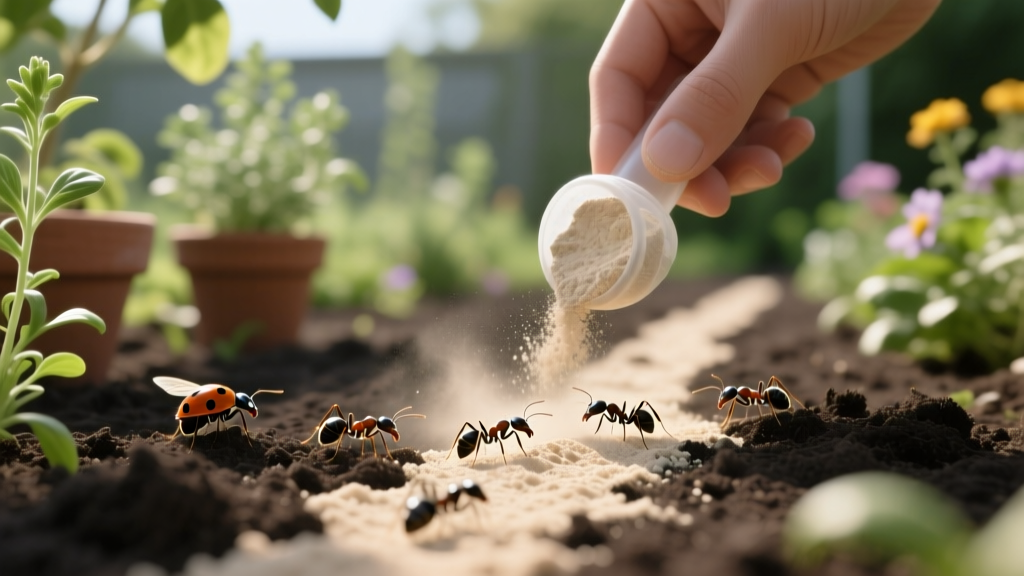
Food-Grade DE for Ant Trails: 2026 Bio-Control Guide
Robert HayesPublished
Introduction to Bio-Control and Ant Management in 2026
As we navigate the 2026 gardening season, the shift toward Integrated Pest Management (IPM) and bio-control strategies has never been more pronounced. Homeowners and professional landscapers alike are moving away from broad-spectrum synthetic pesticides that devastate local ecosystems. Instead, the focus is on targeted, mechanically acting, and naturally derived solutions. One of the most effective, yet frequently misunderstood, tools in the eco-conscious gardener's arsenal is food-grade diatomaceous earth (DE). When dealing with persistent ant trails invading your patio, garden beds, or home foundation, food-grade DE offers a powerful, non-toxic bio-control alternative that aligns perfectly with modern environmental stewardship.
Ants play a crucial role in soil aeration and organic matter decomposition. However, when species like the Argentine ant or the odorous house ant establish massive foraging trails through your living spaces or disrupt the root systems of prized plants, intervention is necessary. This comprehensive guide will walk you through the precise application of food-grade diatomaceous earth for ant trails, ensuring maximum efficacy while safeguarding the beneficial insects that keep your garden thriving.
What is Food-Grade Diatomaceous Earth?
Diatomaceous earth is a naturally occurring, soft, siliceous sedimentary rock that is easily crumbled into a fine white to off-white powder. It is composed of the fossilized remains of diatoms, a type of hard-shelled microalgae. According to the National Pesticide Information Center (NPIC), the physical properties of DE make it an exceptional mechanical insecticide.
It is critical to distinguish between food-grade and filter-grade (or pool-grade) diatomaceous earth. Filter-grade DE undergoes high-heat calcination, which converts the naturally occurring amorphous silica into crystalline silica—a known respiratory hazard that is toxic to humans and mammals. Food-grade DE, on the other hand, is mined from freshwater lake beds, processed without high heat, and contains less than 1% crystalline silica. It is recognized as safe by environmental and agricultural agencies, making it the only acceptable form of DE for use in gardens, around pets, and near edible crops.
How DE Works: The Mechanical Bio-Control Advantage
Unlike chemical baits or neurotoxic sprays that interfere with an insect's nervous system, food-grade DE operates through a purely mechanical and physical mode of action. The microscopic particles of DE are incredibly sharp and abrasive. When an ant walks across a treated surface, the DE particles cling to its body and score the waxy, protective outer layer of its exoskeleton (the cuticle).
Once this lipid barrier is compromised, the ant rapidly loses moisture and succumbs to fatal desiccation (dehydration). Because this is a physical process rather than a chemical one, insects cannot develop genetic resistance to diatomaceous earth. This makes DE an invaluable, long-term bio-control tool in 2026, especially as chemical resistance in urban ant populations continues to rise.
Step-by-Step Application for Ant Trails
To effectively eliminate ant trails without wasting product or harming the surrounding environment, precision is key. Follow this step-by-step protocol for optimal results.
Step 1: Identification and Preparation
Before applying any treatment, observe the ant trails to identify their entry and exit points. Are they foraging for sugars or proteins? Once you have mapped the trail, you must disrupt their chemical communication. Ants rely on pheromone trails to guide their colony members. Wipe down the visible trail with a 50/50 mixture of white vinegar and water. This erases the pheromone map, forcing the scouts to search blindly and increasing the likelihood that they will encounter your DE barrier.
Step 2: Selecting the Right Application Tools
In 2026, modern ergonomic dusters have made DE application cleaner and more precise. Avoid dumping DE in piles; ants will simply walk around large mounds of powder. Instead, use a bellows hand duster or a specialized fine-mesh shaker. The goal is to create a microscopically thin, barely visible layer of dust. If you can easily see the white powder, you have applied too much. A light dusting is all that is required to cling to the ants' tarsi (feet).
Step 3: Targeted Barrier Placement
- Cracks and Crevices: Use the extension tube of your duster to inject a fine layer of DE deep into foundation cracks, weep holes, and gaps around window frames.
- Perimeter Lines: Apply a continuous, hair-thin line of DE across door thresholds and along the baseboards where trails enter the home.
- Garden Beds: Create a protective ring around the base of vulnerable plants or trees, ensuring the DE is applied directly to dry soil or mulch.
Step 4: Moisture Management and Reapplication
The primary limitation of diatomaceous earth is its vulnerability to moisture. DE loses its desiccating properties when wet because the particles clump together and lose their abrasive edge. However, once it dries out, it regains its efficacy. In the unpredictable weather patterns of 2026, expect to reapply DE after heavy morning dews, irrigation cycles, or rain showers. For outdoor trails, consider applying DE under the shelter of eaves, patio furniture, or specialized garden cloches to protect the barrier from the elements.
Protecting Beneficial Insects While Using DE
A core tenet of bio-control and IPM is the preservation of beneficial insects. While DE is non-toxic, it is non-selective; it will desiccate a honeybee or a ladybug just as easily as an Argentine ant if they come into direct contact with it. Therefore, application placement is everything.
Never broadcast DE across open lawns, flowering garden beds, or areas where pollinators actively forage. Keep applications strictly confined to ant trails, foundation perimeters, and non-floral crevices. By targeting the specific micro-habitats of trailing ants and avoiding the botanical zones frequented by pollinators and predatory beetles, you maintain the ecological balance of your garden. According to the University of California Integrated Pest Management (UC IPM) program, targeted physical barriers are a cornerstone of sustainable ant management that protects non-target organisms.
Comparison Chart: DE vs. Other Bio-Control & IPM Methods
Choosing the right tool depends on the specific ant species, the location of the infestation, and your broader garden ecology. Below is a comparison of leading 2026 IPM strategies for ant control.
| Control Method | Mode of Action | Impact on Beneficials | Best Use Case |
|---|---|---|---|
| Food-Grade DE | Mechanical desiccation | Low (if targeted correctly) | Dry trails, foundation cracks, indoor perimeters |
| Borax/Sugar Baits | Stomach poison (slow-acting) | Very Low (contained in stations) | Sugar-feeding ants, colony elimination |
| Spinosad Baits | Neurotoxin (bacterial derivative) | Low (targeted baiting) | Protein/grease-feeding ants, outdoor mounds |
| Beneficial Nematodes | Biological parasitism | None (highly specific) | Fire ant mounds, soil-dwelling larvae |
Expert Tips for Long-Term IPM Success
To maximize the effectiveness of your food-grade DE application, integrate it into a broader cultural and biological strategy:
- Eliminate Honeydew Sources: Many ant species farm aphids and scale insects for their sugary honeydew excretions. Introduce biological predators like Hippodamia convergens (convergent lady beetles) or green lacewings to control aphid populations, thereby removing the ants' primary food source.
- Modify the Habitat: Trim tree branches and shrubs so they do not touch your home's exterior. Ants frequently use these as bridges to bypass your ground-level DE barriers.
- Wear Proper PPE: Although food-grade DE is non-toxic, any fine particulate matter can cause mechanical irritation to the human respiratory tract. Always wear an N95 respirator mask and safety goggles during application.
- Monitor and Adapt: IPM is an ongoing cycle. Monitor the treated trails weekly. If ant activity shifts to a new entry point, adjust your DE barriers accordingly rather than resorting to chemical sprays.
Conclusion
As we embrace the ecological gardening standards of 2026, food-grade diatomaceous earth remains a cornerstone of effective, bio-friendly pest management. By understanding its mechanical mode of action and applying it with precision along ant trails, you can protect your home and garden without resorting to harmful synthetic chemicals. Remember that true pest control is not about total eradication, but about managing populations and maintaining a healthy, balanced ecosystem. When used responsibly as part of a comprehensive IPM strategy, food-grade DE proves that nature provides the most elegant solutions to our most persistent pest challenges.