Pest Control
Stop Ant Trails in Raised Beds: Food-Grade DE Guide 2026
The 2026 Raised Bed Ant Challenge
Raised bed vegetable gardening continues to dominate home landscaping trends in 2026, offering superior drainage, warmer soil temperatures, and easier weed management. However, these exact same benefits make raised beds an irresistible target for ant colonies. Ants are drawn to the loose, well-aerated soil and the warmth retained by wooden or corrugated metal bed walls. While ants do not typically eat vegetable plants directly, their presence in raised beds can lead to severe secondary issues. They are notorious for farming aphids and mealybugs on your prized tomatoes and peppers, protecting these sap-sucking pests from natural predators in exchange for sweet honeydew. Furthermore, extensive ant tunneling can disturb the delicate root systems of young seedlings and cause the soil in your raised beds to dry out much faster.
For organic gardeners, finding a safe, effective, and non-toxic solution is paramount. Enter food-grade diatomaceous earth (DE). In this comprehensive 2026 guide, we will explore exactly how to identify, target, and eliminate ant trails in your raised bed vegetable garden using food-grade DE, without harming your soil ecology or your family.
What is Food-Grade Diatomaceous Earth?
Diatomaceous earth is a naturally occurring, soft sedimentary rock composed of the fossilized remains of diatoms, a type of hard-shelled microalgae. It is easily crumbled into a fine, white to off-white powder. According to the National Pesticide Information Center (NPIC), DE works through a mechanical, rather than chemical, process. The microscopic silica particles have incredibly sharp edges that scratch the waxy outer layer of an insect's exoskeleton. Once this protective layer is compromised, the insect rapidly loses moisture and dies of desiccation (dehydration).
It is absolutely critical to distinguish between food-grade DE and filter-grade (or pool-grade) DE. Filter-grade DE has been heat-treated (calcined), which increases its crystalline silica content, making it highly toxic to human lungs and entirely unsuitable for garden use. Food-grade DE contains less than 1% crystalline silica and is recognized as safe for use around edible crops, pets, and humans when applied correctly.
Step-by-Step Application for Ant Trails
Applying DE to ant trails in a raised bed environment requires precision. Simply broadcasting the powder over your entire garden bed is ineffective and wasteful. Follow these targeted steps for the best results in 2026.
Step 1: Map the Ant Trail
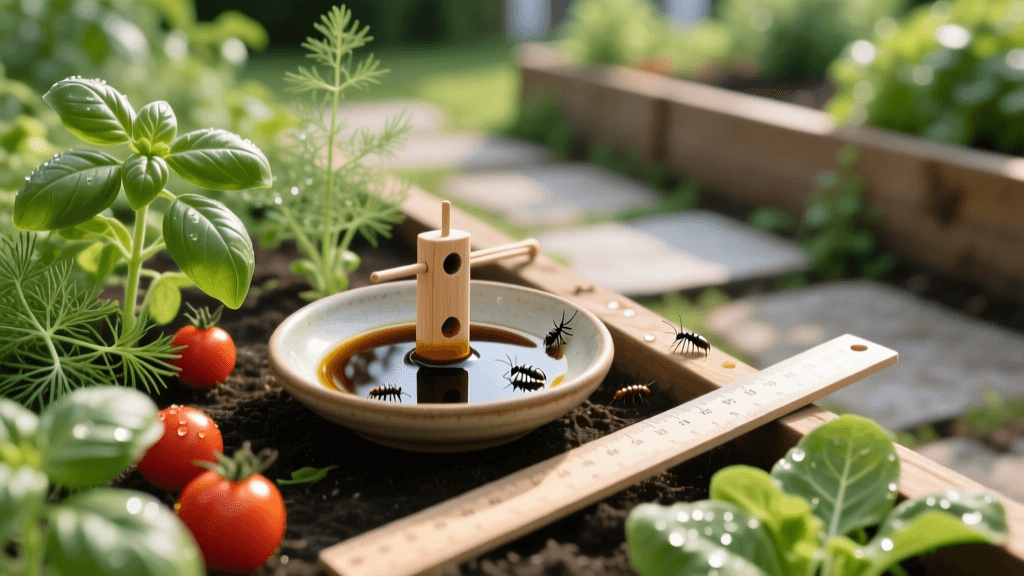
Before applying any treatment, observe the ants. Identify the main foraging trails leading from the soil surface, up the sides of your raised beds, and onto your vegetable plants. Look for the entry and exit points at the base of the bed or in the soil crevices. You want to intercept them where they are most active.
Step 2: Prepare the Environment
DE is only effective when completely dry. If you have recently watered your raised beds or if morning dew is heavy, wait until the soil surface and the bed walls are dry to the touch. Put on a standard N95 dust mask to avoid inhaling the fine silica particles during application.
Step 3: Apply the Barrier
Using a specialized duster, apply a very thin, barely visible layer of food-grade DE directly over the ant trail and around the base of the raised bed legs or walls. Ants will not cross a thick, visible pile of DE; they will simply walk around it. A micro-layer forces them to walk through it, ensuring the particles cling to their legs and bodies, which they then carry back to the colony.
Application Tools Comparison Chart
Choosing the right tool is essential for the micro-layer application required for ant control. Here is a comparison of the top application methods for raised bed gardeners:
| Tool Type | Best Used For | Pros | Cons |
|---|---|---|---|
| Bulb Duster | Soil crevices, base of bed walls | Excellent reach, applies ultra-thin layers | Requires practice to avoid clumping |
| Shaker Can | Broad soil surfaces, bed perimeters | Easy to use, inexpensive | Hard to control in wind, applies too heavily |
| Makeup/Paint Brush | Plant stems, wooden bed corners | Extreme precision, zero waste | Very slow, tedious for long trails |
| Pump Duster | Large perimeters, tall raised beds | Consistent output, one-handed operation | More expensive, requires cleaning |
Managing Moisture: The Achilles Heel of DE
The single biggest challenge of using DE in raised bed vegetable gardening is moisture. Raised beds drain quickly and require frequent watering, especially during the peak of the 2026 summer heat. The moment DE gets wet, it loses its mechanical effectiveness. The sharp edges clump together, and the desiccating properties are neutralized.
The 2026 Drip Irrigation Solution: To maintain your DE barriers, transition your raised beds to subsurface drip irrigation or drip tape. By delivering water directly to the root zone beneath the soil surface, the top layer of soil, the bed walls, and the surrounding perimeter remain dry. This allows your DE ant barriers to remain active for weeks. If you must use overhead watering, plan to reapply the DE immediately after the soil surface dries.
Top Food-Grade DE Products for 2026
Not all food-grade DE is milled to the same standard. For ant control, a finer mesh size is preferable as it adheres better to the insects' exoskeletons. Here are the top-rated food-grade DE products for gardeners this year:
| Brand | Mesh Size | Estimated 2026 Price (4 lbs) | Best Feature |
|---|---|---|---|
| Harris Food Grade DE | Standard | $16.00 | Includes a high-quality puffer duster in the box |
| Safer Brand Ant & Crawling Insect Killer | Fine | $12.50 | Pre-packaged in an easy-to-use shaker bottle |
| DiatomaceousEarth.com Food Grade | Ultra-Fine | $22.00 | OMRI Listed, exceptionally fine milling for maximum adherence |
Protecting Pollinators and Soil Ecology
While food-grade DE is non-toxic to humans and mammals, it is a broad-spectrum mechanical insecticide. This means it will harm beneficial insects, including bees, ladybugs, and ground-dwelling predators, if they come into direct contact with it while it is dry. The University of California Integrated Pest Management (UC IPM) program emphasizes the importance of targeted application to preserve beneficial insect populations.
Best Practices for Ecological Safety:
- Never dust blooming flowers: Avoid applying DE anywhere near the blossoms of your squash, tomatoes, or cucumbers where pollinators are actively foraging.
- Apply at dusk: Applying DE in the late evening ensures that it settles before daytime pollinators become active. By morning, dew or light watering can incorporate it slightly into the topsoil where it targets ants but is less likely to coat the wings of visiting bees.
- Protect Earthworms: Earthworms are vital for raised bed soil health. Because they live deep within the moist soil and lack the waxy exoskeleton of insects, surface-applied DE does not harm them. Just avoid mixing large quantities of DE directly into the deep soil layers.
Integrating DE into a Broader IPM Strategy
In 2026, successful pest management relies on Integrated Pest Management (IPM) principles. DE should not be your only line of defense against ants in raised beds. Combine DE barriers with cultural controls. Keep the area immediately surrounding your raised beds free of tall weeds, mulch piles, and debris where ants might establish satellite colonies. If aphids are present on your vegetables, treat the aphids directly with insecticidal soap or neem oil; without the honeydew produced by aphids, the ants will quickly lose interest in your raised beds and move on to forage elsewhere.
Final Thoughts for the 2026 Season
Food-grade diatomaceous earth remains one of the most reliable, cost-effective, and organic-compliant tools for managing ant trails in raised bed vegetable gardens. By understanding its mechanical nature, applying it with precision tools, and managing your irrigation to keep the barriers dry, you can protect your 2026 vegetable harvest from the secondary damage caused by ant-farmed pests. Always prioritize targeted application to ensure your garden remains a thriving, balanced ecosystem.