Pest Control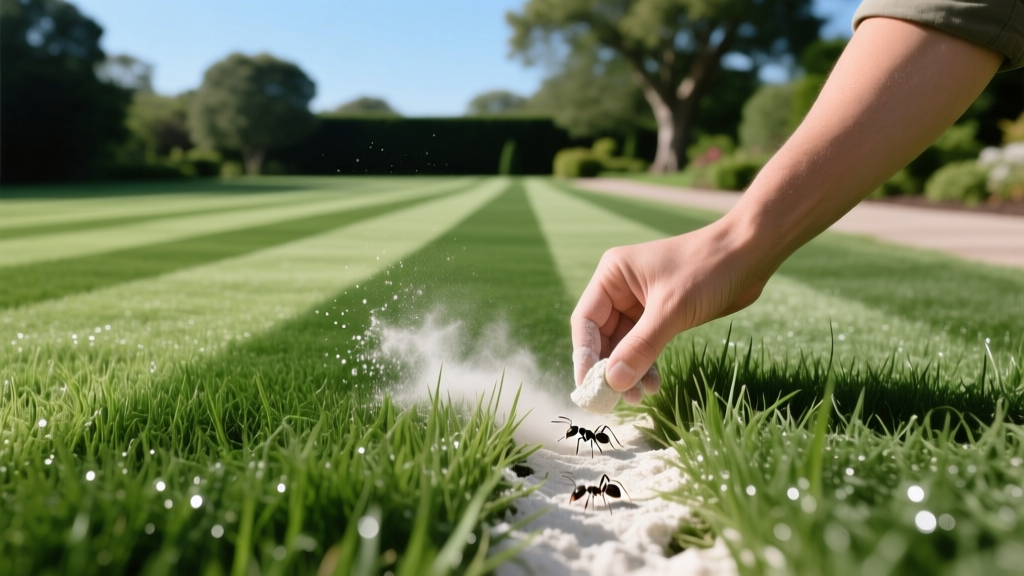
2026 Guide: Food-Grade DE for Ant Trails on Striped Lawns
Sarah ChenPublished
The Art of the Stripe and the Ant Invasion
Lawn striping is more than just a mowing technique; it is a deliberate manipulation of light and shadow that transforms a standard yard into a manicured masterpiece. By bending turfgrass blades in alternating directions, you create striking visual contrasts that elevate the entire aesthetic of your property. However, maintaining these pristine, geometric patterns in 2026 requires more than just a premium roller mower and a disciplined mowing schedule. It requires a rigorous approach to pest management, particularly when dealing with the disruptive presence of ant trails.
Ants are notorious for undermining the visual flow of a striped lawn. Their foraging trails create worn, discolored paths through the turf, while their nesting habits result in unsightly soil mounds that completely disrupt the light-reflecting geometry of your stripes. When an ant colony establishes a superhighway across your carefully striped Kentucky Bluegrass or Bermuda turf, the aesthetic damage is immediate. As a proponent of Integrated Pest Management (IPM), turning to harsh chemical sprays is often a last resort, especially when you want to maintain a safe environment for pets, children, and beneficial pollinators. This is where food-grade diatomaceous earth (DE) becomes an invaluable tool in your 2026 lawn care arsenal.
Understanding Food-Grade Diatomaceous Earth
Before discussing application techniques that preserve your lawn's aesthetics, it is crucial to understand what DE is and how it functions. Diatomaceous earth is a naturally occurring, soft sedimentary rock formed from the fossilized remains of tiny, aquatic organisms called diatoms. Their skeletons are made of a natural substance called silica. When milled into a fine powder, DE acts as a mechanical, rather than chemical, insecticide.
According to the National Pesticide Information Center, DE kills insects by absorbing the oils and fats from the cuticle of the insect's exoskeleton, causing them to dry out and die. Its abrasive edges also score the exoskeleton, accelerating the desiccation process. Because it relies on physical mechanics rather than chemical toxicity, ants cannot develop a biological resistance to it, making it a cornerstone of sustainable, long-term pest control.
It is absolutely vital to use only food-grade diatomaceous earth for lawn and garden applications. Pool-grade or filter-grade DE has been heat-treated (calcined), which increases its crystalline silica content, making it highly toxic to humans and pets if inhaled. Food-grade DE, conversely, contains less than 1% crystalline silica and is generally recognized as safe by environmental and health agencies, making it ideal for residential landscapes where families and pets play.
The Aesthetic Dilemma: White Dust on a Green Canvas
The primary challenge of using DE on a striped lawn is purely aesthetic. DE is a stark, opaque white powder. If broadcast carelessly across a lush, green lawn, it settles on the grass blades and completely ruins the visual contrast of your striping patterns. A lawn that should reflect deep, alternating bands of light and dark green will instead look like it has been dusted with snow or afflicted by a severe fungal disease.
To leverage the pest-control efficacy of DE while adhering to the strict visual standards of lawn striping, the application must be surgical. The goal is to place the DE exactly where the ants travel—at the soil line and within the thatch layer—while keeping the visible grass blades entirely free of the white residue. This requires specialized tools, precise timing, and an understanding of turfgrass anatomy.
Precision Application Tools for 2026
In 2026, the market offers several specialized applicators designed for targeted IPM treatments. Broadcasting DE with a standard spreader or shaking it by hand is unacceptable for aesthetic lawns. Below is a comparison of the best application methods for preserving lawn stripes.
| Application Method | Recommended Tool | Aesthetic Impact | Estimated Cost (2026) | Best Use Case |
|---|---|---|---|---|
| Precision Bulb Duster | Long-Nozzle Copper Bulb Duster | Very Low (Targets soil/thatch) | $18 - $25 | Active trails across open turf |
| Liquid DE Slurry | 1-Gallon Pump Sprayer | Low (Dries mostly invisible) | $30 - $45 | Perimeter borders and hardscape edges |
| Micro-Trenching | Manual Edging Trowel | Zero (Completely hidden) | $12 - $18 | Intercepting trails before they hit the turf |
Step-by-Step Surgical Application Guide
To eliminate ant trails without compromising your lawn's striping patterns, follow this meticulous, step-by-step application protocol.
Step 1: Identify and Map the Trails
Observe the lawn during peak ant activity, usually in the late morning or early evening. Map out the exact routes the ants are taking. Note where the trails intersect with the 'valleys' of your stripes (the darker bands where the grass is bent away from the sun). These shadowed valleys are ideal zones for minor applications, as the lack of direct light naturally hides minor soil imperfections.
Step 2: Part the Canopy
Using a flexible lawn rake or even your hands, gently part the grass blades along the ant trail. You want to expose the thatch layer and the topsoil without breaking the grass blades, which would disrupt their ability to hold a bend for striping.
Step 3: Apply with a Bulb Duster
Fill a long-nozzle bulb duster with food-grade DE. Insert the nozzle deep into the parted grass, aiming directly at the soil surface and the entrance of any visible ant mounds. Squeeze the bulb gently to release a fine, barely visible cloud of dust directly onto the trail. The static charge of the DE will cause it to cling to the ants and the soil, rather than floating up onto the grass blades. As noted by the EPA's Integrated Pest Management principles, targeted, minimal applications are the hallmark of effective, environmentally responsible pest control.
Step 4: Treat the Mounds
For the mounds themselves, use a specialized soil probe or a long screwdriver to poke several holes into the center of the nest. Puff the DE directly into these holes. This ensures the colony is treated at its source without requiring you to dump a visible pile of white powder on the surface of your striped lawn.
Step 5: The Liquid Slurry Alternative
If the ant trail is heavily trafficked and a dry dust application is simply too visible, mix a liquid DE slurry. Combine 1/4 cup of food-grade DE with one gallon of water in a pump sprayer. Agitate constantly, as DE does not dissolve; it remains in suspension. Spray the slurry directly at the base of the grass along the trail. Once the water evaporates, the DE is left at the soil line, largely hidden from view, yet fully lethal to passing ants.
Post-Application Lawn Care and Striping Maintenance
After applying DE, your lawn care routine must adapt to ensure both the efficacy of the treatment and the longevity of your stripes.
- Avoid Immediate Watering: DE loses its mechanical desiccation properties when wet. If you must irrigate, do so deeply and infrequently, allowing the top layer of soil and thatch to dry out completely so the DE can reactivate.
- Mowing Strategy: Wait at least 48 hours after application before mowing. When you do mow, ensure your mower deck is set to the optimal height for striping (usually 2.5 to 3.5 inches, depending on the turfgrass species). Cutting the grass too short will expose the soil and the DE, ruining the aesthetic.
- Rolling the Lawn: The act of rolling the lawn with a striping kit or roller will naturally press any stray, microscopic DE particles deeper into the thatch layer, effectively hiding them while simultaneously bending the grass to refresh your stripes.
- Reapplication Timing: Because DE is a physical barrier, it must be reapplied after heavy rains or prolonged irrigation. Monitor the trails weekly. If ant activity resumes, repeat the surgical bulb-duster application.
Alternative IPM Strategies for Aesthetic Purists
While food-grade DE is highly effective, some lawn care purists in 2026 prefer completely invisible biological controls to maintain their stripes. If DE application proves too cumbersome for your specific turf type, consider introducing Beneficial Nematodes (specifically Steinernema carpocapsae). These microscopic worms are applied via a standard hose-end sprayer, leaving absolutely zero visual residue on the grass blades. Once they reach the soil, they actively seek out and destroy ant larvae, collapsing the colony from the inside out. Additionally, the University of Minnesota Extension recommends using bait stations disguised as landscape rocks or hidden within garden bed mulches to draw foraging ants away from the pristine turf entirely.
Conclusion
Maintaining a beautifully striped lawn requires a meticulous eye for detail, and pest control should never force you to compromise your landscape's visual integrity. By understanding the mechanical action of food-grade diatomaceous earth and utilizing precision application tools like bulb dusters and liquid slurries, you can eradicate disruptive ant trails in 2026 without leaving a trace of white dust on your pristine turf. Embrace the surgical approach to IPM, and your lawn will remain a flawless canvas of light, shadow, and vibrant green health all season long.