Pest Control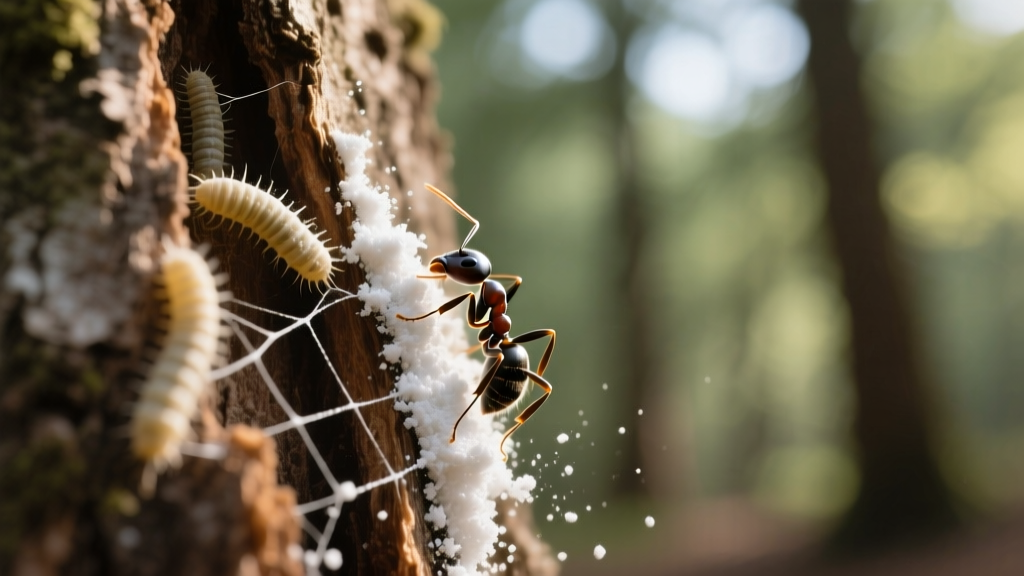
Stop Ant Trails With DE For Tree Web Worm Control 2026
James MillerPublished
The Hidden Link Between Ant Trails and Tree Web Worms
When managing fall webworms (Hyphantria cunea) or eastern tent caterpillars, most homeowners in 2026 focus exclusively on the tree canopy. They prune out silk tents, apply biological sprays, or wait for the pests to cycle out. However, holistic tree web worm control requires looking closely at the base of the trunk. Why? Because of the complex symbiotic relationship between ants, honeydew-producing insects, and the disruption of beneficial predators.
Ants are notorious for 'farming' aphids, scale insects, and mealybugs on tree trunks and branches. In return for the sugary honeydew these pests secrete, ants aggressively defend them. Unfortunately, the same aggressive ant species also attack and drive away the parasitic wasps, tachinid flies, and predatory beetles that naturally prey on webworm eggs and early-instar larvae. If you have heavy ant trails marching up your tree trunk, your tree's natural defense system against webworms is severely compromised. By eliminating these ant trails using food-grade diatomaceous earth (DE), you disrupt this pest symbiosis and invite beneficial insects back into the canopy to assist with webworm control.
Identifying the Culprits: Which Ants Threaten Webworm Predators?
Not all ants are equally aggressive toward beneficial wasps. In 2026, arborists and lawn care professionals frequently identify three main species that disrupt tree canopy ecosystems and protect secondary pests:
- Argentine Ants (Linepithema humile): Highly aggressive and known for forming massive supercolonies. They are the primary defenders of honeydew-producing insects and will actively swarm and deter parasitic wasps attempting to lay eggs in webworm larvae.
- Carpenter Ants (Camponotus spp.): While they primarily nest in dead or decaying wood, they forage extensively on trunks for honeydew. Their large mandibles and territorial nature make them highly effective at biting and deterring tachinid flies.
- Pavement Ants (Tetramorium caespitum): Common at the base of urban street trees and suburban landscaping, they maintain extensive, visible trails up the bark, creating a highway of disruption for natural predators.
Recognizing these trails early in the spring allows you to apply a DE barrier before the summer webworm hatch begins, setting the stage for a balanced ecosystem.
Why Food-Grade Diatomaceous Earth is the 2026 IPM Standard
According to the National Pesticide Information Center (NPIC), diatomaceous earth is a naturally occurring, soft sedimentary rock consisting of fossilized diatoms. It works mechanically, not chemically. When ants crawl over DE, the microscopic, razor-sharp silica shards scratch their waxy outer exoskeleton. This causes the insects to lose moisture rapidly and die from desiccation.
For tree base applications, you must strictly use food-grade DE, not pool-grade (filter-grade) DE. Pool-grade DE is calcined (heat-treated), which crystallizes the silica and makes it highly toxic to mammalian lungs. Food-grade DE contains less than 1% crystalline silica and is safe for use around pets, wildlife, and humans when applied correctly. In 2026, organic lawn and tree care standards heavily favor food-grade DE because it leaves no toxic residue in the soil, does not harm the tree's root system, and does not contribute to chemical resistance in ant populations.
Step-by-Step Guide: Applying DE to Ant Trails at the Tree Base
To effectively protect your trees from webworms by managing the ant population, follow this precise application protocol:
1. Preparation and Trunk Clearing
Remove mulch, leaf litter, and tall grass from a 12-inch radius around the base of the tree trunk. Ants often use mulch as a moisture bridge to bypass soil treatments. Exposing the bare soil and the lower 6 inches of the trunk ensures the ants must cross your DE barrier.
2. Choosing the Right Applicator
Do not apply DE by hand or with a heavy shovel. You need a fine, even dusting. Use a bulb duster or a specialized bellows hand duster. Ants will simply walk around thick piles of powder; a barely visible, microscopic layer is the most lethal because they will unknowingly walk through it, coating their legs and antennae.
3. Creating the Barrier Band
Apply a continuous 2-inch wide band of food-grade DE around the entire circumference of the tree trunk, starting about 2 inches above the soil line. Additionally, dust the exposed soil in a 12-inch ring around the base. Target any visible ant trails directly, puffing the DE into the cracks or soil crevices where the trail originates.
4. Weather Monitoring and Reapplication
DE is highly effective when dry but loses its mechanical desiccation properties when wet. In the humid summer months of 2026, morning dew and afternoon thunderstorms will wash the DE away or cause it to clump. You must reapply the barrier every 5 to 7 days, or immediately after any heavy rainfall, to maintain continuous protection against ant trails during the peak webworm hatching season (typically late June through August).
Top Food-Grade DE Products for Tree Base Application in 2026
Selecting the right product ensures purity and ease of application. Below is a comparison of the top-rated food-grade DE products available for arborists and homeowners this year:
| Brand / Product | Grade & Certification | Avg Price (2026) | Best For | Recommended Applicator |
|---|---|---|---|---|
| Harris Food-Grade DE | OMRI Listed, Pure Silica | $16.99 / 4lb | Dry perimeter trails & small yards | Reddi-Mist Bulb Duster |
| Safer Brand Ant & Crawling Insect Killer | Food-Grade Blend | $13.49 / 4lb | Quick spot treatments on bark | Built-in Shaker Top |
| DiatomaceousEarth.com Food Grade | Amorphous Silica, Lab Tested | $24.00 / 8lb | Large orchard trunks & multi-tree properties | Bellows Hand Duster |
Integrating DE with Broader Web Worm Management
Controlling ant trails is just one pillar of a comprehensive tree web worm control strategy. Once the ants are managed, parasitic wasps will have easier access to webworm egg masses laid on the undersides of leaves. To maximize your Integrated Pest Management (IPM) efforts in 2026, combine your DE trunk barrier with the following canopy treatments:
- Biological Sprays (Btk): Apply Bacillus thuringiensis var. kurstaki (Btk) to the canopy when webworms are in their early instar stages. Btk is a naturally occurring soil bacterium that targets caterpillars without harming the beneficial wasps you are trying to attract.
- Targeted Pruning: If a webworm nest is localized to a single branch, use a pole pruner to remove the silk tent entirely. Dispose of the branch in a sealed bag or burn it where local ordinances permit.
- Beneficial Nematodes: Apply Steinernema carpocapsae nematodes to the soil beneath the tree in early spring. These microscopic worms hunt down overwintering pupae before they can emerge as adult moths.
As noted by Penn State Extension, fall webworms rarely cause long-term structural damage to healthy, mature trees, but they can severely defoliate young or stressed specimens. Keeping the trunk free of farming ants ensures the tree isn't fighting a multi-front war against aphids, scale, and webworms simultaneously.
Safety and Environmental Considerations
While food-grade DE is non-toxic if ingested by mammals, it is a fine particulate matter. Inhalation of any fine dust can cause mechanical respiratory irritation. When applying DE to tree bases, always wear an N95 respirator mask and safety goggles to protect your lungs and eyes from airborne silica dust.
Furthermore, avoid applying DE directly to the blossoms of nearby understory plants or blooming weeds at the tree's base. While DE is not a chemical poison, its mechanical action can harm foraging bees and beneficial pollinators if they come into direct contact with heavy dustings. By restricting your application strictly to the tree trunk and the bare soil perimeter, you protect the pollinators while devastating the ant trails. This targeted approach exemplifies the best practices of modern, ecologically conscious pest control in 2026.