Pest Control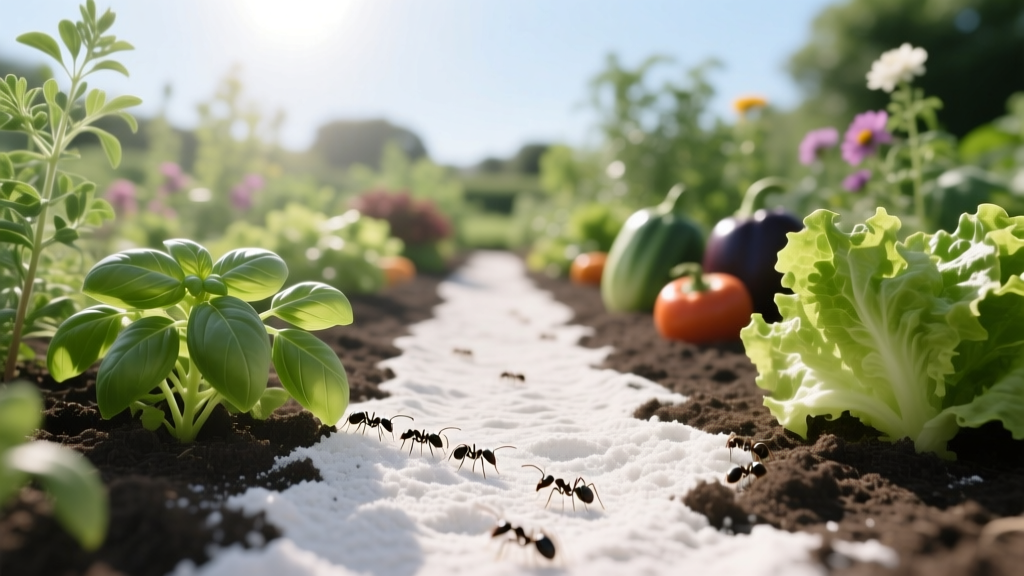
Stop Ant Trails With Food-Grade Diatomaceous Earth 2026
James MillerPublished
The Rise of Foodscaping and the Ant Problem in 2026
As we progress through the 2026 growing season, the practice of foodscaping—integrating edible plants into traditional ornamental landscapes—has reached unprecedented popularity. Homeowners are replacing manicured lawns with dwarf citrus trees, berry bushes, and raised vegetable beds. However, this blending of agriculture and ornamental gardening has brought a unique pest control challenge to the forefront: ant trails. Ants are not merely a nuisance; in an edible landscape, they are often the masterminds behind severe aphid infestations, farming these sap-sucking pests on your prized tomatoes and fruit trees for their sugary honeydew.
When dealing with pests near food crops, synthetic chemical pesticides are largely off the table. You need an effective, non-toxic solution that aligns with modern organic gardening standards. Enter food-grade diatomaceous earth (DE). This natural, mechanical pest control method has become a cornerstone of Integrated Pest Management (IPM) for edible landscapes. In this comprehensive guide, we will explore exactly how to apply food-grade diatomaceous earth to eradicate ant trails while keeping your edible garden safe, productive, and thriving.
What is Food-Grade Diatomaceous Earth?
Diatomaceous earth is a naturally occurring, soft sedimentary rock formed from the fossilized remains of tiny, aquatic organisms called diatoms. When crushed into a fine powder, it feels like talcum powder to human skin. However, under a microscope, DE reveals its true nature: it consists of microscopic, razor-sharp silica shards. According to the National Pesticide Information Center, when insects with exoskeletons, such as ants, crawl across DE, these sharp particles scratch and absorb the lipids from their waxy outer layer, causing the insects to dehydrate and die.
It is absolutely critical for foodscapers to understand the difference between the two main types of DE:
- Food-Grade DE: This is the only type you should use in your garden. It is mined from freshwater deposits and contains very low levels of crystalline silica (usually less than 1%). It is safe for use around humans, pets, and edible crops.
- Filter-Grade (Pool-Grade) DE: This type is heat-treated (calcined) for use in swimming pool filters. The heat treatment converts the amorphous silica into crystalline silica, which is highly toxic to humans and animals if inhaled and entirely inappropriate for garden use.
Why Ants Target Your Edible Landscape
To effectively stop an ant trail, you must understand why the ants are there in the first place. The University of California Statewide Integrated Pest Management Program notes that most ant species do not directly damage plants. Instead, they are drawn to the edible landscape for three primary reasons:
- Aphid Farming: Ants will actively protect aphids, mealybugs, and scale insects on your fruit trees and berry bushes from natural predators like ladybugs. In return, the ants harvest the honeydew these pests excrete.
- Moisture Seeking: During dry spells in 2026, ants will invade raised beds and container gardens seeking the consistent moisture provided by your drip irrigation systems.
- Harvesting Seeds and Fruit: Certain species, like harvester ants, will drag away seeds from your newly sown rows, while others will swarm over-ripe, fallen fruit on the ground.
Step-by-Step Application for Ant Trails
Applying DE is not as simple as tossing it into the wind. Because it is a mechanical desiccant, it requires precise, targeted application to be effective against ant trails.
Step 1: Identify the Trail and Entry Points
Observe the ants during the warmest part of the day. Trace the trail back to its origin. Are they marching up the trunk of your dwarf peach tree? Are they emerging from a crack in the pavement near your raised beds? Identifying the exact route is crucial for creating an impassable barrier.
Step 2: Choose the Right Application Tool
While you can sprinkle DE by hand, it often results in clumpy, uneven piles that ants will simply walk around. For the 2026 season, invest in a dedicated bellows hand duster or a specialized DE applicator bulb. These tools puff the powder into a fine, even, barely visible cloud that settles perfectly over the trail and into soil crevices.
Step 3: Apply in Dry Conditions
DE is entirely ineffective when wet. Ensure you apply the powder during a dry window, ideally in the late afternoon or early evening. This timing also reduces the risk of affecting beneficial pollinators, which are less active at dusk.
Step 4: Create Impassable Barriers
For ant trails leading up fruit trees or raised bed legs, apply a continuous, unbroken band of DE. If the trail crosses a hardscape feature, dust a 2-inch wide line directly across their path. The ants must physically walk through the dust for it to work; they will not avoid it on sight.
Foodscape DE Application Quick Reference Chart
| Foodscape Zone | Application Method | Target Pest Behavior | Reapplication Trigger |
|---|---|---|---|
| Raised Bed Perimeter | Thick 2-inch band along the outer wooden or stone edge | Foraging ants seeking moisture and seeds | Immediately after rain or overhead watering |
| Fruit Tree Trunks | Apply over a sticky barrier (like Tanglefoot) wrapped in tape | Aphid-farming ants climbing to the canopy | Every 3 weeks, or after heavy wind/rain |
| Berry Bush Base | Light dusting at the soil line and mulch surface | Moisture-seeking and fruit-scavenging ants | When the white powder is no longer visible |
| Patio Container Gardens | Dust the saucer rim and the base of the pot | Ants nesting in the dry potting soil | After every deep11session that overflows |
Common Mistakes Foodscapers Make with DE
Even experienced gardeners can misuse diatomaceous earth, leading to frustration and a false belief that the product does not work. Avoid these common pitfalls in your edible landscape:
- Applying Before Rain: The kryptonite of DE is water. Once the powder gets wet, the silica particles clump together, losing their sharp, abrasive edge. If it rains or if your sprinklers hit the treated area, you must reapply once the surface dries.
- Using Too Much: Piling DE into thick, mountainous mounds is counterproductive. Ants are smart enough to walk around a massive pile. A fine, barely visible dusting is far more lethal because the ants won't recognize it as a barrier and will walk directly through it.
- Broadcasting Over Flowers: DE does not discriminate between pests and beneficial insects. If you dust the open blooms of your squash or tomato plants, you risk killing essential pollinators like bees. Always keep DE strictly to the soil line, trails, and non-flowering trunks.
- Ignoring the Nest: While disrupting the trail is excellent for immediate plant protection, locating and treating the central colony with an organic bait (like spinosad-based baits) in conjunction with DE barriers provides long-term control.
Safety Precautions for the Home Gardener
Although food-grade diatomaceous earth is non-toxic and safe to ingest in small quantities (it is often used as an anti-caking agent in stored grains), it is still a fine, abrasive dust. Inhalation is the primary risk. When applying DE in your garden, always wear a properly fitted N95 respirator mask and protective eyewear. The microscopic silica particles can irritate the mucous membranes of your lungs and eyes. Once the dust has settled onto the soil or plant surfaces, it poses virtually no respiratory risk to humans, pets, or wildlife. When harvesting crops that have been treated with DE near their base, simply wash your produce with water as you normally would; the powder rinses away easily.
Integrating DE into a Broader 2026 IPM Strategy
In the modern edible landscape, diatomaceous earth should not be your only line of defense. It is most effective when paired with other organic IPM strategies. For instance, use horticultural oils or neem oil to smother the aphids that the ants are trying to farm. Introduce beneficial nematodes into the soil to target ant larvae and other soil-dwelling pests. Prune the lower branches of your fruit trees to prevent ants from using leaves as a bridge to bypass your DE trunk barriers. By combining physical barriers (DE), biological controls (beneficial insects), and cultural practices (pruning and weed management), you can maintain a vibrant, highly productive foodscape in 2026 without ever reaching for synthetic, harmful pesticides.
Conclusion
Foodscaping offers the immense reward of harvesting fresh, organic produce right from your front yard, but it requires vigilant, safe pest management. Food-grade diatomaceous earth remains one of the most reliable, cost-effective, and ecologically sound tools available to the home gardener. By understanding how DE works, applying it with precision along ant trails, and respecting its limitations regarding moisture and pollinators, you can protect your edible landscape from the hidden damage caused by ant colonies. Equip yourself with a quality hand duster, a bag of food-grade DE, and the; your 2026 harvest will be all the better for it.