Lawn Care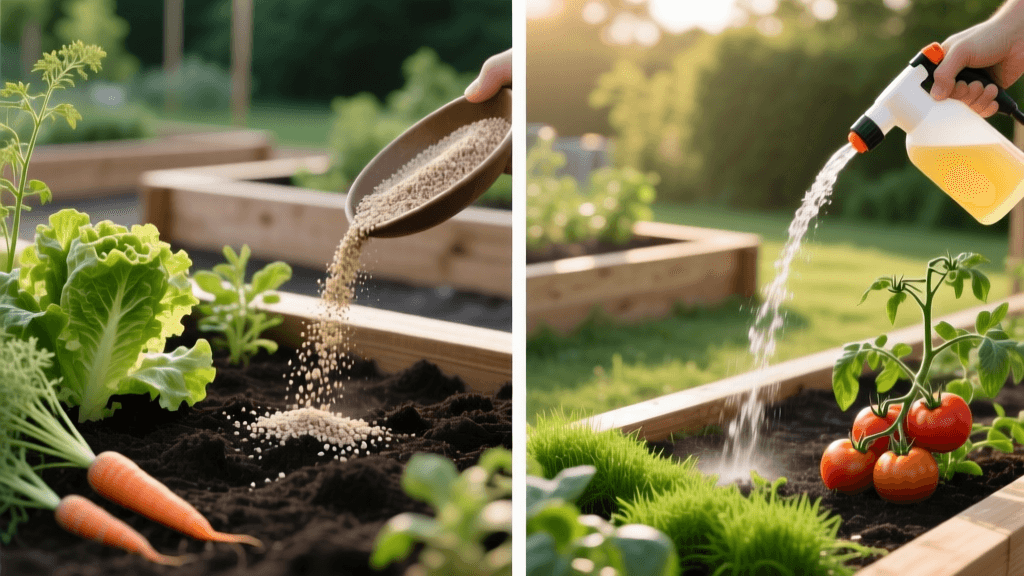
Granular vs Liquid Fertilizer for Foodscaping in 2026
The Rise of Foodscaping in 2026
Welcome to 2026, where the traditional American lawn has evolved from a simple carpet of turfgrass into a dynamic, productive ecosystem. Foodscaping—the art of integrating edible plants like fruit trees, berry bushes, herbs, and vegetables seamlessly into your ornamental landscape and lawn borders—has become a cornerstone of modern sustainable home gardening. However, merging a pristine turfgrass lawn with high-yield edible crops introduces a unique horticultural challenge: how do you feed both without compromising the health, aesthetics, or safety of either?
The fundamental conflict lies in nutrient requirements. Turfgrass thrives on high-nitrogen diets designed to push rapid, lush vegetative growth. Conversely, edible crops require a delicate balance of nitrogen, phosphorus, and potassium (NPK), often needing higher concentrations of phosphorus and potassium to promote flowering, fruiting, and root development. Applying standard lawn fertilizer to your tomato plants or apple trees will result in massive, leafy plants with little to no fruit. Conversely, using expensive, specialized edible fertilizers across your entire lawn is economically unfeasible. This brings us to the ultimate debate for the modern foodscape: granular vs. liquid fertilizer applications.
The Core Dilemma: Turfgrass vs. Edible Crop Nutrition
Before choosing a delivery method, it is crucial to understand the differing nutritional timelines of your landscape. Cool-season and warm-season turfgrasses benefit from slow, steady nutrient release over several months. Edible crops, particularly heavy feeders like peppers, tomatoes, and brassicas, experience rapid growth spurts and require immediate nutrient availability during their flowering and fruiting stages.
According to the University of Minnesota Extension, understanding the release mechanisms of fertilizers is critical for preventing nutrient runoff and ensuring plant uptake. In a mixed edible landscape, utilizing a single fertilizer type or delivery method is a recipe for disaster. Instead, successful foodscaping in 2026 relies on a strategic combination of both granular and liquid fertilizers, deployed in specific zones based on plant needs.
Granular Fertilizers: The Slow-Release Foundation
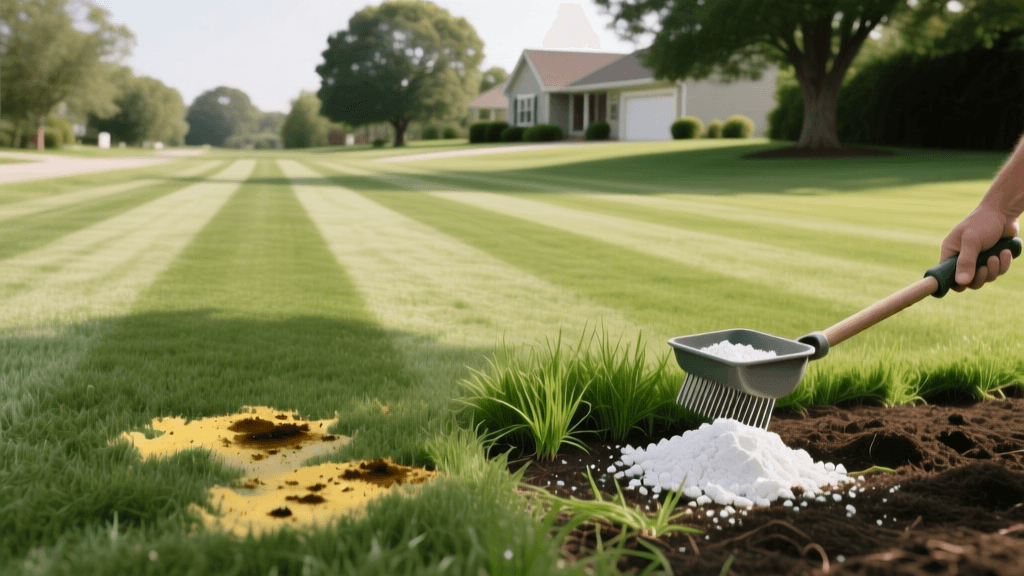
Granular fertilizers are solid, pelletized, or prilled nutrients that are broadcast or side-dressed onto the soil surface. They rely on soil moisture and microbial activity to break down and release nutrients into the root zone over an extended period.
Pros for Foodscaping
- Longevity: High-quality organic granular fertilizers can feed the soil for 2 to 4 months, reducing the labor required to maintain large landscape areas.
- Soil Building: Organic granular options (like those derived from feather meal, bone meal, and kelp) improve soil structure and feed beneficial mycorrhizal fungi, which are essential for the long-term health of perennial edibles like fruit trees and blueberry bushes.
- Cost-Effective for Large Areas: Covering the transition zones between your lawn and edible beds is much more affordable with granular products.
Cons for Foodscaping
- Slow Correction: If your edible plants show signs of a mid-season nutrient deficiency (like blossom end rot or chlorosis), granular fertilizers take too long to break down to correct the issue.
- Placement Risks: Broadcasting granular fertilizer near the crowns of delicate herbs or the trunks of young fruit trees can cause fertilizer burn if not watered in properly.
2026 Top Granular Product Recommendations
For the edible landscape, Espoma Organic Garden-tone (4-4-4) remains a gold standard in 2026, retailing for approximately $35 for a 36-pound bag. Its slow-release formula and rich blend of natural ingredients make it perfect for side-dressing perennial foodscaping borders. For fruit trees integrated into the lawn, Dr. Earth Organic Fruit Tree Fertilizer provides the specific micronutrients needed for citrus and stone fruits without the synthetic salts that damage surrounding turfgrass roots.
Liquid Fertilizers: Precision and Speed
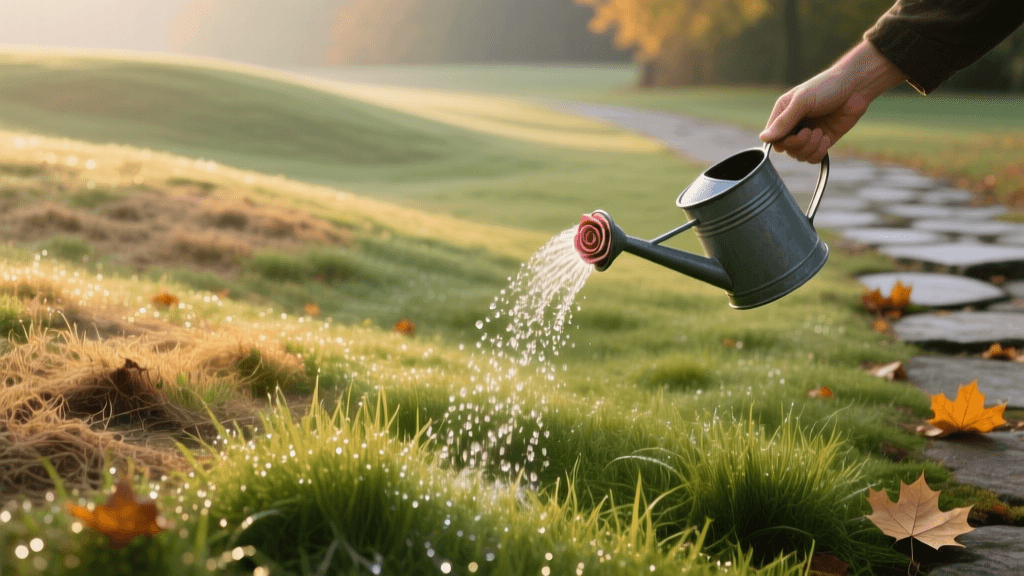
Liquid fertilizers are concentrated solutions or water-soluble powders that are mixed with water and applied via a watering can, hose-end sprayer, or drip irrigation system. They provide nutrients in a form that is immediately available for plant uptake through both the roots and the foliage.
Pros for Foodscaping
- Immediate Availability: Liquid fertilizers act within days, making them ideal for giving heavy-feeding annual vegetables a boost during peak fruiting season.
- Precision Targeting: You can spot-treat specific edible plants without accidentally over-fertilizing the adjacent turfgrass, which could lead to thatch buildup or disease susceptibility.
- Foliar Feeding: Many liquid fertilizers can be sprayed directly onto leaves, bypassing soil pH lockouts that might prevent root absorption of critical micronutrients like calcium or magnesium.
Cons for Foodscaping
- High Labor: Liquids leach through the soil profile quickly, requiring reapplication every 1 to 2 weeks during the growing season.
- Burn Risk: Over-concentrating the mixture or applying liquids during the heat of a mid-summer afternoon can scorch the leaves of delicate edible crops.
2026 Top Liquid Product Recommendations
For intensive edible beds woven into the lawn, Neptune's Harvest Fish & Seaweed Blend (2-3-1) is exceptional. Priced around $45 per gallon in 2026, it provides a massive array of trace minerals and natural growth hormones that promote robust flowering in tomatoes and peppers. For a rapid nitrogen boost for leafy greens like Swiss chard and kale planted in lawn borders, FoxFarm Grow Big Liquid Plant Food (6-4-4) delivers fast, visible results.
2026 Granular vs. Liquid Comparison Matrix
| Feature | Granular Fertilizer | Liquid Fertilizer |
|---|---|---|
| Nutrient Release Speed | Slow (Weeks to Months) | Fast (Hours to Days) |
| Application Frequency | 1-3 times per season | Every 1-2 weeks |
| Best Used For | Turfgrass, Perennial Edibles, Fruit Trees | Annual Veggies, Seedlings, Foliar Feeding |
| Cost Efficiency (Per Sq Ft) | High (Lower cost over time) | Low (Higher recurring cost) |
| Risk of Fertilizer Burn | Moderate (If not watered in) | High (If over-concentrated) |
The Zoned Application Strategy for Mixed Landscapes
When designing these mixed-use spaces, NC State Extension recommends treating different areas of your yard according to their primary function. To successfully manage a foodscape in 2026, divide your yard into three distinct fertilization zones:
Zone 1: The Turf Dominant Areas
This is the main expanse of your lawn, used for recreation and aesthetics. Here, rely exclusively on slow-release granular fertilizers. Apply a high-nitrogen, organic lawn food (like Milorganite or Espoma Organic Lawn Food) in early spring and early fall. Keep broadcast spreaders at least 3 feet away from the drip lines of edible trees and shrubs to prevent excess nitrogen from promoting weak, sappy growth that attracts aphids and borers to your fruit trees.
Zone 2: The Transition Zones (Perennials & Herbs)
These are the borders where lawn meets garden, often populated by blueberry bushes, raspberry canes, rosemary, and perennial artichokes. Use organic granular fertilizers as a base in early spring to build the soil food web. Top-dress with compost and a balanced 4-4-4 granular organic fertilizer. Because these plants share root space with the lawn, granular applications ensure that the turf doesn't steal all the liquid nutrients before the deeper-rooted perennials can access them.
Zone 3: The Intensive Edible Beds
These are the raised beds, container gardens, or dedicated in-ground plots where you grow annual vegetables like tomatoes, cucumbers, and peppers. This zone demands liquid fertilizers. Begin with a granular base at planting time, but transition to a bi-weekly liquid feeding regimen once the plants begin to flower. Using a hose-end sprayer with a fish emulsion or seaweed blend allows you to target the root zones of these heavy feeders without wasting expensive nutrients on the surrounding pathways or nearby grass.
Soil Testing and pH Adjustments
No fertilizer, whether granular or liquid, will be effective if your soil pH is out of balance. Turfgrass generally prefers a pH between 6.0 and 7.0. However, many popular foodscape additions, such as blueberries and potatoes, require highly acidic soil (pH 4.5 to 5.5). Attempting to grow these in the same soil profile as your lawn will result in severe nutrient lockout. Always conduct a soil test before applying fertilizers. If your edible beds require acidification, apply elemental sulfur or liquid soil acidifiers independently of your lawn care routine.
Safety, Runoff, and Organic Certifications
Because foodscaping involves growing plants that you and your family will consume, safety is paramount. Synthetic fertilizers often contain high salt indexes and chemical fillers that can accumulate in the soil over time. In 2026, the standard for edible landscaping is to use products verified by the Organic Materials Review Institute (OMRI). The OMRI seal guarantees that the fertilizer is free from synthetic pesticides, toxic heavy metals, and harmful pathogens, making it safe for use around children, pets, and food crops.
Furthermore, liquid fertilizers pose a higher risk of nutrient runoff into local waterways if over-applied, as they are not bound to soil particles. Always apply liquids when the soil is slightly moist, and never apply them right before a heavy rainstorm. Granular organics, by contrast, bind to the soil matrix, reducing runoff and protecting local watersheds.
Conclusion
The debate between granular and liquid fertilizer in the context of foodscaping is not about choosing one over the other; it is about deploying the right tool for the right zone. By using slow-release granular fertilizers to build the foundation of your turf and perennial borders, and utilizing fast-acting liquid fertilizers to push the yields of your annual vegetable crops, you can achieve a landscape in 2026 that is both breathtakingly beautiful and abundantly delicious. Test your soil, zone your yard, and feed your landscape with intention.