Gardening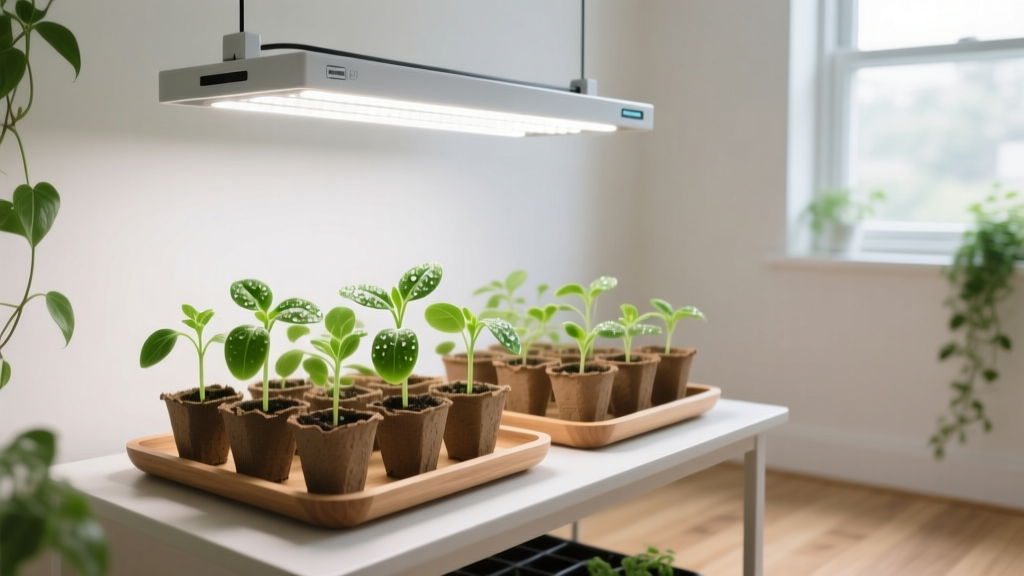
The Ultimate 2026 LED Grow Light Seed Starting Schedule
David ParkPublished
The Role of Indoor Seed Starting in Modern Foodscaping
Foodscaping—the art of seamlessly integrating edible plants into traditional ornamental landscapes—has evolved from a niche hobby into a mainstream horticultural movement in 2026. Whether you are weaving rainbow Swiss chard into your front border, planting alpine strawberries as a ground cover, or training espaliered fruit trees along a privacy fence, the success of your edible landscape relies entirely on the vigor of your transplants. To achieve a mature, visually stunning, and highly productive foodscape immediately after the last frost, mastering an indoor LED grow light schedule for seed starting is non-negotiable.
Starting seeds indoors allows foodscapers to manipulate the growing environment, ensuring that slow-growing perennials, ornamental edibles, and heirloom vegetables are robust enough to withstand outdoor variables. In 2026, advancements in full-spectrum LED technology and automated lighting schedules have made it easier than ever to cultivate professional-grade transplants right from your basement or spare room.
Understanding DLI and 2026 LED Technology
Before setting your timers, it is crucial to understand Daily Light Integral (DLI). DLI measures the total amount of photosynthetically active radiation (PAR) that a plant receives over a 24-hour period, expressed in moles of light per square meter per day (mol/m²/d). While outdoor sunlight naturally fluctuates, indoor foodscaping requires us to manually engineer the perfect DLI to prevent seedlings from becoming "leggy" or weak.
According to research from Cornell University's Controlled Environment Agriculture program, maintaining a consistent and targeted DLI is the single most important factor in producing compact, vigorous seedlings. Most edible landscape seedlings require a DLI between 12 and 15 mol/m²/d during their early stages, ramping up to 20+ mol/m²/d as they approach transplant time.
The latest 2026 quantum board LED grow lights utilize high-efficiency diodes (such as the upgraded Samsung LM301X series) that deliver uniform light penetration with minimal heat output. Paired with smart app integrations, these lights allow you to program precise sunrise and sunset dimming routines, which gently acclimate your seedlings to the natural light cycles they will experience in your outdoor foodscape.
The Ultimate 2026 LED Grow Light Schedule for Seedlings
Below is the definitive 2026 LED grow light schedule tailored specifically for edible landscaping crops. This chart assumes you are using a modern, full-spectrum quantum board LED positioned directly above standard 1020 seed trays.
| Growth Stage | Light Distance (Inches) | Photoperiod (Hours On/Off) | Target DLI (mol/m²/d) | Spectrum Focus |
|---|---|---|---|---|
| Germination (Days 1-7) | N/A (Covered/Dark) | 0 / 24 | 0 | None (Heat mat only) |
| Cotyledon Emergence (Days 8-14) | 24 - 30 | 16 / 8 | 10 - 12 | Heavy Blue (Veg Mode) |
| True Leaf Development (Days 15-30) | 18 - 24 | 16 / 8 | 14 - 16 | Full Spectrum (Balanced) |
| Pre-Transplant & Hardening (Days 31-45) | 12 - 18 | 14 / 10 | 18 - 22 | Full Spectrum + UV/Red |
Stage 1: Germination (Days 1-7)
Most edible landscape seeds, such as purple basil, kale, and ornamental peppers, do not require light to germinate. They require warmth and moisture. Keep your LED lights off and use a seedling heat mat set to 75°F–80°F. Once you see the very first hint of green pushing through the soil medium, it is time to immediately turn on the lights to prevent stretching.
Stage 2: Cotyledon Emergence (Days 8-14)
The cotyledons (seed leaves) are highly sensitive. Position your 2026 LED grow light 24 to 30 inches above the canopy. Set your timer for 16 hours on and 8 hours off. The dark period is critical; plants respire and process the energy they gathered during the day while the lights are off. Skipping the dark cycle will lead to stunted growth and nutrient lockout.
Stage 3: True Leaf Development (Days 15-30)
As the first set of "true leaves" emerges, the plant's photosynthetic engine is fully online. Lower your LED fixture to 18-24 inches. This is the stage where you should begin introducing a diluted, balanced liquid organic fertilizer (like a kelp or fish emulsion blend) at 1/4 strength to support the rapid cellular division required for lush, ornamental foliage.
Stage 4: Pre-Transplant & Hardening (Days 31-45)
Preparing your seedlings for the outdoor foodscape means simulating outdoor stress. Lower the lights to 12-18 inches to maximize intensity. If your 2026 LED model features UV or deep-red diodes, turn them on now. This triggers the production of anthocyanins and thicker cuticles, giving your edible plants that vibrant, deep coloration and structural toughness needed to survive wind and direct sun in the garden.
Top Edible Landscape Crops to Start Under LEDs
Not all plants are suited for indoor seed starting, but the following foodscaping favorites benefit immensely from a controlled LED environment:
- Rainbow Swiss Chard: A foodscaping staple. Starting indoors ensures you have massive, vibrant, multi-colored stalks ready to act as border focal points the moment the soil thaws.
- Alpine Strawberries: These slow-growing perennial groundcovers take weeks to germinate and months to reach transplant size. A strict 16-hour LED schedule is mandatory for their survival.
- Rosemary and Lavender: Woody perennial herbs are notoriously difficult to start from seed. High-intensity, low-heat LED lighting prevents the damping-off fungus that usually kills them in high-humidity outdoor spring conditions.
- Nasturtiums (Jewel Mix): While they can be direct-sown, starting these edible flowers indoors under moderate LED light yields earlier blooms, providing rapid color and pest-deterrence for your vegetable beds.
"The integration of edibles into ornamental spaces requires a shift in how we view plant maturity. We aren't just growing for yield; we are growing for immediate architectural impact in the landscape. Indoor LED starting bridges the gap between seed and landscape-ready specimen."
Avoiding Common Indoor Seed Starting Mistakes
Even with the best 2026 equipment, foodscapers can stumble if they ignore the microclimate of their seed-starting room. Avoid these common pitfalls:
- Overwatering in High-DLI Environments: Modern LEDs are incredibly efficient, but they still drive transpiration. Water your seed trays from the bottom to encourage deep root growth and keep the soil surface dry, which prevents fungal gnats and damping off.
- Ignoring Airflow: Stagnant air leads to weak stems. Place a small oscillating fan on a low setting a few feet away from your seed trays. The gentle breeze forces the seedlings to develop thicker, stronger cell walls, perfectly prepping them for the breezy conditions of your outdoor edible landscape.
- Skipping the Hardening Off Phase: Never move an indoor LED-grown seedling directly into the harsh, unfiltered UV rays of the outdoor garden. The USDA's Urban Agriculture initiatives consistently remind growers that a gradual 7-to-10-day hardening off period in dappled shade is required to prevent solar bleaching and transplant shock.
Final Thoughts for the 2026 Growing Season
Foodscaping is about breaking down the barriers between the beautiful and the delicious. By utilizing a precise, science-backed LED grow light schedule, you are doing more than just starting seeds; you are engineering the foundational building blocks of your landscape. Invest the time this winter to dial in your DLI, monitor your photoperiods, and nurture your transplants. When spring 2026 arrives, your edible landscape will burst forth with mature, vibrant, and resilient plants that are ready to feed both the eyes and the table.
