
Landscaping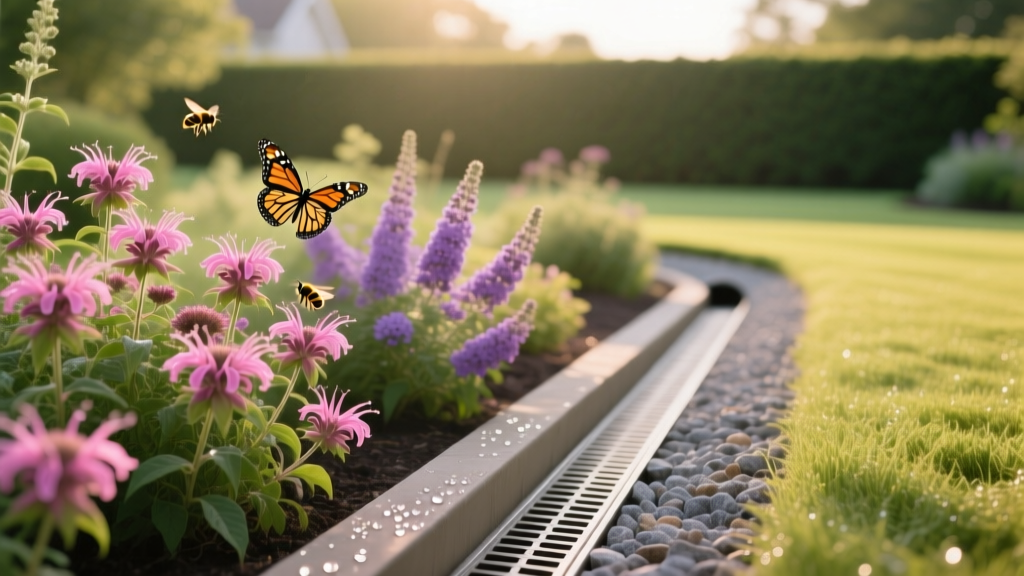
French Drain Pollinator Garden: Bee Balm & Butterfly Bush 2026
Robert HayesPublished
The Synergy of Subsurface Drainage and Pollinator Habitats
Homeowners in 2026 are increasingly looking for landscaping solutions that solve practical yard issues while supporting local ecosystems. A persistent problem in many residential properties is poor subsurface drainage, leading to waterlogged lawns, foundation risks, and muddy unusable spaces. The traditional solution is a French drain—a gravel-filled trench containing a perforated pipe that redirects groundwater away from vulnerable areas. However, the excavation and soil disruption required for French drain installation often leave homeowners with a scarred yard. Instead of simply replanting turf grass over the trench, modern landscape design encourages transforming the drainage corridor into a thriving pollinator garden.
By integrating a French drain with a pollinator-friendly planting scheme, you create a functional rain garden effect. Two of the most effective and visually striking plants for this dual-purpose setup are Bee Balm (Monarda didyma) and Butterfly Bush (Buddleja davidii). When positioned correctly relative to the drain's moisture gradient, these plants thrive, mask the drainage infrastructure, and attract vital pollinators.
2026 French Drain Installation Standards
Before selecting your plants, the French drain must be installed correctly to handle the water load without drowning your garden beds. In 2026, landscaping codes and eco-conscious practices have shifted the standard materials used in drainage systems.
Trenching and Slope Requirements
A standard French drain trench should be 12 to 18 inches wide and 18 to 24 inches deep. To ensure proper water flow, the trench must maintain a minimum slope of 1 inch per 8 feet (a 1% grade). In 2026, laser levels and smart grading apps are standard tools for DIYers and contractors alike to verify this slope before laying pipe.
Eco-Friendly Pipe and Fabric Selection
The industry has largely moved away from traditional PVC toward recycled high-density polyethylene (HDPE) corrugated pipes, which are flexible, durable, and environmentally friendly. As of 2026, a 4-inch recycled HDPE perforated pipe costs approximately $1.50 per linear foot. To protect the pipe from soil infiltration, wrap it in a non-woven geotextile fabric. Recent advancements in biodegradable, high-tensile weed barriers allow for excellent water permeability while reducing long-term plastic waste in the soil profile.
The Gravel Bed and Soil Berm
Fill the trench with 3/4-inch washed drainage gravel up to 2 inches below the surface grade. This gravel layer acts as a subterranean reservoir. The top 2 inches are filled with a mix of native topsoil and compost, creating a slightly elevated berm directly over the trench. This berm is the key to successfully planting your Butterfly Bush, while the adjacent depressions or outflow zones are perfect for Bee Balm.
Strategic Planting: Bee Balm and Butterfly Bush
The secret to a successful drainage-integrated pollinator garden lies in understanding the distinct moisture requirements of your chosen plants. A French drain creates a microclimate: the soil directly above the pipe is exceptionally well-drained, while the areas near the drain's catch basin or discharge outflow remain consistently moist.
Positioning Bee Balm (Monarda)
Bee Balm is a moisture-loving perennial that naturally thrives in the damp edges of rain gardens and drainage swales. Plant your Bee Balm near the catch basin where surface water first enters the system, or near the discharge outlet where the pipe daylighting creates a damp zone. In 2026, mildew-resistant cultivars like 'Jacob Cline' and 'Raspberry Wine' are highly recommended, as they tolerate the high humidity of wet soil zones without succumbing to powdery mildew. Bee Balm's vibrant, tubular red and pink flowers are a primary nectar source for hummingbirds, bees, and swallowtail butterflies.
Positioning Butterfly Bush (Buddleja)
Butterfly Bush, conversely, demands excellent drainage and will suffer from root rot if left in standing water. This makes it the ideal candidate for planting directly on top of the soil berm covering your French drain trench. The gravel below rapidly pulls moisture away from the root zone, mimicking the dry, rocky slopes of the plant's native habitat. When selecting a Butterfly Bush in 2026, it is critical to choose sterile, non-invasive cultivars such as the 'Miss' series (e.g., 'Miss Violet' or 'Miss Ruby'). According to the University of Minnesota Extension, utilizing sterile cultivars ensures you support local pollinators without introducing aggressive seedlings into nearby natural waterways.
Plant Profile and Placement Guide
Use the following table to guide your planting layout relative to your French drain infrastructure.
| Feature | Bee Balm (Monarda didyma) | Butterfly Bush (Buddleja sterile cultivars) |
|---|---|---|
| Moisture Preference | High (Moist to wet soil) | Low (Dry to medium, well-draining) |
| Placement Relative to Drain | Catch basin, outflow zone, or adjacent swale | Directly atop the gravel trench soil berm |
| 2026 Recommended Cultivars | 'Jacob Cline', 'Raspberry Wine' | 'Miss Violet', 'Pugster Blue' |
| Mature Height | 2 to 4 feet | 2 to 5 feet (dwarf/compact varieties) |
| Pollinator Benefits | Native bees, hummingbirds, swallowtails | Monarchs, painted ladies, fritillaries |
| Pruning Needs | Cut to ground in late fall/early spring | Hard prune in early spring after frost threat passes |
Soil Preparation and Amendment Strategies
Because your garden is integrated with a drainage system, soil structure is paramount. Avoid heavy clay amendments that could clog the geotextile fabric of your French drain. In 2026, landscape professionals heavily recommend incorporating horticultural biochar and mycorrhizal fungi into the topsoil layer. Biochar improves moisture retention in the Bee Balm zones without causing waterlogging, while mycorrhizal fungi help the Butterfly Bush establish a robust root system in the fast-draining soil berm above the gravel trench. Furthermore, the Xerces Society for Invertebrate Conservation advises against using synthetic fertilizers or broad-spectrum pesticides near rain gardens and drainage outflows, as these chemicals can easily wash into local watersheds and harm the very aquatic ecosystems your French drain ultimately feeds into.
Integrating Smart Irrigation and Maintenance
While a French drain handles excess subsurface water, newly planted pollinator gardens require consistent moisture to establish their root systems during the first growing season. In 2026, smart drip irrigation systems connected to local weather APIs are the standard for garden establishment. By laying drip lines along the Bee Balm zones and utilizing individual emitters for the Butterfly Bush berm, you can provide targeted hydration without overwhelming the drainage capacity of your French drain.
Maintenance of this integrated system is straightforward. Annually inspect the French drain's exposed outflow to ensure it is free of debris, rodent nests, or soil erosion. The geotextile fabric beneath the gravel should prevent root intrusion from your Bee Balm and Butterfly Bush, but avoiding the use of heavy, clay-based topsoils over the trench will further protect the pipe's integrity. As noted by the Environmental Protection Agency (EPA), combining green infrastructure like rain gardens and pollinator habitats with gray infrastructure like drainage pipes significantly reduces localized flooding and improves groundwater recharge.
Overwintering and Ecological Impact
As winter approaches, your drainage-integrated garden requires specific care. Leave the hollow stems of the Bee Balm standing until early spring; they provide crucial overwintering habitat for native solitary bees. For the Butterfly Bush, wait until the threat of hard frost has completely passed in the spring before performing your hard prune. This delayed pruning prevents winter moisture from traveling down the hollow stems and freezing the root crown, which is especially important for plants situated on the elevated, exposed soil berm above your French drain.
Conclusion
Merging French drain installation with a pollinator garden featuring Bee Balm and Butterfly Bush is a masterclass in modern, functional landscaping. By leveraging the moisture gradient created by your drainage system, you can cultivate a stunning, ecologically vital garden that solves water management issues while bringing vibrant life to your outdoor space in 2026 and beyond.

