Gardening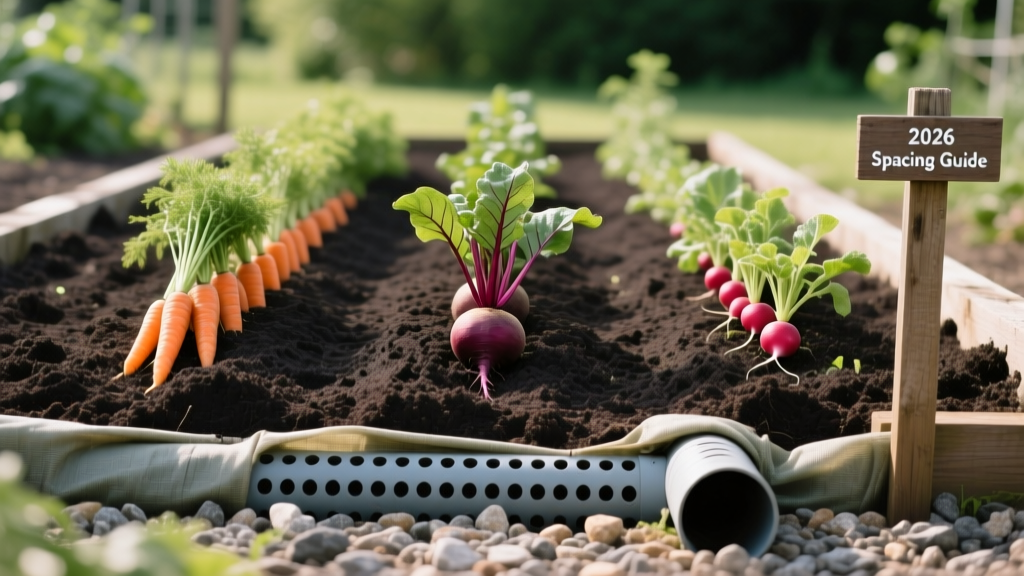
2026 French Drain Installation and Root Veg Spacing
Robert HayesPublished
The Secret to Perfect Root Vegetables: Soil Drainage
If you have ever pulled a carrot from the ground only to find it forked, stunted, or rotting, you already know the heartbreak of poor soil drainage. Root vegetables are the foundation of a productive home garden, but they are notoriously unforgiving when it comes to soil conditions. Carrots, beets, and radishes require loose, well-aerated, and exceptionally well-draining soil to develop their signature crisp textures and sweet flavors. When garden beds suffer from waterlogging or heavy clay compaction, root crops are the first to fail.
As we navigate the 2026 growing season, experienced gardeners are increasingly turning to structural landscaping solutions to fix chronic soil issues. Installing a French drain near or beneath your garden beds is one of the most effective, long-term investments you can make for your root vegetable harvest. By actively redirecting excess groundwater and surface runoff, a French drain creates the perfect moisture gradient for root development. In this comprehensive guide, we will walk you through the modern 2026 French drain installation process and provide an exact spacing guide for carrots, beets, and radishes in your newly optimized, well-drained soil.
Why Install a French Drain Near Your Garden Beds?
Root vegetables grow by pushing their taproots or swollen hypocotyls deep into the soil profile. When soil is saturated with water, the air pockets that roots need for respiration are flooded. This anaerobic environment not only stunts growth but also invites soil-borne pathogens and root rot. Furthermore, when roots encounter dense, water-compacted layers of clay, they deflect and fork, resulting in misshapen and unmarketable produce.
A French drain solves this by providing a path of least resistance for water. By digging a strategically sloped trench, lining it with modern geotextile fabrics, and filling it with gravel or lightweight aggregate, you lower the local water table. This ensures that even during heavy spring rains, your garden beds remain friable and well-oxygenated. The result? Straighter carrots, larger beets, and crisper radishes.
2026 French Drain Installation Steps for Gardeners
Installing a French drain is a weekend project that yields decades of benefits. Modern materials available in 2026, such as lightweight recycled aggregate alternatives and advanced non-woven geotextiles, make the process easier and less labor-intensive than traditional gravel-only methods.
Materials and Tools Needed
- Trenching Shovel and Line Level: For precise digging and slope calculation.
- Perforated Corrugated Drain Pipe: Flexible 4-inch pipe (or modern NDS EZ-Flow systems that integrate the pipe and aggregate into one lightweight tube).
- Non-Woven Geotextile Fabric: Essential for preventing soil from clogging the drain over time.
- Washed Drainage Gravel: 3/4-inch crushed stone (avoid pea gravel, as it does not lock together well).
- Smart Soil Moisture Sensors: A popular 2026 addition to monitor the effectiveness of your new drainage system in real-time.
Step 1: Planning the Route and Slope
Your French drain should intercept water before it pools in your garden beds. Map out a trench line that runs parallel to your beds, positioned slightly uphill from the planting zone. The trench must have a consistent downward slope of at least 1 inch per 8 feet to ensure gravity moves the water away from your crops and toward a safe discharge area, such as a dry well, storm drain, or lower-elevation swale.
Step 2: Digging the Trench
Dig a trench approximately 12 to 18 inches wide and 18 to 24 inches deep. For garden beds with deep-rooting crops like parsnips or long carrots, deeper is better. Use your line level to verify the 1/8-inch per foot slope continuously as you dig.
Step 3: Lining and Pipe Placement
Line the trench with your non-woven geotextile fabric, leaving enough overhang on both sides to wrap over the top of the gravel later. This fabric barrier is critical; without it, fine silt and clay will infiltrate the pipe and render the system useless within a few seasons. Lay the perforated pipe at the bottom of the trench with the holes facing downward. This counterintuitive placement actually improves water entry and prevents sediment from washing directly into the pipe holes.
Step 4: Backfilling and Capping
Cover the pipe with 2 to 3 inches of washed gravel. Then, fold the excess geotextile fabric over the gravel to create a buried bundle. Finish by backfilling the remaining trench space with native soil or high-quality topsoil, mounding it slightly to account for natural settling over the first few months.
Preparing Your Drained Soil for Root Crops
Once your French drain is operational and the soil has dried to a workable moisture level, it is time to prepare the seedbed. Root vegetables thrive in sandy loam. If your native soil is still heavy, incorporate generous amounts of finished compost and coarse horticultural sand. Avoid adding fresh manure or high-nitrogen fertilizers, as excess nitrogen causes root crops to produce lush green tops at the expense of the edible roots, and can also cause carrots to develop hairy, fibrous side roots.
Root Vegetable Spacing Guide for Well-Drained Soil
With your drainage issues solved, proper spacing becomes the primary factor in your harvest's success. Overcrowding leads to competition for nutrients and stunted, undersized roots. Here is the precise spacing guide for the big three root crops, backed by leading horticultural research.
Carrots
Carrots require the finest, most rock-free seedbed. According to the University of Minnesota Extension, carrots should be sown 1/4 to 1/2 inch deep. Because carrot seeds are tiny, they are notoriously difficult to space evenly. In 2026, many home gardeners are switching to pelleted carrot seeds or pre-seeded biodegradable seed tapes to eliminate the need for tedious thinning. If sowing loose seeds, aim for 2 to 3 inches between plants, with rows spaced 12 to 18 inches apart. Thinning is mandatory once seedlings reach 2 inches tall; snip the excess seedlings at the soil line with scissors to avoid disturbing the delicate roots of the remaining plants.
Beets
Beets are unique because each wrinkled seedball actually contains multiple true seeds. This means that even if you carefully space your seedballs, you will still end up with clusters of seedlings that require thinning. The University of Minnesota Extension's beet guide recommends planting seedballs 1/2 inch deep, spaced 3 to 4 inches apart in rows 12 to 18 inches apart. When the seedlings are 3 to 4 inches tall, thin them so that the strongest plant remains every 4 inches. The thinned beet greens are highly nutritious and make an excellent addition to spring salads.
Radishes
Radishes are the speedsters of the root vegetable world, often ready for harvest in as little as 25 to 30 days. Because they grow so quickly, they are an excellent crop to plant in the freshly turned, well-drained soil directly above or adjacent to your new French drain line. Following the radish cultivation guidelines, sow seeds 1/2 inch deep, spaced 1 to 2 inches apart, with rows 12 inches apart. Radishes do not tolerate overcrowding; if they are too close together, they will produce abundant foliage but fail to form the swollen, edible taproot.
Spacing and Depth Comparison Table
Use this quick-reference chart to plan your 2026 garden layout. Proper spacing ensures adequate airflow, reduces fungal disease pressure, and maximizes the benefits of your newly installed drainage system.
| Crop | Seed Depth | Plant Spacing | Row Spacing | Days to Maturity |
|---|---|---|---|---|
| Carrots | 1/4 to 1/2 inch | 2 to 3 inches | 12 to 18 inches | 60 to 80 days |
| Beets | 1/2 inch | 3 to 4 inches | 12 to 18 inches | 50 to 70 days |
| Radishes | 1/2 inch | 1 to 2 inches | 12 inches | 25 to 30 days |
Thinning Techniques and Maintenance
Thinning is the most skipped step by novice gardeners, yet it is the most critical for root development. When you pull a seedling from the ground, the friction can damage the microscopic root hairs of the neighboring plant you intend to keep. To prevent this, always thin root vegetables when the soil is moist, either after a light rain or a gentle watering session. Use a pair of sharp micro-snips or scissors to cut the unwanted seedlings off right at the soil surface. This leaves the roots of the remaining plants completely undisturbed.
Maintaining your French drain is equally important. Once a year, preferably in late autumn after the harvest, check the discharge outlet of your drain to ensure it is free of debris, leaves, and rodent nests. If your system includes a catch basin, clean out the sediment trap to maintain optimal water flow.
Conclusion
Combining structural landscaping with precise horticultural techniques is the hallmark of a modern, productive garden. By installing a French drain, you eliminate the hidden underground barriers that cause root crops to fail. Pair this exceptional drainage with the exact 2026 spacing guidelines for carrots, beets, and radishes, and you will be rewarded with a bountiful harvest of perfectly formed, crisp, and sweet root vegetables season after season.
