Gardening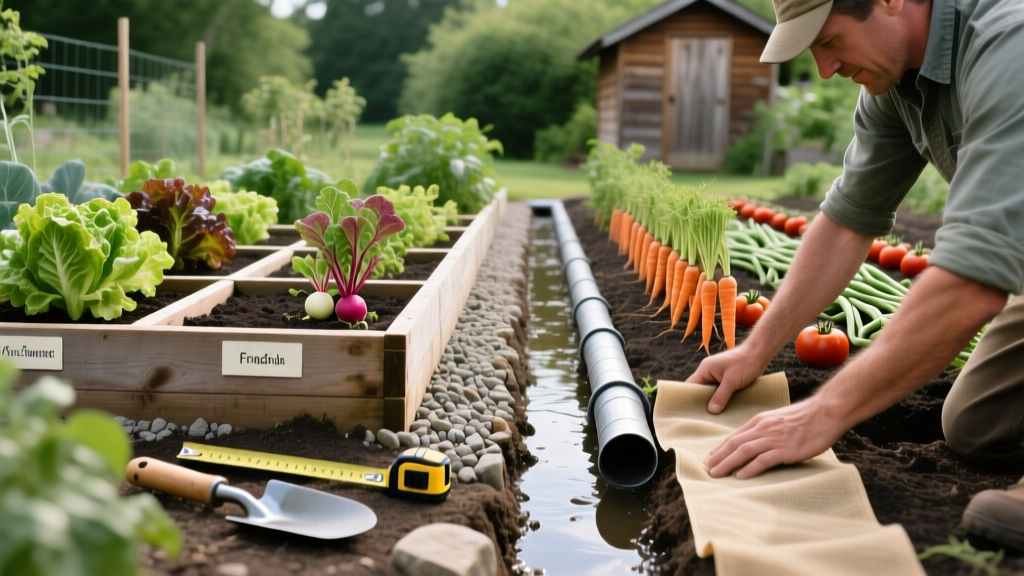
French Drains For Vegetable Gardens: Row vs Square Foot 2026
Sarah ChenPublished
Managing Garden Hydrology: French Drains for Vegetable Layouts in 2026
As we navigate the 2026 growing season, extreme weather patterns and heavier spring downpours have made proper garden hydrology more critical than ever. When planning your vegetable garden layout, the decision between the square foot vs row planting method is usually framed around space efficiency and crop yield. However, from a drainage and infrastructure perspective, these two layouts interact with water in fundamentally different ways. Poor water management can lead to root rot, soil erosion, and devastating fungal diseases.
Installing a French drain is one of the most effective ways to protect your harvest, but the placement, depth, and design of the drain must be tailored to your specific garden layout. According to the Environmental Protection Agency (EPA), managing soil moisture and preventing surface water runoff are vital components of sustainable land management. In this guide, we will explore how to approach French drain installation based on whether you are utilizing traditional row planting or the intensive square foot gardening method.
The Row Planting Method: Surface Runoff and Trench Drains
Traditional row planting is the most common agricultural layout, characterized by long, linear mounds or furrows spaced apart to allow for walking and machinery. While this method is excellent for large-scale crops like corn, potatoes, and winter squash, it creates distinct water channels.
The Hydrology of Rows
In a row-planted garden, the furrows between the mounds act as miniature aqueducts during heavy rains. If your garden is situated on even a slight slope, water will accelerate down these furrows, gaining enough velocity to strip away your nutrient-rich topsoil and expose shallow root systems. Conversely, if your garden is flat and features heavy clay soil, these same furrows will hold stagnant water, drowning your crops and creating a breeding ground for phytophthora and other waterborne pathogens.
French Drain Placement for Row Gardens
For row-planted gardens, the French drain must act as an interceptor. You should install a main French drain trench perpendicular to your rows at the lowest point of the garden's elevation. This "collector trench" will catch the runoff exiting the furrows before it can erode your property or flood adjacent landscaping. Additionally, if your soil percolation rate is exceptionally slow, you may need to install lateral branch drains that run parallel to your rows, buried deeply enough (usually 18 to 24 inches) to sit below the primary root zone of your vegetables.
Square Foot Gardening: Raised Beds and Perimeter Drainage
Square foot gardening (SFG) revolutionized home growing by utilizing raised beds divided into one-foot grid squares. This method maximizes yield in small spaces and relies heavily on a specialized soil blend (typically equal parts compost, peat moss or coco coir, and coarse vermiculite) that promotes rapid drainage. According to the United States Department of Agriculture (USDA), maintaining optimal soil structure and preventing compaction are key to long-term agricultural health, which SFG naturally addresses through its raised bed design.
The Hydrology of Square Foot Beds
Because square foot beds are elevated and filled with highly porous media, the beds themselves rarely suffer from internal waterlogging. The problem, however, shifts to the surrounding environment. During a severe 2026 storm event, the rapid drainage from a 4x8-foot raised bed can dump hundreds of gallons of water directly into the pathways and the native soil beneath the bed. This can cause the pathways to turn into muddy swamps, undermine the structural integrity of the wooden or composite bed walls, and create hydrostatic pressure that pushes moisture back up into the bed's base.
French Drain Placement for SFG Layouts
For square foot gardens, a perimeter French drain is the gold standard. Instead of cutting through the growing space, you will dig a continuous trench around the entire exterior footprint of your raised bed array. This trench should be positioned roughly 12 inches away from the bed walls. By lining this perimeter trench with a perforated pipe and washed gravel, you create a moat that instantly captures the aggressive runoff shedding from the raised beds, channeling it safely away from your garden zone to a storm drain, dry well, or lower-elevation discharge point.
Step-by-Step French Drain Installation for Vegetable Layouts
Whether you are protecting row crops or square foot beds, the core installation principles remain the same. Here is the modern, 2026-standard approach to installing a high-capacity French drain.
- Site Assessment and Grading: Use a laser level or a string line to determine the exact slope of your garden. Your French drain trench requires a minimum slope of 1 inch per 8 feet of run to ensure gravity moves the water efficiently.
- Trench Excavation: For row interceptor drains, dig a trench 12 inches wide and 18 inches deep. For square foot perimeter drains, a slightly shallower trench (10 inches wide, 12 inches deep) is often sufficient, as you are primarily catching surface and shallow subsurface runoff.
- Landscape Fabric Lining: Line the trench with a heavy-duty, non-woven geotextile fabric (minimum 4 oz per square yard). Do not use woven weed barrier, as it will clog with silt over time. Leave enough excess fabric on the sides to wrap over the top of the gravel later.
- Pipe Selection and Placement: In 2026, rigid PVC with pre-drilled holes or high-density polyethylene (HDPE) corrugated pipes wrapped in a geotextile sock are the industry standards. Place the pipe at the bottom of the trench with the holes facing downward. This counter-intuitive placement allows water to rise through the gravel and enter the pipe at the lowest possible point, preventing sediment from washing directly into the holes.
- Gravel Backfill: Cover the pipe with 2 to 3 inches of washed, 3/4-inch drainage gravel. Avoid crushed limestone, which can alter the pH of your nearby vegetable soil over time; opt for washed river rock or granite.
- Wrapping and Topsoil: Fold the excess landscape fabric over the gravel to create a "burrito" effect, preventing topsoil from migrating down into the drainage rock. Finish by covering the bundle with 2 to 3 inches of topsoil or pathway mulch to blend the drain seamlessly into your garden layout.
Comparison Chart: Row vs. Square Foot Drainage Needs
Understanding the distinct requirements of your chosen vegetable garden layout will save you time and money during the installation phase. Review the 2026 comparison chart below to identify your specific drainage needs.
| Feature | Row Planting Method | Square Foot Gardening Method |
|---|---|---|
| Primary Water Issue | Furrow erosion and deep soil saturation | Pathway flooding and bed base hydrostatic pressure |
| Drain Placement | Interceptor trench at slope base; lateral branches | Continuous perimeter trench around raised beds |
| Trench Depth | 18 to 24 inches (below deep root zones) | 10 to 12 inches (catching rapid surface shed) |
| Best Pipe Type | Rigid Schedule 40 PVC (handles soil shifting) | Flexible corrugated HDPE (easily curves around beds) |
| Estimated 2026 Cost | $15 - $25 per linear foot (deep excavation) | $10 - $18 per linear foot (shallow perimeter) |
2026 Material Costs and Sourcing
Supply chain stabilization in the landscaping sector has kept material costs relatively predictable for the 2026 season. When sourcing materials for your French drain, avoid big-box store "drainage kits" for large vegetable gardens; these are typically designed for small residential downspouts and lack the volume capacity needed for agricultural runoff.
Instead, visit local landscape supply yards. A 100-foot roll of 4-inch corrugated HDPE drain pipe with a pre-attached geotextile sock currently averages $85 to $110. Washed 3/4-inch drainage gravel is typically priced between $45 and $65 per ton, depending on your regional quarry proximity. High-quality non-woven geotextile fabric (a 3x50 foot roll) will cost approximately $75. Factoring in manual labor, a DIY perimeter drain for a standard 4x8 square foot garden bed can be completed for under $150, while a comprehensive interceptor system for a large row-plotted market garden may require a budget of $500 to $800 for materials alone.
Final Thoughts on Garden Layouts and Drainage
Ultimately, the choice between the square foot vs row planting method should be dictated by your available space, physical mobility, and crop selection. However, neither layout is immune to the realities of heavy rainfall. By viewing your garden through the lens of water management and installing a properly graded French drain tailored to your specific layout, you ensure that your soil remains oxygenated, your roots stay healthy, and your 2026 harvest is protected from the unpredictable elements.
