
Landscaping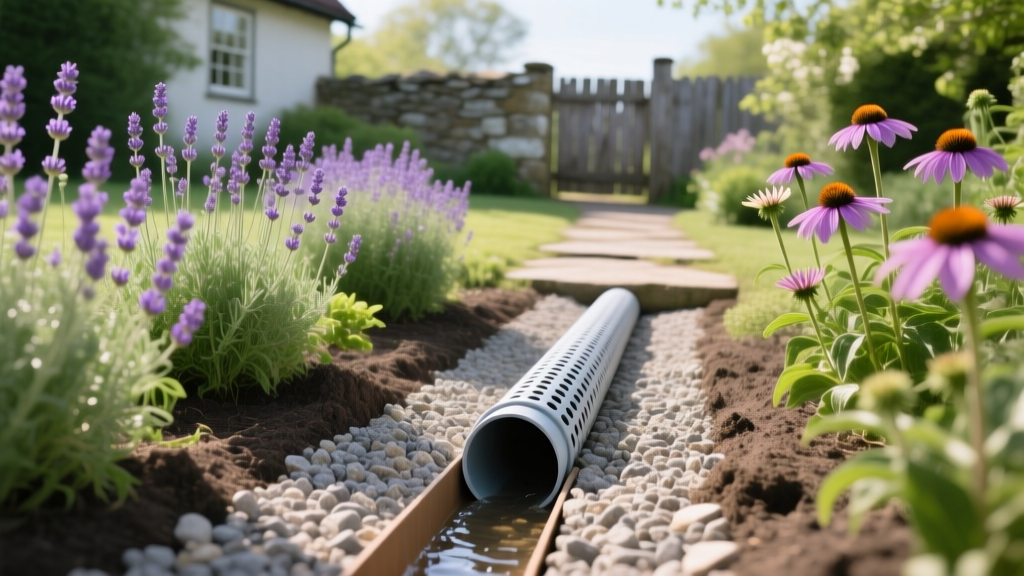
French Drain Installation for Lavender Cottage Borders 2026
Sarah ChenPublished
The Cottage Garden Dilemma: Beauty vs. Bog
The quintessential cottage garden is a romantic, overflowing tapestry of color, texture, and fragrance. In 2026, the most sought-after landscape designs heavily feature structured yet wild-looking borders anchored by the silvery foliage of lavender (Lavandula angustifolia) and the vibrant, daisy-like blooms of purple coneflowers (Echinacea purpurea). However, achieving this lush, pastoral aesthetic hides a severe horticultural challenge: drainage. While cottage gardens are designed to look effortlessly natural, the soil conditions required for these specific perennials are anything but forgiving. If you are dealing with heavy clay soil or a yard with poor percolation, your dream border can quickly turn into a graveyard for expensive root balls. This is where strategic French drain installation becomes the most critical, albeit hidden, component of your 2026 landscape design.
Why Lavender and Coneflowers Demand Subsurface Drainage
To understand why a French drain is non-negotiable for this specific plant palette, we must look at the botanical origins and soil science of these perennials. Lavender is native to the rocky, arid, and well-draining slopes of the Mediterranean. According to the Royal Horticultural Society (RHS), lavender is highly susceptible to root rot and fungal diseases if its roots sit in waterlogged soil, particularly during the freezing and thawing cycles of late winter and early spring. It requires sharp drainage and thrives in slightly alkaline, gritty conditions.
Coneflowers, while native to North American prairies and slightly more adaptable, still demand well-drained soil to establish deep taproots. The University of Minnesota Extension notes that while Echinacea is drought-tolerant once established, poor drainage in heavy clay soils will suffocate the root system, leading to stunted growth and crown rot. In 2026, with climate models indicating more intense, concentrated spring downpours in many temperate zones, relying solely on surface grading is no longer sufficient. Subsurface water management via a French drain is the only way to guarantee the longevity of your cottage garden borders.
Planning Your French Drain Layout for Garden Borders
Integrating a drainage system into a delicate cottage garden design requires careful planning. You cannot simply dig a trench through the middle of your planned perennial bed. Instead, the French drain must be routed along the back edge of the border (near the fence line or foundation) or along the lowest topographical point of the garden bed, acting as an interceptor for groundwater before it reaches the root zones of your lavender and coneflowers.
Calculating the Slope and Trench Dimensions
A French drain relies entirely on gravity. For a garden border application, a trench width of 12 inches and a depth of 18 inches is standard. This depth ensures the perforated pipe sits below the primary root mass of both lavender (which roots shallowly but wide) and coneflowers (which send down deep taproots). The trench must maintain a minimum slope of 1% (a 1-inch drop for every 8 feet of pipe) to ensure adequate water flow. The USDA Natural Resources Conservation Service (NRCS) emphasizes that proper slope calculation and outlet placement are the most common failure points in residential drainage systems.
Step-by-Step French Drain Installation (2026 Best Practices)
Modern landscaping materials have evolved, and the 2026 standard for French drain installation prioritizes long-term clog prevention and soil health. Follow these steps to install a drain that will protect your cottage border for decades.
Step 1: Excavation and Base Preparation
Dig your 12-inch wide by 18-inch deep trench along the planned perimeter. Use a laser level or a string line to verify your 1% slope toward your designated daylight point or dry well. Tamp the soil at the bottom of the trench to create a firm, undisturbed base.
Step 2: Lining with Advanced Geotextiles
Line the trench with a high-quality, non-woven geotextile landscape fabric. In 2026, professionals recommend fabrics with a flow rate that balances water permeability with fine-particle filtration. Leave at least 12 inches of excess fabric draped over the sides of the trench; you will use this to wrap the gravel later. This step is crucial to prevent clay particles from migrating into the gravel and clogging the pipe.
Step 3: Adding the Base Gravel and Pipe
Add a 2-inch layer of 3/4-inch washed, angular gravel to the bottom of the trench. Place a 4-inch SDR 35 rigid PVC pipe (perforated) or a high-density corrugated pipe with a pre-attached sock filter on top of the gravel. Ensure the perforations are facing downward. This allows water rising from the water table to enter the pipe from the bottom, reducing sediment buildup inside the tube.
Step 4: Backfilling and Wrapping
Cover the pipe with another 6 to 8 inches of washed gravel. Fold the excess landscape fabric over the top of the gravel, creating a complete "burrito" wrap. This encapsulation ensures that no surrounding soil can mix with the drainage aggregate. Finally, backfill the remaining 4 to 6 inches of the trench with native topsoil or a sandy loam mix to prepare for planting.
Material Cost & Comparison Table (2026 Pricing)
Budgeting for hardscape and drainage infrastructure is a vital part of landscape planning. Below is an estimated cost breakdown for a standard 50-foot French drain installation tailored for a garden border, based on 2026 national average material costs.
| Material | 2026 Estimated Cost (50 ft) | Purpose in Cottage Border |
|---|---|---|
| Non-Woven Geotextile Fabric | $85.00 | Prevents clay soil from clogging the gravel bed |
| 4-inch SDR 35 Perforated PVC | $110.00 | Core water transport; resists crushing under soil |
| 3/4-inch Washed Angular Gravel | $140.00 | Creates void space for rapid water percolation |
| Landscape Edging & Stakes | $65.00 | Separates the drain zone from the mulch/plant zone |
| Sandy Loam Backfill Soil | $50.00 | Provides a well-draining planting medium for lavender |
| Total Material Cost | $450.00 | Excludes labor and heavy machinery rental |
Designing the Border: Integrating Flora and Drainage
Once the French drain is installed and backfilled, the true art of the cottage garden design begins. The soil directly above a French drain is inherently drier and better-draining than the surrounding yard, making it the absolute perfect microclimate for Mediterranean herbs.
Strategic Planting Layout
- The Crest (Directly above the drain): Plant your lavender (Lavandula angustifolia 'Hidcote' or 'Munstead') directly over the buried drain line. The gravel below will act as a thermal mass, warming the roots in the spring and wicking away deadly winter moisture.
- The Mid-Slope: Transition into purple coneflowers (Echinacea purpurea). Their deep taproots will help stabilize the soil above the trench without penetrating the geotextile barrier.
- The Accents: Intersperse with drought-tolerant cottage companions like Russian Sage (Perovskia atriplicifolia), Yarrow (Achillea millefolium), and ornamental grasses like Festuca glauca to soften the edges and hide the transition lines of the soil.
Concealing the Drain Exit
A French drain must "daylight" or empty somewhere. In a formal lawn, this is an eyesore. In a cottage garden, you can turn the drain exit into a focal point by designing a dry creek bed. Use varying sizes of river rock, boulders, and moisture-loving marginal plants like Astilbe or Ferns at the termination point. This not only hides the PVC outlet but also creates a naturalistic feature that perfectly complements the wild, romantic ethos of the cottage garden style.
Final Thoughts on 2026 Landscape Sustainability
Installing a French drain before planting your lavender and coneflower borders is an investment in the longevity and sustainability of your landscape. By proactively managing subsurface water, you reduce the need for chemical fungal treatments, prevent the waste of replacing dead perennials annually, and create a thriving, resilient ecosystem. The most beautiful cottage gardens of 2026 are not just defined by what grows above the soil, but by the invisible, engineered foundations that allow those blooms to flourish season after season.

