
Landscaping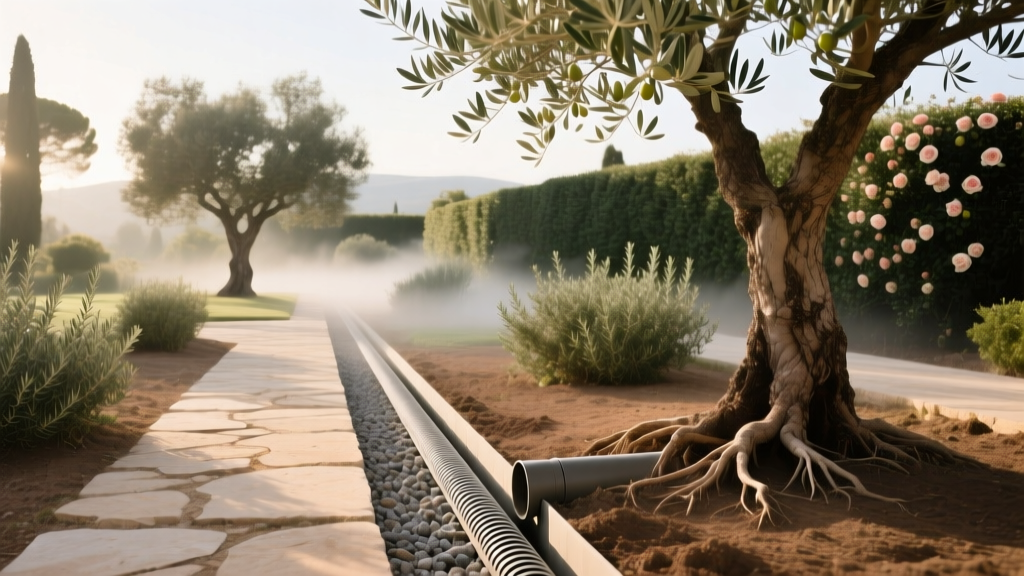
French Drain Install for Mediterranean Olive & Rosemary Gardens 2026
Sarah ChenPublished
The Challenge of Drainage in Mediterranean Landscapes
Mediterranean landscapes have surged in popularity through 2026, driven by a global push toward drought-tolerant, sustainable, and low-water gardening. Homeowners are increasingly replacing thirsty turfgrass with elegant olive trees (Olea europaea), fragrant rosemary hedging (Salvia rosmarinus), and sweeping hardscapes. However, a common misconception is that because these plants are drought-tolerant, they do not require careful water management. In reality, poor drainage is the number one killer of Mediterranean plants in residential settings. According to the Royal Horticultural Society (RHS), waterlogging deprives roots of oxygen, leading to rapid root rot, a fatal condition for plants evolved in arid, well-draining soils. When heavy winter rains or overzealous irrigation systems inundate a yard, installing a French drain becomes a critical intervention. But how do you excavate and install a subsurface drainage system without destroying the delicate, sprawling root networks of your prized olive trees and rosemary hedges?
Understanding Root Architecture: Olives and Rosemary
Before breaking ground in 2026, it is vital to understand what lies beneath the soil. Olive trees are renowned for their resilience, but their root systems are surprisingly shallow and widespread. The UC Davis Arboretum notes that the majority of an olive tree’s active, water-absorbing roots reside in the top 18 to 24 inches of soil, extending well beyond the drip line. Severing these lateral roots with a traditional trencher can shock the tree, stunt its growth, and invite fungal pathogens.
Rosemary hedging presents a similar challenge. While rosemary is a woody perennial that thrives in rocky, alkaline soils, its fibrous root system is highly susceptible to "wet feet." If a rosemary hedge sits in a depression where water pools, the lower branches will quickly succumb to powdery mildew and root asphyxiation. Therefore, a French drain designed for a Mediterranean garden must be routed strategically to intercept water before it reaches the root zones, utilizing modern, low-impact excavation techniques.
Step-by-Step French Drain Installation for Mediterranean Yards
1. Mapping the Root Zones and Water Flow
The first step in 2026 is utilizing smart topography mapping. Using LiDAR-equipped drones or advanced laser levels, map the exact grade of your yard. Identify the low points where water accumulates after a storm. Next, map the drip lines of your olive trees and the outer edges of your rosemary hedges. Your French drain trench must maintain a minimum distance of 3 feet from the trunk of an established olive tree and at least 18 inches from the base of a mature rosemary hedge. The goal is to create a "curtain drain" that intercepts subsurface water flowing toward the plants.
2. Low-Impact Trenching with Air Spades
In the past, landscapers used mechanical trenchers that violently chewed through soil and roots alike. Today, working near heritage olives or expensive mature rosemary hedges requires precision. We recommend using a pneumatic air spade. An air spade uses compressed air to fracture and blow away compacted soil without cutting or tearing the delicate root bark. Dig a trench that is 12 inches wide and 18 to 24 inches deep. Ensure the trench maintains a consistent downward slope of at least 1% (a 1-inch drop for every 8 feet of pipe) toward your designated discharge area, such as a dry well, a municipal storm drain, or a lower-elevation rain garden. The University of Minnesota Extension emphasizes that proper grading and slope are the most critical factors in ensuring a French drain functions effectively over the long term.
3. Selecting the Right Pipe and Geotextiles
For a Mediterranean landscape, standard corrugated pipe can sometimes collapse under the weight of heavy stonework or decomposed granite pathways. In 2026, the industry standard for high-end landscaping is rigid PVC pipe with slotted perforations (Schedule 40 or SDR 35). Line the trench with a high-quality, non-woven geotextile fabric. Avoid woven weed barriers, as they clog easily with fine silt. The non-woven fabric acts as a filter, allowing water to enter the pipe while keeping the surrounding clay or loam from washing in and clogging the aggregate.
4. Choosing the Aggregate: Aesthetics Meet Function
The gravel you choose serves two purposes: structural support for the pipe and aesthetic integration with your Mediterranean design.
- Base Layer: Place 2 inches of washed, angular 3/4-inch crushed rock at the bottom of the trench.
- Pipe Placement: Lay the perforated PVC pipe with the holes facing down. This allows water to wick up into the pipe from the saturated bottom of the trench, preventing sediment from settling inside.
- Cover Layer: Cover the pipe with another 4 to 6 inches of washed crushed rock.
- The Cap: Fold the excess geotextile fabric over the rock to create a "burrito" wrap.
- Top Dressing: To blend the drain into your Mediterranean landscape, cap the trench with 2 inches of stabilized decomposed granite (DG) or localized native soil. DG is a hallmark of Mediterranean design, providing a natural, rustic look that matches perfectly with olive tree trunks and rosemary foliage.
Material Comparison: Traditional vs. 2026 Eco-Drain Systems
To help you plan your budget and material sourcing, here is a comparison of traditional French drain materials versus the advanced eco-friendly systems trending in 2026.
| Material Component | Traditional Approach | 2026 Mediterranean Eco-Drain Approach | Estimated Cost (Per Linear Foot) |
|---|---|---|---|
| Pipe | Flexible Corrugated Slotted Pipe | Rigid SDR 35 PVC with Soil-Tight Perforations | $2.50 - $4.00 |
| Filter Fabric | Woven Polypropylene Weed Barrier | Non-Woven Polypropylene Geotextile (4 oz/yd²) | $0.80 - $1.20 |
| Aggregate | Round River Rock | Angular 3/4" Crushed Basalt or Limestone | $1.50 - $2.50 |
| Top Dressing | Sod or Mulch | Stabilized Decomposed Granite (DG) | $2.00 - $3.50 |
| Monitoring | Visual Inspection | Inline Smart Moisture & Flow Sensors | $150 - $250 (Flat Fee) |
| Total Estimated Cost | $15 - $25 / ft | $35 - $55 / ft |
Integrating Smart Technology for 2026
A major advancement in 2026 landscape management is the integration of IoT (Internet of Things) sensors into subsurface drainage. Because Mediterranean plants are highly sensitive to overwatering, guessing when your soil is saturated is no longer necessary. By installing a wireless soil moisture sensor probe adjacent to the French drain trench near your rosemary hedge, you can connect the data to your smart irrigation controller (such as the latest Rachio or Hydrawise models). These modern systems communicate via Wi-Fi or LoRaWAN networks and integrate directly with local weather forecasting APIs. If the sensor detects that the soil moisture has reached a critical saturation point, or if it detects standing water in the dry well, it will send an immediate alert to your smartphone. This proactive monitoring ensures your olive trees and rosemary never sit in waterlogged soil, preserving the health and longevity of your investment while allowing you to clear debris from drain grates before a predicted heavy winter storm hits.
Aesthetic Integration: Hiding the Drain in Plain Sight
The hallmark of a masterful Mediterranean landscape is that functional elements are disguised as natural features. A French drain outlet does not have to be an ugly plastic pipe sticking out of a hillside. Consider these design-forward integration techniques:
- Dry Creek Beds: Route the final 5 to 10 feet of your drain above ground using large, angular boulders and cobblestones to mimic a dry arroyo or wadi, a common and beautiful feature in North African and Southern European landscapes.
- Boulder Outcroppings and Scuppers: Hide the discharge point behind a strategic placement of moss rock or sandstone boulders. You can use terracotta scuppers or faux stone weep holes to disguise the actual pipe exits, making the water appear as though it is naturally weeping from a stone wall. Surround these areas with creeping thyme or trailing rosemary to soften the hardscape.
- Rain Gardens: Direct the water into a shallow depression planted with moisture-tolerant Mediterranean natives like Cistus (Rock Rose) or Lavandula stoechas (Spanish Lavender). These plants can handle periodic winter inundation but thrive in summer drought, bridging the gap between drainage necessity and botanical beauty.
Conclusion
Installing a French drain in a Mediterranean landscape requires a delicate balance of hydrology, horticulture, and design. By respecting the shallow root systems of olive trees and rosemary hedges, utilizing low-impact air spade trenching, and capping your drain with authentic decomposed granite, you can protect your plants from root rot while maintaining the rustic elegance of your outdoor space. As we move through 2026, combining time-tested drainage principles with smart soil monitoring ensures your Mediterranean oasis remains vibrant, healthy, and beautifully dry where it needs to be. Whether you are retrofitting an existing garden or planning a new installation, prioritizing root health and aesthetic continuity will guarantee a landscape that thrives for decades.

