Gardening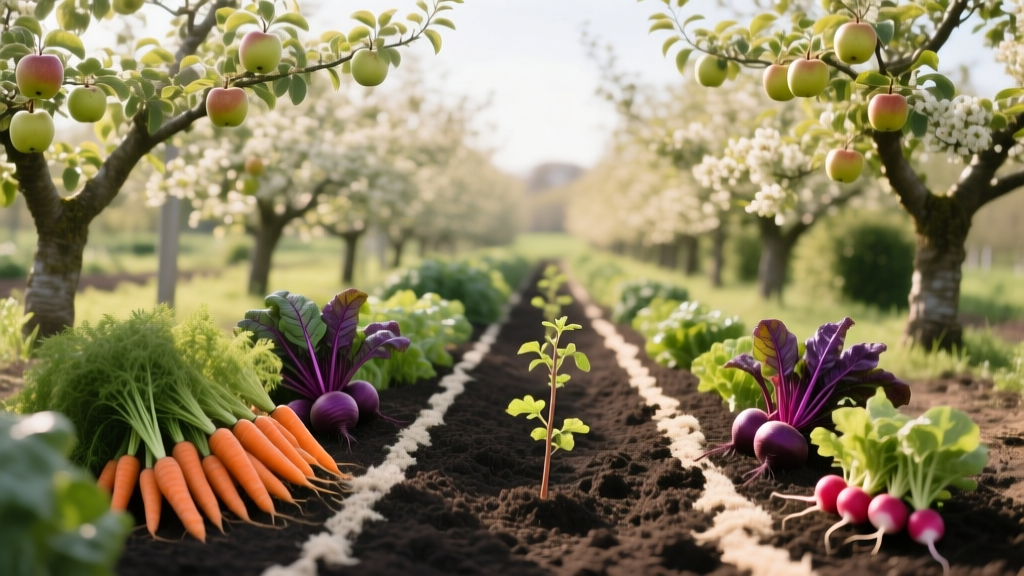
Fruit Tree Understory: Root Veggie Spacing Guide 2026
Sarah ChenPublished
Designing the 2026 Orchard Understory
As we navigate the 2026 growing season, the concept of the "food forest" has transitioned from a niche permaculture theory to a mainstream gardening standard. Homeowners and small-scale growers are no longer satisfied with isolated fruit trees surrounded by barren mulch rings. Instead, the modern home orchard is a layered, productive ecosystem. One of the most effective ways to maximize your garden's spatial efficiency is by integrating root vegetables into the understory of your fruit trees. However, successfully growing carrots, beets, and radishes beneath a tree canopy requires a deep understanding of both tree selection and precise vegetable spacing.
According to the USDA's National Agroforestry Center, integrating herbaceous crops with tree canopies—often referred to as alley cropping or forest farming—can significantly improve soil health and maximize land yield. But to achieve this without stunting your tree's growth or choking your vegetables, you must master the art of spacing and root-zone management.
Aligning Tree Selection with Root Crop Needs
Before you plant a single carrot seed, you must evaluate your tree selection. Not all fruit trees are suitable for understory planting. The root architecture and canopy density of your chosen tree will dictate which vegetables can thrive below.
- Dwarf and Semi-Dwarf Rootstocks: Trees grafted onto dwarfing rootstocks (such as the M.9 or Budagovsky 9 for apples) have smaller, less aggressive surface root systems. This leaves more physical space and soil nutrients for root vegetables.
- Canopy Density and Pruning: Stone fruits like peaches and cherries often require heavy annual pruning, which allows dappled sunlight to reach the soil floor. This dappled light is ideal for cool-season root crops that bolt in intense, direct summer heat.
- Allelopathic Considerations: Avoid planting root vegetables directly beneath black walnut trees, as they secrete juglone, a compound that is highly toxic to carrots, beets, and radishes. Stick to pome fruits (apples, pears) and most stone fruits for safe companion planting.
Soil Preparation in the Tree Drip Line
The most critical mistake gardeners make when planting vegetables around trees is deep tilling. A tree's most active feeder roots and its vital mycorrhizal fungal networks are located in the top 6 to 12 inches of soil. Rototilling this area to prepare a carrot bed will severely damage the tree and invite soil-borne pathogens.
Instead, utilize a broadfork to gently aerate the soil without turning it. Apply a 2-inch layer of finished compost over the planting area. For heavy clay soils common in many 2026 suburban developments, consider building shallow, no-dig raised beds (roughly 8 to 10 inches high) over the tree's drip line to give root vegetables the loose depth they require without disturbing the tree's primary root flare.
Master Root Vegetable Spacing Chart
Proper spacing is non-negotiable in an understory environment where water and nutrients are already being shared with a mature tree. The following chart outlines the precise spacing requirements for 2026's most popular root crops when planted in an orchard setting.
| Crop | Seed Depth | In-Row Spacing | Row Spacing | Shade Tolerance | Days to Maturity |
|---|---|---|---|---|---|
| Carrots | 1/4 inch | 2-3 inches | 12-18 inches | Moderate | 70-80 |
| Beets | 1/2 inch | 3-4 inches | 12-18 inches | Moderate-High | 55-70 |
| Radishes | 1/2 inch | 1-2 inches | 8-12 inches | Low-Moderate | 25-35 |
Carrots: Navigating Tree Roots and Soil Compaction
Carrots are notoriously fussy about soil texture. If they encounter a tree root or a compacted layer of soil, they will fork, twist, and stunt. As noted by the University of Minnesota Extension, carrots require loose, stone-free soil to develop properly. In an orchard setting, this means you must plant your carrots further out toward the edge of the tree's drip line where the tree's structural roots are less dense.
Spacing Strategy: Sow carrot seeds 1/4 inch deep and 2 inches apart. Because carrot seeds are tiny and difficult to space evenly by hand, many 2026 gardeners are turning to biodegradable seed tapes. While premium organic seed tapes cost around $8 to $12 per roll this season, they eliminate the need for aggressive thinning, which can disturb nearby tree feeder roots. If you must thin, use micro-scissors to snip the excess carrot tops at the soil line rather than pulling them out.
Variety Selection: Opt for shorter, stout varieties like 'Parisian' or 'Danvers Half-Long'. These varieties require less vertical depth and are far more forgiving of the subtle soil compaction found near fruit trees.
Beets: Maximizing Yield in Dappled Light
Beets are a dual-purpose powerhouse in the food forest. You can harvest the nutrient-dense greens early in the season while allowing the roots to bulk up below ground. Beets are slightly more tolerant of the dappled shade provided by a developing apple or pear canopy than carrots are, making them an excellent mid-ring understory crop.
Spacing Strategy: Beet seeds are actually dried seed clusters containing multiple embryos. Plant them 1/2 inch deep and 3 to 4 inches apart. According to the Savanna Institute, maintaining strict spatial boundaries in agroforestry systems ensures that competing plants do not trigger stress responses in the primary tree crop. Thin beet seedlings to one plant every 4 inches. Do not waste the thinnings; toss them into your salad mix.
Orchard Integration: Leave 18 inches between your beet rows and the trunk of the tree to ensure proper air circulation, which prevents fungal issues like powdery mildew that can easily spread from the tree canopy to the vegetable foliage in humid late-summer conditions.
Radishes: The Ultimate Orchard Trap Crop and Soil Breaker
Radishes are the rapid-response team of the root vegetable world. Maturing in as little as 25 days, they can be succession-planted throughout the spring and fall in the open spaces between newly planted fruit trees. Furthermore, specific varieties of radish serve a vital mechanical function in the orchard.
Spacing Strategy: Plant small spring radishes (like 'Cherry Belle') 1 inch apart in rows spaced 8 inches apart. They require full sun to partial shade, so plant them in the southern-facing gaps between your tree rows where the canopy has not yet closed.
Bio-Drilling with Daikon: In late summer, plant Daikon or 'Tillage' radishes around the outer edges of your tree's drip line. Spaced 4 inches apart, these massive radishes will plunge deep into the soil, breaking up compaction caused by heavy spring rains and foot traffic. When the winter freezes arrive, the radishes will die and rot in place, leaving deep, nutrient-rich channels that improve water infiltration for your fruit tree's roots the following spring.
Irrigation: Balancing Tree and Veggie Water Needs
The greatest challenge in understory planting is irrigation. Fruit trees generally prefer deep, infrequent watering to encourage deep root growth. Root vegetables, conversely, require consistent, shallow moisture to prevent splitting and ensure tender textures.
To solve this in 2026, utilize a dual-zone smart drip irrigation system. Run a primary drip line with high-flow emitters (2 to 4 gallons per hour) along the tree's primary root zone. Then, weave a secondary micro-drip line or drip tape (with emitters spaced every 6 inches) through your carrot, beet, and radish beds. Set your smart controller to deliver short, daily bursts of water to the vegetable tape, while scheduling deep, weekly soaks for the tree emitters. This technological approach ensures your root vegetables receive the consistent moisture they crave without waterlogging the deeper soil profiles where your fruit tree anchors itself.
Conclusion
Integrating carrots, beets, and radishes into your fruit tree orchard is a highly rewarding endeavor that transforms dead space into a culinary goldmine. By carefully selecting dwarf or semi-dwarf tree rootstocks, utilizing no-dig soil preparation techniques, and adhering to strict spacing guidelines, you can cultivate a thriving, multi-layered garden. As you plan your 2026 garden layout, remember that the key to a successful food forest lies in respecting the boundaries and biological needs of both the towering trees above and the humble root vegetables below.
