
Landscaping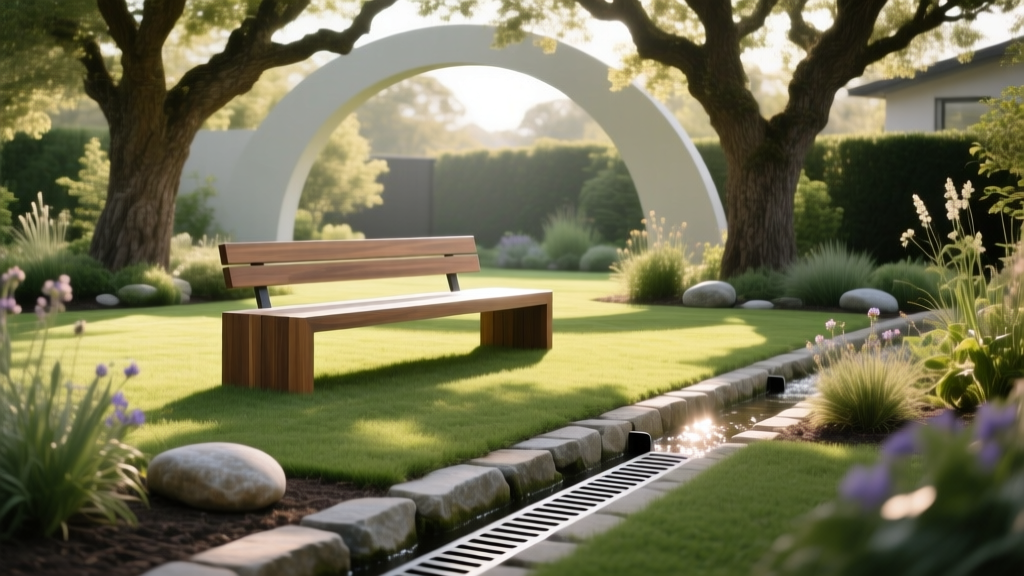
2026 Guide: Garden Bench Placement Over French Drains
Anna KowalskiPublished
The Intersection of Landscape Design and Water Management
Creating a stunning, functional landscape in 2026 requires balancing aesthetic vision with practical environmental management. One of the most coveted features in modern garden design is the destination bench—a secluded seating area tucked under the dappled shade of a mature canopy tree, serving as a visual focal point from the main patio or back door. However, landscape architects and drainage specialists consistently warn that these shaded focal points are prime candidates for severe water accumulation. By combining strategic garden bench placement with a concealed French drain installation, you can protect your hardscaping investment, eliminate muddy shoes, and solve chronic runoff issues without sacrificing beauty.
The Microclimate Challenge: Shade, Drip Lines, and Sinking Soil
When you place a garden bench under a mature tree for shade, you are building directly inside the tree's "drip line." During rainstorms, the tree canopy intercepts precipitation and funnels it outward, dropping concentrated sheets of water along the outer edge of the branches. Combined with the lack of direct UV sunlight to evaporate moisture, the soil beneath and immediately surrounding a shaded bench becomes a sponge. Over time, this leads to soil compaction, wood rot on bench legs, sinking stone pavers, and an ideal breeding ground for mosquitoes.
According to hydrology guidelines published by the University of Minnesota Extension, managing yard hydrology in low-evaporation zones requires proactive subsurface drainage. Relying on surface grading alone is rarely sufficient under heavy canopy cover, making a French drain the most reliable solution for keeping your shaded focal point dry and usable year-round.
Strategic Placement: Sightlines and Drainage Routing
To establish your garden bench as a true focal point, it must be visible from your primary outdoor living space or a key indoor window. Use the "rule of thirds" when mapping your yard: place the bench at an intersecting point of visual interest, perhaps at the end of a winding gravel path or nestled in a curved garden bed.
Once the visual focal point is established, you must plan the French drain routing. The drain trench should ideally run directly behind the bench or wrap in a subtle U-shape around the back and sides of the seating pad. This intercepts the canopy drip line runoff before it reaches the seating area, channeling it safely toward a lower-grade discharge point, such as a dry well, a municipal storm drain, or a lower-elevation rain garden.
Step-by-Step French Drain Installation Under a Bench Focal Point
Integrating a drainage system into an existing shaded garden bed requires precision, especially when working around established root systems. Follow these 2026 best practices for installation:
Step 1: Site Assessment and Grading
Use a laser level or a digital transit level to map the topography of the shaded area. Your French drain trench must maintain a minimum slope of 1% to 2% (a drop of 1 to 2 inches per 10 feet of pipe) to ensure gravity moves the water efficiently away from the bench pad.
Step 2: Root-Safe Trenching
Digging near mature shade trees requires extreme caution. The Arbor Day Foundation emphasizes the importance of protecting the critical root zone to prevent destabilizing or killing the tree that provides your bench's shade. Avoid severing any structural roots larger than 2 inches in diameter. In 2026, many professionals use pneumatic air-spades to excavate trenches safely around fibrous root mats without causing the trauma associated with steel trenching shovels. If a large root blocks your planned path, route the flexible drain pipe gently over or under it rather than cutting through.
Step 3: Pipe Selection and Bedding
Traditional French drains require a deep trench filled with heavy washed gravel. However, modern geofabric-wrapped tubular systems (such as the NDS EZ-Flow series) are now the industry standard for shallow, landscaped areas. These lightweight, gravel-free pipes can be buried in shallower trenches (often just 6 to 8 inches deep), drastically reducing the risk of damaging deep tree roots while providing excellent flow capacity.
Step 4: Constructing the Permeable Bench Pad
Instead of pouring a solid concrete pad that traps water, build your bench foundation using permeable pavers set over a bed of coarse sand and crushed stone. This allows any surface water that bypasses the French drain to percolate harmlessly into the subsurface gravel bed, which then feeds into the drain pipe.
2026 Material and Cost Comparison for Bench Drainage Zones
When planning your budget for a combined bench and drainage project, consider the following material configurations. Pricing reflects average national landscaping costs for 2026.
| Drainage System Type | Trench Depth Required | Est. Cost per Linear Foot (2026) | Best Bench Application |
|---|---|---|---|
| Traditional Gravel & PVC | 12 - 18 inches | $30 - $45 | Heavy stone or concrete benches on open, root-free lawns. |
| Geofabric Tubular (Gravel-Free) | 6 - 10 inches | $22 - $35 | Wood or composite benches placed near mature tree root zones. |
| Channel Drain with Decorative Grate | 4 - 6 inches | $40 - $60 | Modern metal benches on solid patios where surface runoff is heavy. |
Concealing the Trench: Aesthetic Hardscaping Techniques
A French drain should be heard, not seen. To maintain the visual integrity of your garden bench focal point, you must camouflage the drainage exit and the trench line. Here are the top design strategies used by landscape architects in 2026:
- Decorative River Rock Camouflage: Instead of covering the drain trench with soil and grass (which struggles to grow in deep shade), line the trench with polished black river rock or dark basalt chips. This creates a "dry creek bed" aesthetic that looks intentional and beautifully frames the bench.
- Custom Wooden Grates: If your drain must pass directly in front of the bench, install a heavy-duty structural drain grate and cover it with a custom slatted wood panel made from the same composite or treated timber as the bench itself. This creates a cohesive, built-in look.
- Shade-Tolerant Marginal Plantings: Soften the edges of the gravel trench by planting shade-loving perennials. In 2026, top choices for planting around drainage zones include Carex (sedge), Japanese Painted Ferns, and Astilbe. These plants thrive in the moist soil adjacent to the drain while their root systems help filter sediment before it reaches the pipe.
Long-Term Maintenance for Shaded Drainage Systems
Shaded environments present unique maintenance challenges for French drains. Falling autumn leaves, pine needles, and decaying organic matter can easily wash into the gravel or grate openings, leading to clogs. To protect your focal point:
- Install a catch basin with a removable leaf grate upstream from the main trench to catch large debris before it enters the pipe.
- Flush the system annually in early spring using a garden hose with a high-pressure nozzle to push out accumulated silt and fine root hairs.
- Inspect the permeable bench pad every two years, lifting pavers to add fresh jointing sand and ensure the subsurface base has not shifted due to frost heave or soil erosion.
Final Thoughts
A garden bench placed in the shade is a timeless landscape feature, offering a cool retreat and a captivating focal point. However, ignoring the hydrology of the drip line will quickly turn your serene getaway into a muddy, unusable mess. By thoughtfully integrating a modern French drain system into your bench placement strategy, you protect both the tree and the hardscape. With the right materials, root-safe trenching techniques, and aesthetic camouflage, your shaded destination seating will remain dry, beautiful, and structurally sound for decades to come.

