
Landscaping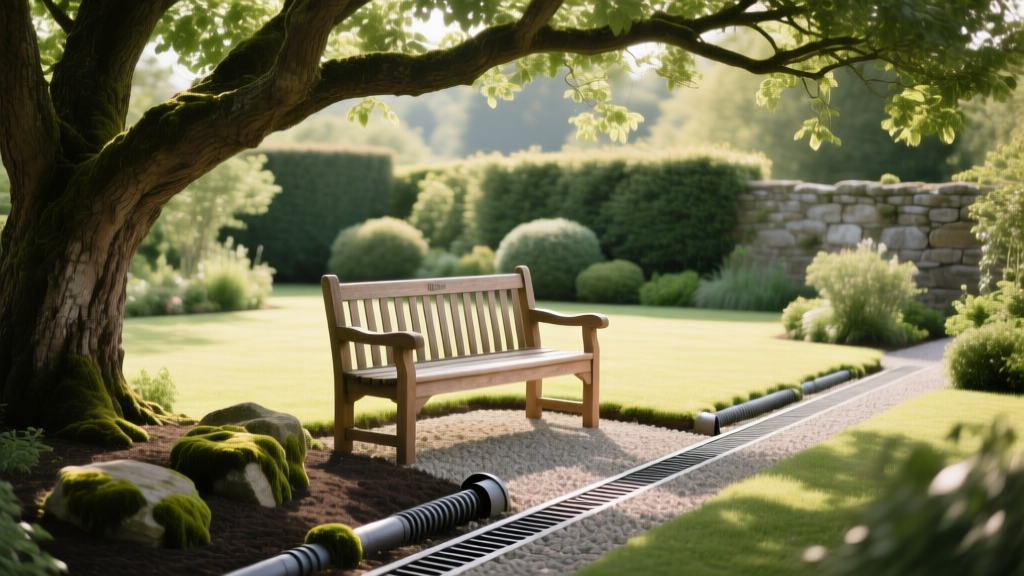
2026 Garden Bench Placement: Shade, Focal Points & Drain Pipes
Anna KowalskiPublished
The 2026 Landscape Challenge: Balancing Aesthetics and Subsurface Infrastructure
In modern landscape design, creating a tranquil, shaded focal point is a primary goal for any outdoor living space. A beautifully placed garden bench nestled under a canopy of trees or a shade sail offers a perfect retreat. However, as extreme weather patterns and heavier micro-bursts of rain continue to define the 2026 climate, subsurface landscape drainage pipes have become the unsung heroes of the modern yard. Networks of 4-inch corrugated NDS pipes, SDR 35 PVC, and French drain gravel trenches are now standard installations to prevent yard flooding and foundation damage.
The challenge for homeowners and landscape architects is clear: how do you position a heavy, focal-point garden bench in a prime shaded location without crushing shallow drainage pipes, blocking pop-up emitters, or driving pergola footings straight through a vital French drain? According to the EPA's Green Infrastructure guidelines, managing yard runoff requires careful integration of hardscaping and subsurface water management. This guide will walk you through the precise strategies for placing your garden bench to maximize shade and visual appeal while protecting your critical drainage infrastructure.
Mapping Subsurface Drainage Pipes Before Bench Placement
Before you even select a bench style or dig a single post hole for a shade structure, you must map your subsurface drainage network. Placing a heavy cast-iron or solid teak bench directly over a shallow corrugated pipe can lead to soil compaction and eventual pipe collapse, especially when the weight of the bench is combined with the hydrostatic pressure of saturated soil during a storm.
Techniques for Locating Drain Lines
- Ground-Penetrating Radar (GPR): In 2026, renting a compact, consumer-grade GPR unit is more accessible than ever. This allows you to map the exact depth and trajectory of your 4-inch and 6-inch drain lines before finalizing your focal point layout.
- Soil Probing: Use a fiberglass soil probe to gently test the ground. If you hit a void or a plastic barrier within 12 inches of the surface, you have likely located a shallow trench drain or French drain gravel bed.
- Tracing Cleanouts and Emitters: Identify all visible PVC cleanouts and pop-up emitters. As noted by the USGS Water Science School, surface runoff must have an unobstructed path to subsurface conveyance systems; therefore, your bench placement must never block the natural flow of water toward these intake grates.
Selecting the Right Bench for Damp, Drainage-Heavy Zones
Shaded areas in the yard often coincide with the lower elevations where drainage pipes terminate or where French drains collect moisture. The microclimate around a drainage exit is inherently damp, prone to moss, and subject to occasional splash-back from pop-up emitters during heavy 2026 spring downpours. Choosing the right bench material is critical for longevity in these specific focal points.
| Bench Material | Moisture & Drainage Resistance | Weight / Load Impact on Pipes | Best Placement Strategy |
|---|---|---|---|
| Grade-A Teak | Excellent (natural oils repel water) | Heavy (Requires solid footing away from shallow pipes) | Under shade trees, 5+ feet from pop-up emitters |
| Cast Aluminum (2026 Powder-Coated) | Superior (rust-proof, lightweight) | Low to Moderate (Safe over deeper buried SDR 35 PVC) | Near drainage beds where soil shifts slightly |
| Recycled Composite (e.g., Trex 2026 Line) | Excellent (impervious to rot and mold) | Moderate (Distribute weight with wide foot pads) | Directly adjacent to concealed trench drains |
| Wrought Iron | Poor (Prone to rust in constant dampness) | Very Heavy (High risk of crushing corrugated pipes) | Avoid near drainage exits or shaded damp zones |
Creating the Focal Point: Concealing Drainage Exits
A true landscape focal point draws the eye and creates a sense of destination. Unfortunately, landscape drainage pipes often terminate in unsightly locations, such as corrugated pop-up emitters, trench drain grates, or dry well access covers. You can use strategic garden bench placement to hide these eyesores while maintaining necessary maintenance access.
The 18-Inch Clearance Rule
When angling your bench to act as a visual screen for a drainage exit, always maintain a minimum 18-inch clearance between the back of the bench and the pop-up emitter. This ensures that when the emitter activates during a heavy rainstorm, the water discharge is not blocked by the bench legs or surrounding shade-loving hostas. Furthermore, this clearance allows you to easily reach the emitter to clear autumn leaves or winter debris without having to move a 150-pound teak bench.
Using Under-Bench Plantings to Soften Hardscaping
If your bench is placed over a deep-buried solid PVC drain line (which can safely support surface weight if buried below the frost line and compacted properly), use the space beneath the bench to plant shallow-rooted, moisture-loving ferns or creeping jenny. This softens the hardscape, draws the eye to the shaded seating area, and completely masks the fact that a major drainage artery runs directly beneath the seating zone.
Shade Structures and Footings: Avoiding Pipe Punctures
A garden bench rarely achieves its full potential as a shaded focal point without an accompanying shade structure, such as a pergola, a cantilever umbrella, or tensioned shade sails. The installation of these structures poses a massive risk to your landscape drainage pipes.
Pergola Footings vs. French Drains
A standard French drain consists of a 12-to-18-inch wide trench filled with washed gravel and a perforated pipe wrapped in landscape fabric. If you attempt to dig a sonotube footing for a pergola post and intersect this gravel trench, you will compromise the structural integrity of the post and flood the French drain with concrete slurry. Always cross-reference your pergola post layout with your drainage map. If a post must cross a drain line, use a shallow, load-bearing concrete pad that sits entirely above the gravel trench, or span the drain line with a reinforced concrete lintel buried just below the topsoil.
Cantilever Umbrellas and Tree Roots
If you are relying on existing shade trees to provide the canopy for your bench focal point, remember that the same subsurface environment that nurtures massive tree roots also houses your drainage pipes. Tree roots are notorious for seeking out the moisture and oxygen found in French drain gravel beds. When placing a heavy cantilever umbrella base near the bench, ensure you are not compacting the soil directly over a root-and-pine intersection, which can lead to pipe intrusion and eventual blockage.
Step-by-Step Installation Over or Near Drain Lines
If your ideal focal point absolutely requires the bench to sit near or over a landscape drainage pipe, follow these 2026 best practices to ensure both the bench and the pipe survive the elements:
- Verify Pipe Depth and Type: Ensure the pipe is solid SDR 35 PVC or Schedule 40 PVC, not flexible corrugated pipe, which can crush under point-loads. The pipe must be buried at least 18 inches deep in compacted bedding sand.
- Install Load-Bearing Pavers: Place large, 24x24 inch architectural concrete pavers beneath the bench legs. This distributes the weight of the bench and its occupants over a wider surface area, preventing point-load soil compression that could snap a subsurface pipe.
- Grade for Surface Runoff: Ensure the ground beneath and immediately around the bench slopes away at a 2% grade. You do not want surface water pooling under the bench and seeping down into the pipe bedding, which can cause soil erosion and pipe sagging over time.
- Mark Cleanouts Discreetly: If a drainage cleanout riser is located near your focal point, paint it to match the surrounding mulch or use a decorative faux-rock cover that can be easily lifted when you need to snake the drain line.
Conclusion
Designing a captivating, shaded garden bench focal point in 2026 requires more than just an eye for aesthetics; it demands a thorough understanding of the hidden hydrology beneath your feet. By carefully mapping your landscape drainage pipes, selecting moisture-resistant materials like cast aluminum or composite, and respecting the 18-inch clearance rule for drainage emitters, you can create a stunning outdoor retreat. Your bench will serve as a beautiful, tranquil destination in the garden, while the vital drainage infrastructure below continues to protect your property from stormwater runoff, completely unseen and undisturbed.

