Lawn Care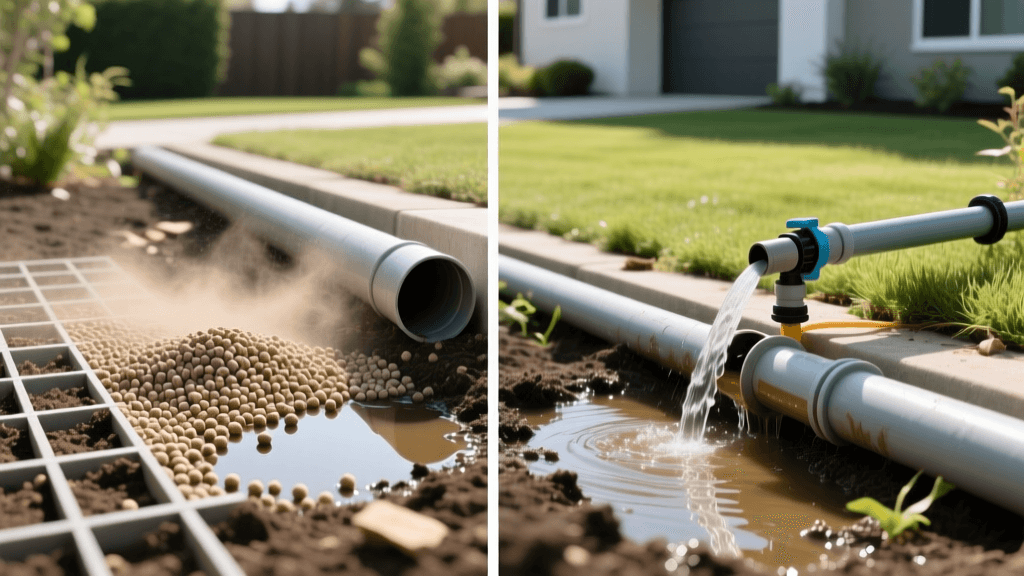
Granular vs Liquid Fertilizer 2026: Drainage Pipe Guide
The Hidden Conflict: Lawn Fertilizer and Landscape Drainage Pipes
As extreme spring rainfall events become more frequent in 2026, a growing number of homeowners are retrofitting their yards with subsurface landscape drainage pipes. Whether you have a French drain lined with corrugated HDPE pipe, an NDS catch basin system, or a dry well network, these systems are vital for preventing lawn saturation and foundation damage. However, installing a comprehensive drainage network introduces a complex variable to your seasonal lawn care routine: how do you apply fertilizer without compromising your pipes or polluting local watersheds?
The debate between granular and liquid fertilizer application takes on a completely new dimension when landscape drainage pipes are involved. What works best for a flat, un-drained yard might cause severe clogging or environmental runoff in a yard laced with perforated pipes and catch basins. In this 2026 guide, we break down the granular vs. liquid fertilizer comparison strictly from the perspective of landscape drainage infrastructure, helping you maintain a lush lawn while keeping your subsurface pipes flowing freely.
Granular Fertilizer: Slow-Release Prills vs. The Catch Basin
Granular fertilizers remain a staple for cool-season and warm-season grasses due to their ease of application and extended feeding windows. In 2026, advanced polymer-coated granulars, such as the latest slow-release nitrogen formulations, are designed to break down over 8 to 12 weeks, reducing the frequency of application and providing steady turf nutrition.
The Drainage Pipe Perspective
While granular fertilizers are excellent for steady nutrient delivery, they pose a unique physical threat to landscape drainage systems. The primary issue is prill migration. When you broadcast granular fertilizer using a rotary spreader, the small pellets often bounce off compacted soil, hardscapes, and thick thatch layers. If your yard features surface-level catch basin grates or exposed French drain gravel trenches, thousands of these granules can easily roll directly into the drainage network.
Once inside the dark, damp environment of a corrugated drainage pipe, these granules dissolve into a concentrated, nutrient-rich sludge. This sludge coats the interior walls of the pipe, creating an ideal breeding ground for algae, biofilm, and even invasive root intrusion from nearby trees seeking the concentrated nitrogen and phosphorus. Over time, this biological buildup narrows the pipe's diameter, reducing its flow capacity and leading to yard flooding during heavy 2026 summer storms.
Liquid Fertilizer: Fast Absorption vs. Perforated Pipe Runoff
Liquid fertilizers, including soluble synthetic blends and organic liquid kelp or chelated iron solutions, offer immediate nutrient availability. They are typically applied via hose-end sprayers or tank sprayers, allowing for precise foliar feeding or rapid soil drenching.
The Drainage Pipe Perspective
Liquid fertilizers eliminate the physical clogging hazard of rolling granules, but they introduce a severe hydrological runoff risk. Subsurface landscape drainage pipes—specifically perforated corrugated pipes wrapped in landscape fabric—are installed in gravel-filled trenches to intercept lateral water movement. If you apply a liquid fertilizer drench to a lawn with heavy clay soil, the soil's slow infiltration rate will force the liquid laterally into the path of least resistance: the gravel trench and the perforated pipe.
Instead of feeding the grassroots, the liquid nitrogen and phosphorus are immediately flushed through the pipe system and discharged into storm drains, dry wells, or local waterways. According to the Environmental Protection Agency (EPA), nutrient pollution from residential runoff is a leading cause of water quality degradation, triggering harmful algae blooms in local ecosystems. Furthermore, if a liquid fertilizer contains high salt indices or unchelated minerals, the rapid accumulation inside the pipe trench can alter the soil pH immediately surrounding the drainage aggregate, potentially degrading certain types of landscape fabrics over time.
2026 Comparison Chart: Fertilizer Types in Drained Yards
| Feature | Granular Fertilizer | Liquid Fertilizer |
|---|---|---|
| Physical Clog Risk to Pipes | High (Prills roll into catch basins and dissolve into biofilm sludge) | None (Fully dissolved prior to application) |
| Nutrient Runoff Risk | Moderate (Washes away only if heavy rain occurs before prills melt) | High (Instantly flushes into perforated pipe trenches in clay soils) |
| Application Buffer Zone Needed | 36 inches around all drain grates and gravel trenches | 24 inches (or apply only when soil is dry and no rain is forecast) |
| Best Use Case for Drained Yards | Baseline seasonal feeding using drop spreaders near drains | Targeted foliar sprays or micro-dosing during dry spells |
| 2026 Average Cost per 5,000 sq ft | $18 - $25 (Polymer-coated slow release) | $22 - $35 (Chelated and organic liquid blends) |
Soil Types and Drainage Pipe Interaction
The impact of your fertilizer choice is heavily dictated by your native soil type. In sandy soils, both liquid and granular fertilizers tend to percolate vertically. While this means they might bypass the lateral French drain trenches, it also increases the risk of nutrients leaching past the root zone entirely, requiring more frequent, lighter applications.
Conversely, in heavy clay soils, water and dissolved liquids move horizontally. When a liquid fertilizer is applied to clay, it pools on the surface and eventually migrates sideways until it hits the highly permeable gravel trench of your landscape drainage pipe. This makes liquid applications inherently riskier for nutrient loss in clay-heavy yards unless the soil has been heavily amended with organic matter or recently aerated.
Best Practices for Fertilizing Lawns with Subsurface Drainage
To maximize turf health while protecting your landscape drainage infrastructure, lawn care professionals in 2026 recommend a hybrid approach tailored to your yard's specific topography and pipe layout.
1. Establish a Hardscape and Drainage Buffer Zone
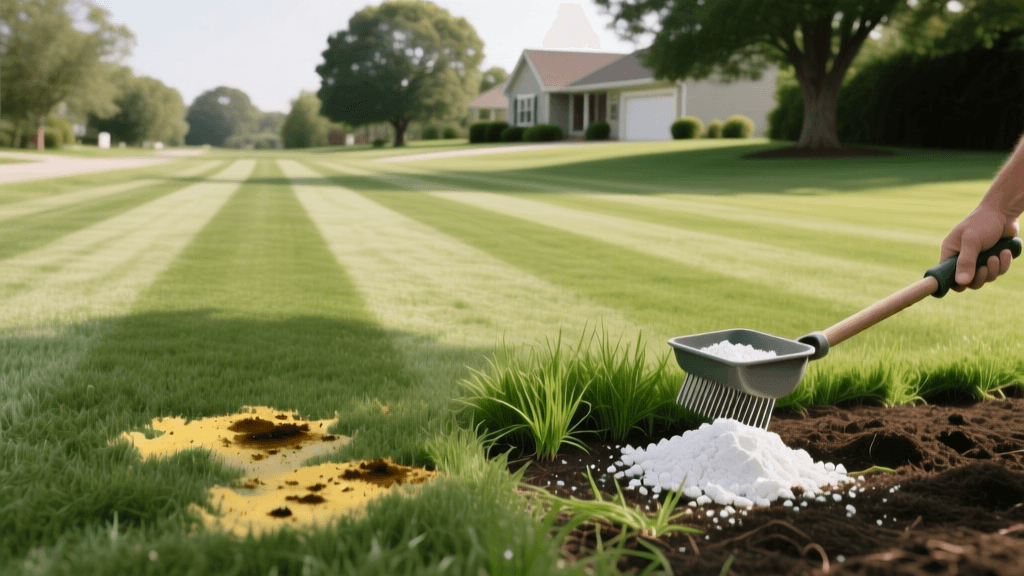
Never use a rotary broadcast spreader near a catch basin, channel drain, or exposed French drain trench. The centrifugal force of the spreader will inevitably flick granular prills into the grates. Instead, maintain a 36-inch buffer zone around all drainage inlets. Within this zone, apply fertilizer by hand or use a drop spreader to ensure the granules fall strictly onto the turf canopy and into the thatch layer, rather than bouncing into the plumbing.
2. Time Liquid Applications with Soil Moisture, Not Just Weather
If you prefer liquid fertilizers for their rapid greening effects, you must account for soil saturation. Never apply liquid nitrogen to a lawn that has recently been drained by your pipe system, as the gravel trenches are likely still holding moisture, and the surrounding soil matrix will push the new liquid directly into the perforations. Consult local agronomic extension services, such as the University of Minnesota Extension, for precise timing on when soil temperatures and moisture levels are optimal for liquid uptake rather than lateral leaching.
3. Core Aeration to Bypass Surface Tension
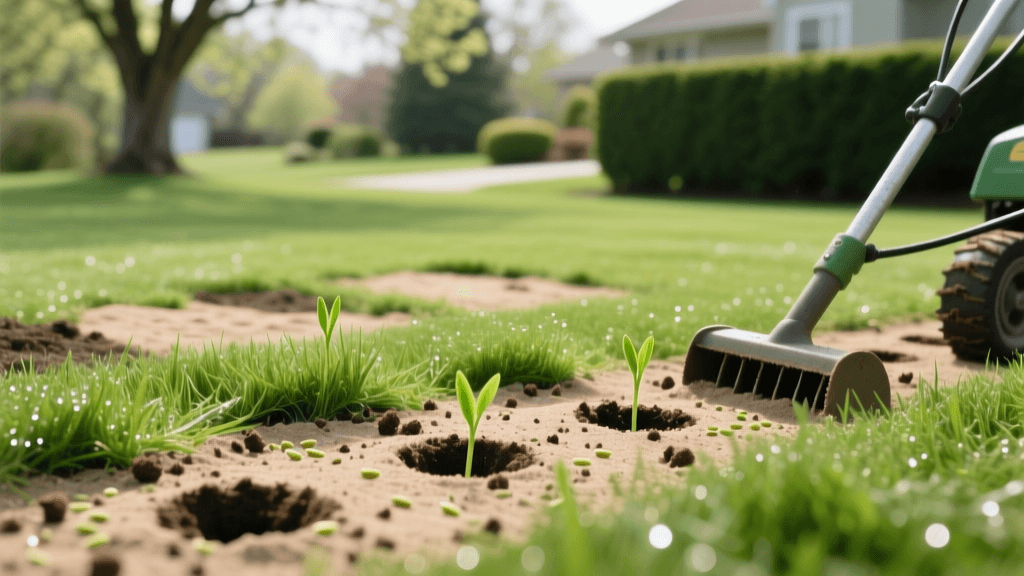
One of the main reasons liquid fertilizers and water run laterally into drainage pipe trenches is surface soil compaction. By performing deep core aeration in the fall, you create vertical channels that allow liquid fertilizers to penetrate straight down into the root zone, bypassing the lateral flow paths that lead to your French drains. This ensures the nutrients feed the grass rather than flushing through your corrugated pipes.
4. Utilize Organic and Low-Salt Formulations
If your drainage pipes discharge into a dry well or a rain garden rather than a municipal storm sewer, the nutrient load and salt content of your fertilizer matter immensely. In 2026, bio-stimulant liquids and organic granulars (like feather meal or bone meal) are highly recommended for drained yards. They bind more effectively to soil organic matter and are far less likely to leach into the pipe network as soluble salts, protecting the downstream discharge zones from eutrophication.
Conclusion: Balancing Turf Nutrition and Drainage Health
The presence of landscape drainage pipes in your yard should not prevent you from achieving a thick, vibrant lawn, but it does demand a more strategic approach to fertilization. Granular fertilizers threaten the physical flow of your pipes through biofilm buildup and prill migration, while liquid fertilizers threaten the environmental integrity of your pipe's discharge point through rapid hydrological leaching. By understanding the mechanics of your subsurface drainage system and adapting your 2026 fertilizer application methods—utilizing buffer zones, drop spreaders, and strategic core aeration—you can nourish your turf without compromising the vital infrastructure that keeps your yard dry.