Lawn Care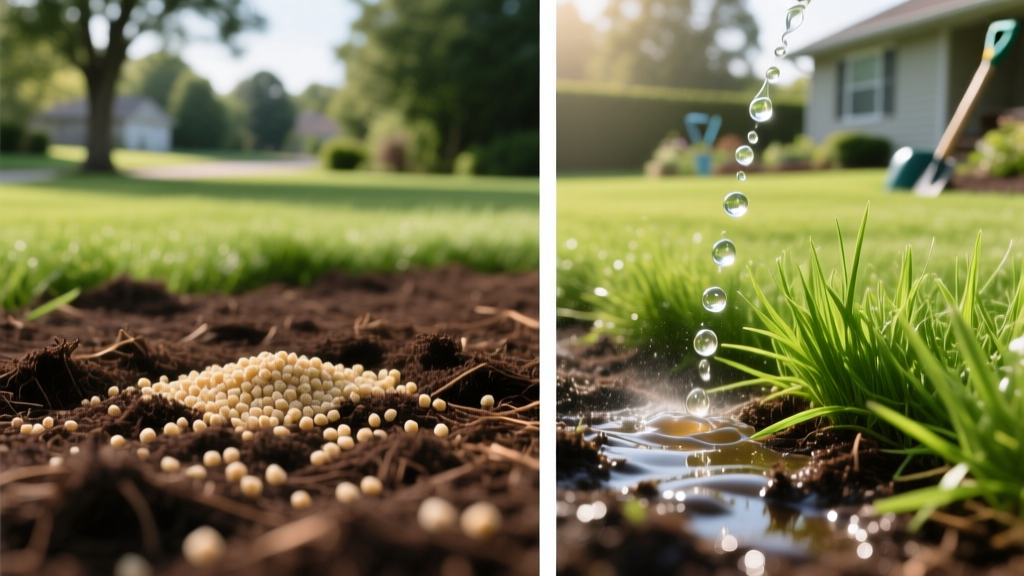
Granular vs Liquid Fertilizer for Mulched Lawns in 2026
Sarah ChenPublished
The Intersection of Mulching Methods and Fertilization in 2026
As we move through the 2026 lawn care season, the practice of mulching grass clippings has evolved from a simple time-saving trick into a cornerstone of sustainable turf management. Modern mulching mowers, equipped with advanced vortex deck technology and specialized high-lift mulching blades, finely chop clippings and deposit them directly into the soil canopy. This organic mulch layer retains moisture, regulates soil temperature, and slowly releases nitrogen back into the earth. However, this beneficial layer of organic matter also creates a unique physical barrier that fundamentally changes how your lawn absorbs supplemental nutrients. This brings us to a critical debate for homeowners and landscaping alike: when maintaining a heavily mulched lawn, should you rely on granular or liquid fertilizer?
Choosing between granular and liquid applications is no longer just about convenience or cost; it is about understanding how different fertilizer states interact with the thatch and mulch layers sitting on your soil surface. According to turfgrass researchers at the University of Minnesota Turfgrass Science program, the physical environment of the turf canopy dictates nutrient uptake efficiency. In this comprehensive guide, we will break down the science, costs, and practical application methods for both granular and liquid fertilizers specifically tailored for mulched lawns in 2026.
The Science of Mulching and Nutrient Cycling
When you mulch your lawn, you are essentially creating a dynamic, living bio-filter on top of your soil. Grass clippings are roughly 80% water and contain about 4% nitrogen by dry weight. As the mulch decomposes, soil microbes break down the organic material, converting it into plant-available nutrients. However, this decomposition process requires time, moisture, and specific soil temperatures.
If you apply fertilizer on top of this mulch layer, the nutrients must navigate this organic matrix before reaching the root zone. The density of your mulch layer—determined by your mowing frequency and the sharpness of your mulching blades—will dictate whether a granular or liquid fertilizer is more effective. A thick, damp layer of clippings can trap granular prills, leading to localized nitrogen burns on the grass blades, whereas a thin, dry mulch layer might allow granules to pass through to the soil with minimal resistance.
Granular Fertilizer: Performance Under a Mulch Layer
Granular fertilizers remain the most popular choice for DIY lawn care due to their ease of storage, long shelf life, and slow-release capabilities. In 2026, advanced polymer-coated granular fertilizers offer highly predictable nutrient release curves that are less dependent on soil temperature than older sulfur-coated variants.
Pros for Mulched Lawns
- Extended Feeding Window: Slow-release granular fertilizers (like methylene urea or polymer-coated urea) can feed a mulched lawn for 8 to 12 weeks, perfectly complementing the slow, steady nutrient release of decomposing clippings.
- Lower Burn Risk (When Watered In): Once the granules bypass the mulch layer and reach the soil, they pose a much lower risk of foliar burn compared to liquid salts.
- Cost-Effective for Large Areas: Bulk granular fertilizer remains the most economical way to deliver macronutrients (N-P-K) to lawns over 5,000 square feet.
Cons for Mulched Lawns
- The "Trapped Prill" Effect: If applied to a thick layer of dry clippings, granules can get stuck in the mulch canopy. If not watered in immediately and heavily, the concentrated salts can burn the grass blades resting against the mulch.
- Delayed Activation: Granular fertilizers require significant moisture to dissolve. In a mulched lawn, the organic layer can sometimes repel initial water droplets (hydrophobic thatch), delaying the fertilizer's journey to the root zone.
Liquid Fertilizer: Bypassing the Mulch Barrier
Liquid fertilizers have surged in popularity, driven by the 2026 trend toward precision lawn care and the widespread availability of high-quality bio-stimulant blends. Liquids are mixed with water and applied via hose-end sprayers or battery-powered backpack sprayers, allowing for immediate foliar absorption and rapid soil penetration.
Pros for Mulched Lawns
- Immediate Foliar Uptake: Liquid fertilizers can be absorbed directly through the stomata of the grass blades. This means the nutrients do not need to navigate the mulch layer at all, providing a rapid green-up within 48 to 72 hours.
- Uniform Coverage: Spraying a liquid ensures an even distribution of nutrients, eliminating the risk of granular "striping" or localized burns caused by clippings trapping heavy prills.
- Microbe Stimulation: Many modern liquid fertilizers include humic acids and kelp extracts that directly feed the soil microbiome, accelerating the breakdown of your mulch layer into usable organic matter.
Cons for Mulched Lawns
- Short-Lasting Results: Because liquids are fast-acting, they are also fast-depleting. You will need to apply liquid fertilizers every 3 to 4 weeks to maintain consistent growth.
- Higher Cost Per Pound of Nitrogen: When comparing the raw cost of nitrogen, liquid formulations are significantly more expensive than granular alternatives, making them less ideal for massive properties.
- Application Sensitivity: Spraying liquid nitrogen in the heat of a summer afternoon over a dry mulch layer can cause severe tip burn due to rapid evaporation and salt concentration.
Head-to-Head Comparison Chart
To help you decide which method suits your specific mulching routine, review the comparison table below based on 2026 market averages and turfgrass science data.
| Feature | Granular Fertilizer | Liquid Fertilizer |
|---|---|---|
| Nutrient Delivery | Soil-applied (Root uptake) | Foliar & Soil (Blade & Root uptake) |
| Mulch Interaction | Can get trapped; requires heavy watering | Bypasses mulch via foliar absorption |
| Duration of Effect | 8 to 12 weeks (Slow-release) | 3 to 4 weeks (Fast-release) |
| Average Cost (per 1,000 sq ft) | $4.00 - $7.00 | $8.00 - $14.00 |
| Equipment Needed | Rotary or Drop Spreader | Pump Sprayer or Hose-End Attachment |
| Best Application Time | Early morning, followed by irrigation | Late evening or early morning (low wind) |
2026 Product Recommendations and Pricing
When selecting products for a mulched lawn, you must prioritize formulations that account for the organic matter already present on your soil surface. According to guidelines published by the Oregon State University Extension, lawns that consistently recycle clippings require roughly 20% to 25% less supplemental nitrogen over the course of a year compared to lawns where clippings are bagged.
Top Granular Pick: Milorganite Organic Nitrogen Fertilizer
For mulched lawns, an organic or slow-release granular is ideal to prevent nitrogen overload. Milorganite (retailing around $26 for a 32 lb bag in 2026) is a heat-dried microbe-based fertilizer. Because it relies on microbial activity to break down, it synergizes perfectly with the decomposing mulch layer. It will not burn the lawn even if some granules get temporarily trapped in the clippings, provided you maintain a standard watering schedule.
Top Liquid Pick: Simple Lawn Solutions 16-4-8 Liquid Fertilizer
If you need a rapid green-up without disturbing your mulch layer, a balanced liquid like Simple Lawn Solutions 16-4-8 (approximately $32 for a 32 oz hose-end bottle) is an excellent choice. The included humic acid helps condition the soil beneath the mulch, while the liquid nitrogen is absorbed directly by the grass blades, entirely bypassing the physical barrier of the clippings.
Equipment Calibration for Mulched Lawns
Applying fertilizer to a mulched lawn requires slight adjustments to your equipment to ensure the nutrients reach their intended target.
Pro Tip for 2026: If using a rotary spreader for granular fertilizer, increase your walking speed by 10% and open the spreader setting slightly. This creates a wider, lighter dispersal pattern, reducing the chance of heavy granule clusters getting hopelessly tangled in dense mulch patches.
For liquid applications, utilize a sprayer nozzle that produces a medium-to-coarse droplet size. Fine mist nozzles will cause the liquid to cling to the top of the dry mulch layer, where it will quickly evaporate. A coarser spray has the momentum to penetrate the canopy, coating the lower grass blades and reaching the soil surface for root uptake.
Your 2026 Seasonal Mulch & Fertilizer Calendar
To maximize the synergy between your mulching mower and your fertilization strategy, follow this seasonal routine:
Early Spring (Soil Temps Reach 55°F)
Strategy: Liquid Application.
Why: The soil microbiome is still waking up, and mulch decomposition is slow. A liquid fertilizer with bio-stimulants will feed the grass directly via foliar uptake and jump-start the microbes needed to break down winter debris and early spring clippings.
Late Spring to Early Summer (Peak Growth)
Strategy: Granular Slow-Release.
Why: You are mowing frequently, generating a high volume of mulch. Apply a high-quality, polymer-coated granular fertilizer. The heavy spring rains will easily wash the granules through the fresh clippings and into the soil, providing a steady 10-week feed that matches the rapid growth rate of the turf.
Mid-Summer (Heat Stress Period)
Strategy: Pause or Light Liquid Kelp.
Why: Cool-season grasses go semi-dormant in high heat. The existing mulch layer is protecting the soil and retaining moisture. Avoid heavy nitrogen. If the lawn looks fatigued, apply a light liquid kelp or humic acid spray in the evening to reduce heat stress without forcing unsustainable top growth.
Early Fall (Recovery and Root Building)
Strategy: Granular Winterizer.
Why: As mulching mowers shred autumn leaves alongside grass clippings, the organic layer thickens. A granular fall winterizer (high in potassium) will wash down through this leaf-mulch matrix, promoting deep root storage and preparing the turf for the following spring.
Conclusion
Managing a mulched lawn in 2026 requires a nuanced approach to fertilization. Granular fertilizers offer unmatched longevity and cost-efficiency but demand careful watering practices to ensure nutrients are not trapped by the clipping canopy. Liquid fertilizers provide a brilliant workaround to the mulch barrier via foliar absorption, though they require more frequent applications and a higher budget. By understanding the physical dynamics of your mulch layer and adjusting your fertilizer type to the season, you can cultivate a dense, vibrant, and highly sustainable lawn that leverages every single clipping you leave behind.
For further reading on safe and effective lawn maintenance, always consult resources like the Environmental Protection Agency's (EPA) Lawn Care Guidelines to ensure your fertilization practices protect local watersheds while maximizing turf health.