Lawn Care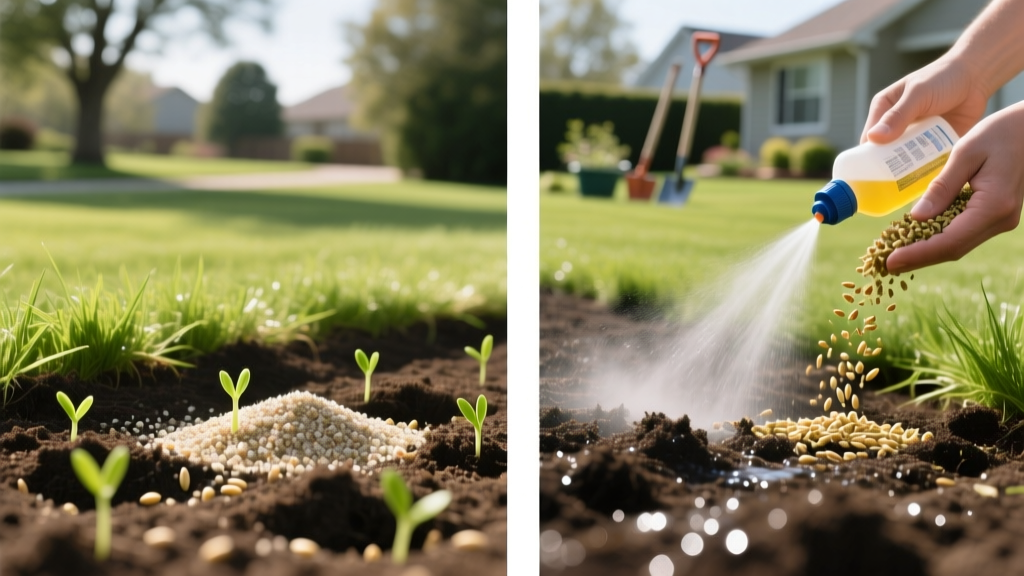
Granular vs Liquid Fertilizer for Aeration and Seeding 2026
Lisa ThompsonPublished
The 2026 Aeration and Seeding Landscape
As we navigate the 2026 lawn care season, extreme weather fluctuations and shifting soil temperatures have made core aeration and overseeding more critical than ever. Compacted soil prevents water, oxygen, and nutrients from reaching the root zone, leading to thin, vulnerable turf. When you pair core aeration with overseeding, you create the perfect environment for new grass to establish. However, the success of this process hinges on one crucial decision: choosing the right fertilizer to support seed germination and early root development.
Homeowners and landscaping professionals frequently debate the merits of granular versus liquid fertilizers. Both delivery methods have distinct advantages, but their effectiveness changes dramatically when applied to freshly aerated soil and newly sown seed. In this comprehensive guide, we break down the science, costs, and application strategies for granular and liquid fertilizers to help you achieve a thicker, healthier lawn in 2026.
Why Fertilizer Choice Matters Post-Aeration
Core aeration involves pulling small plugs of soil from the ground, leaving behind thousands of micro-cavities. These holes are prime real estate for seed-to-soil contact and nutrient accumulation. According to the Penn State Extension, aerating before seeding significantly improves germination rates by protecting seeds from drying out and being washed away. The fertilizer you choose must not only feed the existing turf but also provide a safe, accessible nutrient source for tender new seedlings without causing fertilizer burn.
New grass seeds require a specific balance of nitrogen (N), phosphorus (P), and potassium (K). Phosphorus is particularly vital for early root development, which is why 'starter fertilizers' are the standard recommendation for overseeding. The delivery method of these nutrients—granular or liquid—dictates how quickly they become available to the seed and how they interact with the aeration holes.
Granular Fertilizer: The Slow-Release Seed Bank
Granular fertilizers consist of small, dry pellets coated with polymer or sulfur to control the release of nutrients over time. For 2026 overseeding projects, a high-quality granular starter fertilizer like Lesco Professional Starter Fertilizer (18-24-12) or Scotts Turf Builder Starter Food for New Grass (24-25-4) remains the industry gold standard.
The Aeration Advantage
When applied immediately after core aeration, granular fertilizer pellets naturally fall into the aeration holes. This creates localized 'nutrient banks' deep within the soil profile, exactly where the new grass roots will eventually penetrate. Because the nutrients are released slowly over 4 to 8 weeks, the seedlings receive a steady, non-overwhelming supply of food as they mature.
Pros and Cons of Granular Application
- Pros: Excellent longevity; lower risk of burning tender seedlings; pellets drop into aeration holes; highly cost-effective for large properties.
- Pros: Easy to apply with a standard rotary or drop spreader; no mixing or special equipment required.
- Cons: Requires immediate and thorough watering to activate the prills and begin the nutrient release process.
- Cons: Can be unevenly distributed if the spreader is not calibrated correctly, leading to striping on the lawn.
Liquid Fertilizer: Fast-Acting Foliar and Soil Drench
Liquid fertilizers have surged in popularity leading into 2026, driven by advancements in chelated micronutrients and humic acid blends. Products like Simple Lawn Solutions Liquid Starter Fertilizer or PetraTools 16-4-8 Liquid Fertilizer offer immediate nutrient availability. Liquid applications can be delivered as a foliar spray (absorbed through the grass blades) or a soil drench (watered into the root zone).
The Aeration Advantage
When applied as a soil drench to an aerated lawn, liquid fertilizer instantly washes down into the aeration holes and the surrounding soil matrix. There is no waiting period for the prills to break down. This immediate availability can give existing turf a rapid green-up, which helps it compete with weeds while the new grass seed is germinating.
Pros and Cons of Liquid Application
- Pros: Instant nutrient availability; uniform coverage across the entire lawn; excellent for delivering chelated iron and micronutrients.
- Pros: Can be combined with liquid aeration agents or surfactants to further improve soil penetration.
- Cons: High risk of fertilizer burn on newly germinated seedlings if applied too heavily or during peak afternoon heat.
- Cons: Short residual effect; requires reapplication every 2 to 3 weeks to sustain growth.
Head-to-Head Comparison Chart
To help you decide which method aligns with your 2026 lawn care goals, review the direct comparison below:
| Feature | Granular Starter Fertilizer | Liquid Starter Fertilizer |
|---|---|---|
| Nutrient Release Speed | Slow & Steady (4-8 weeks) | Immediate (1-2 weeks) |
| Aeration Hole Integration | Excellent (Pellets fall into holes) | Good (Washes into holes with water) |
| Burn Risk to New Seedlings | Very Low (if sulfur/polymer coated) | Moderate to High (if over-applied) |
| Application Equipment | Drop or Rotary Spreader | Hose-end or Pump Sprayer |
| Cost per 1,000 sq. ft. (2026) | $4.00 - $7.00 | $8.00 - $14.00 |
| Reapplication Frequency | Once per seeding season | Every 2-3 weeks |
The Ultimate 2026 Hybrid Strategy for Overseeding
For the most resilient and visually stunning lawn, turfgrass experts increasingly recommend a hybrid approach. By leveraging the strengths of both granular and liquid fertilizers, you can support both immediate turf health and long-term seedling establishment. The University of Minnesota Extension emphasizes that timing and nutrient staging are critical for cool-season grasses like Kentucky Bluegrass and Tall Fescue.
Step 1: Day of Aeration and Seeding (Granular)
Immediately after core aerating and spreading your seed, apply a high-phosphorus granular starter fertilizer (e.g., 18-24-12). The pellets will settle into the aeration holes alongside the seed. Water the lawn deeply to activate the granular prills and initiate the germination process. This provides a safe, slow-release foundation that will feed the seedlings for their first 45 days of growth.
Step 2: Week 4 Post-Seeding (Liquid Boost)
Once the new grass has been mowed at least twice, it is mature enough to handle liquid applications. At this stage, apply a liquid fertilizer rich in nitrogen and chelated micronutrients, ideally mixed with a liquid humic acid. The humic acid will improve the soil's cation exchange capacity (CEC), helping the young roots absorb nutrients more efficiently. This liquid boost will thicken the canopy and deepen the green color without overwhelming the root system.
Step 3: Late Fall Winterizer (Granular)
To prepare the newly established grass for winter dormancy, apply a granular winterizer fertilizer (high in potassium) in late autumn. This ensures the deep roots have the carbohydrate reserves necessary to survive freezing 2026 winter temperatures and bounce back aggressively in the spring.
Soil Temperature and Germination Timing in 2026
Fertilizer efficacy is entirely dependent on soil temperature. In 2026, unseasonable warmth in early autumn has shifted the ideal overseeding window in many transition zones. Cool-season grass seeds require soil temperatures between 50°F and 65°F to germinate effectively. According to data from the UMN Extension Overseeding Guide, applying fertilizer when soil temperatures drop below 45°F results in nutrient runoff and wasted product, as the grass roots enter dormancy and cease uptake.
Invest in a reliable digital soil thermometer before beginning your aeration and seeding project. If the soil is too warm, liquid fertilizers can volatilize or burn the seed. If the soil is too cold, granular fertilizers will sit inert on the surface until spring. Timing your application with the natural cooling trend of early autumn is the single most important factor in your overseeding success.
Equipment and Cost Breakdown
Budgeting for your 2026 lawn renovation requires looking beyond the cost of the fertilizer itself. Equipment maintenance and calibration play a massive role in the final outcome.
- Granular Spreaders: A high-quality broadcast spreader costs between $80 and $150. Calibration is essential; an improperly calibrated spreader can dump excessive phosphorus into local waterways, violating strict 2026 environmental runoff regulations in many municipalities.
- Liquid Sprayers: A 2-gallon battery-operated pump sprayer or a hose-end proportioner costs between $40 and $100. Liquid applications require meticulous attention to wind speed to prevent drift onto garden beds or hardscapes.
- Aeration Rentals: Renting a commercial-grade core aerator in 2026 averages $75 to $120 for a half-day. Pairing this rental with a granular fertilizer application maximizes your return on investment, as the fertilizer directly targets the freshly opened soil channels.
Conclusion
The debate between granular and liquid fertilizer for aeration and seeding is not about which is universally 'better,' but rather which is better suited for a specific stage of the lawn's life cycle. For the critical moment of seed-to-soil contact and early root development, granular starter fertilizers remain the undisputed champion due to their safety, longevity, and ability to nestle into aeration holes. However, liquid fertilizers serve as an invaluable tool for follow-up maintenance, providing rapid green-up and essential micronutrients once the seedlings have matured.
By adopting a hybrid strategy in 2026—utilizing granular fertilizers at the time of seeding and transitioning to liquid applications for mid-season boosts—you can cultivate a dense, drought-resistant, and vibrant lawn that stands the test of time. Always base your applications on current soil tests, respect local phosphorus regulations, and time your aeration to coincide with optimal soil temperatures for unparalleled results.