Lawn Care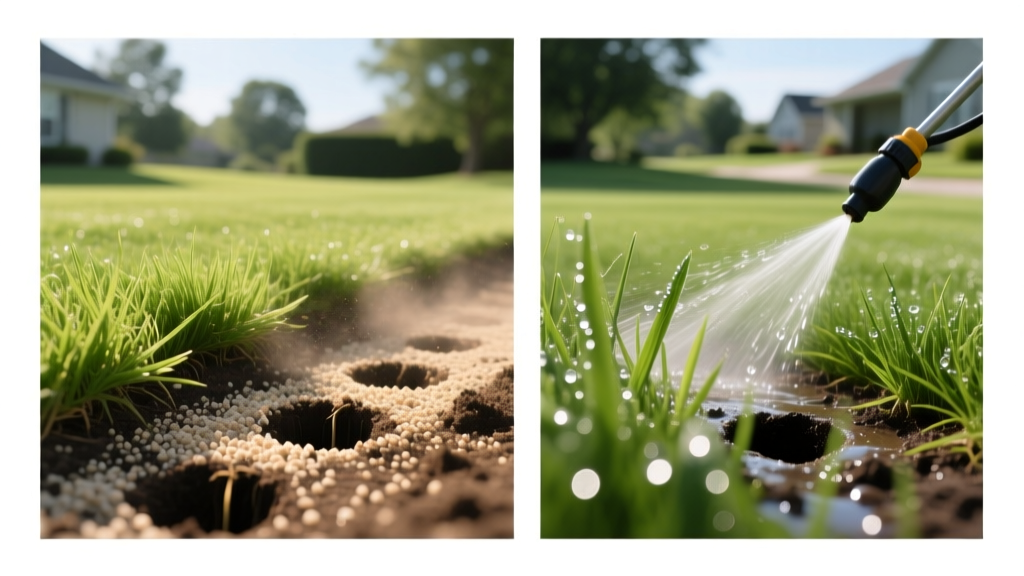
Granular vs Liquid Fertilizer After Core Aeration 2026
David ParkPublished
The Synergy Between Core Aeration and Fertilization
Core aeration is widely considered one of the most transformative cultural practices you can perform on a compacted lawn. By physically extracting plugs of soil, typically two to three inches deep, you alleviate compaction, improve gas exchange, and create direct conduits to the root zone. However, the true magic of core aeration is only unlocked when paired with the correct fertilization strategy. As we navigate the 2026 lawn care season, the debate between granular and liquid fertilizer applications post-aeration remains a central topic among turfgrass professionals and dedicated homeowners alike.
When you aerate, you are essentially creating thousands of miniature nutrient-delivery channels. How your chosen fertilizer interacts with these empty soil cores dictates the speed, efficiency, and safety of your lawn's recovery and growth. According to turfgrass researchers at the University of Minnesota Extension, timing your fertilizer application immediately after aeration maximizes nutrient uptake, but the physical state of the fertilizer—granular versus liquid—fundamentally changes how those nutrients behave within the aeration holes.
In this comprehensive guide, we will break down the granular vs liquid fertilizer application comparison specifically through the lens of core aeration, highlighting the latest 2026 product technologies, application risks, and best practices for both cool-season and warm-season grasses.
Granular Fertilizer: The Deep-Root Delivery System
Granular fertilizers consist of solid, pelletized nutrients (prills) that are broadcast across the lawn surface. When applied immediately after core aeration, granular fertilizers offer a distinct mechanical advantage: gravity.
How Granulars Interact with Aeration Holes
When a granular product is spread over a freshly aerated lawn, a significant percentage of the prills fall directly into the open aeration holes. This is highly beneficial for several reasons:
- Bypassing the Thatch Layer: Even with aeration, thick thatch can intercept nutrients. Prills that drop into the holes bypass this barrier entirely, resting directly in the root zone.
- Oxygen-Enhanced Microbial Activity: The primary reason for aeration is to introduce oxygen to compacted soil. In 2026, many premium granular fertilizers feature microbiome-enhanced coatings, including mycorrhizal fungi and beneficial bacteria. These microbes thrive in the oxygen-rich environment of the aeration hole, rapidly breaking down the granular prills and making nutrients bioavailable to the roots.
- Slow-Release Consistency: Modern polymer-coated granular fertilizers (such as the latest 2026 formulations of Scotts Turf Builder or specialized bio-stimulant blends) are designed to release nutrients based on soil temperature and moisture. Sitting inside the moist, protected environment of an aeration hole ensures a steady, predictable feeding cycle lasting anywhere from 6 to 12 weeks.
The Drawbacks of Granular Post-Aeration
The primary challenge with granular fertilizer is the requirement for immediate and thorough watering. If the prills are not watered into the soil, they can sit on the surface or get trapped in the thatch between holes, potentially burning the grass blades as temperatures rise. Furthermore, granular products rely on soil moisture to dissolve; if your region is experiencing a late-summer drought, the nutrients may remain locked in their solid state until significant rainfall occurs.
Liquid Fertilizer: The Rapid Response Option
Liquid fertilizers are water-soluble nutrient solutions applied via hose-end sprayers or pump tanks. They provide immediate gratification, often greening up a lawn within 24 to 72 hours. However, applying liquids over freshly pulled aeration cores requires a nuanced understanding of soil chemistry and osmotic pressure.
How Liquids Interact with Aeration Holes
When sprayed over an aerated lawn, liquid fertilizer does not just coat the soil surface; it pools directly into the aeration holes. This creates a highly concentrated column of nutrients and salts extending down to the root system.
- Immediate Root and Foliar Uptake: Liquids offer dual-action feeding. The spray coats the grass blades for immediate foliar absorption, while the excess pools into the aeration holes for root uptake. The Clemson University Home & Garden Information Center notes that liquid applications are excellent for addressing acute micronutrient deficiencies, such as iron chlorosis, which is common in high-pH soils.
- Integration with Soil Surfactants: In 2026, advanced liquid lawn care routines frequently combine fertilizers with wetting agents or soil surfactants. When sprayed into aeration holes, surfactants reduce the surface tension of the water, forcing the liquid fertilizer to disperse laterally through the compacted soil profile rather than just pooling at the bottom of the hole.
The Dangers of 'Hot Spots' in Aeration Cores
The most significant risk of applying liquid fertilizer post-aeration is root burn. Because the liquid pools in the empty voids left by the aerator, the concentration of nutrient salts in those specific 3-inch zones can become dangerously high. If the liquid fertilizer is not properly diluted, or if it is applied to a dry lawn without a subsequent deep watering, the osmotic pressure can draw moisture out of the delicate root hairs, causing localized necrosis (root burn). To mitigate this in 2026, turf professionals recommend using nano-chelated liquid fertilizers, which bind nutrients to organic molecules, drastically reducing the salt index and eliminating the risk of burn even when pooling in aeration holes.
Head-to-Head Comparison Chart
To help you decide which application method suits your specific lawn care goals this season, refer to the comparison table below.
| Feature | Granular Fertilizer | Liquid Fertilizer |
|---|---|---|
| Aeration Hole Interaction | Prills drop into holes, feeding roots directly as they dissolve. | Pools in holes; requires surfactant or heavy watering to prevent salt burn. |
| Nutrient Release Speed | Slow to medium (4 to 12 weeks). | Immediate (24 to 72 hours for visible greening). |
| Longevity of Results | High; sustained growth and deep root development. | Low; requires frequent reapplication (every 2 to 4 weeks). |
| 2026 Average Cost (per 5,000 sq ft) | $25 - $45 (Premium bio-stimulant blends). | $30 - $60 (Nano-chelated and humic acid blends). |
| Best Use Case Post-Aeration | Building long-term soil health and thickening turf before winter/summer stress. | Quick recovery from aeration stress and rapid color enhancement. |
| Equipment Required | Broadcast or drop spreader. | Hose-end sprayer, pump tank, or battery-powered backpack sprayer. |
Step-by-Step Post-Aeration Fertilization Guide
Regardless of whether you choose granular or liquid, following a precise sequence is vital for maximizing the benefits of your aeration service.
Step 1: Aerate and Leave the Plugs
Run your core aerator over the lawn in at least two perpendicular directions to ensure maximum hole density. Leave the extracted soil plugs on the lawn. They contain beneficial microbes and will break down naturally over the next two to three weeks, top-dressing the lawn and helping to decompose thatch.
Step 2: Choose Your Fertilizer Based on the Season
- Early Fall (Cool-Season Grasses): Core aeration is best performed in early fall. Apply a high-nitrogen granular fertilizer (e.g., a 24-0-10 NPK ratio). The granular prills will fall into the holes, providing the sustained energy the grass needs to push deep roots before the ground freezes.
- Spring (Warm-Season Grasses): For Bermuda or Zoysia grasses aerated during spring green-up, a liquid fertilizer rich in nitrogen and chelated iron can jumpstart growth. Ensure you water the lawn immediately after application to wash the liquids out of the concentrated aeration holes and into the surrounding soil matrix.
Step 3: Apply and Water Deeply
If using granular, set your spreader to the manufacturer's recommended setting and apply evenly. If using liquid, spray at a steady walking pace to avoid overlapping and over-saturating the aeration holes. Immediately following application, run your irrigation system or hose for 20 to 30 minutes. This is non-negotiable; it washes granular prills off the grass blades into the soil and dilutes the liquid salts pooling in the aeration cores, preventing root burn.
Environmental and Soil Health Considerations for 2026
As environmental regulations regarding nutrient runoff become stricter in 2026, the way we fertilize post-aeration is under scrutiny. Because aeration holes provide a direct pathway to deeper soil layers and potentially to groundwater, applying highly soluble synthetic liquids immediately before a heavy rainstorm can lead to rapid leaching of nitrates.
Granular fertilizers, particularly those utilizing methylene urea or polymer-coated technologies, are vastly superior in preventing leaching. The solid prills remain in the aeration hole and release nutrients only as the grass roots demand them. Furthermore, integrating liquid humic and fulvic acids into your post-aeration routine—regardless of your primary nitrogen source—has become a 2026 industry standard. These carbon-rich liquids coat the inside of the aeration holes, increasing the soil's cation exchange capacity (CEC) and ensuring that any applied nutrients are held tightly in the root zone rather than washing away.
Conclusion
The choice between granular and liquid fertilizer after core aeration is not a matter of one being universally better than the other; rather, it is about matching the delivery method to your specific lawn care objectives. Granular fertilizers excel at utilizing the physical architecture of aeration holes to deliver slow-release, long-lasting nutrition directly to the root zone, making them the undisputed champion for seasonal root-building and overall turf density. Liquid fertilizers, when used carefully with modern chelated formulas and surfactants, offer an unparalleled rapid-response mechanism to heal aeration stress and provide instant visual results.
By understanding the unique physics of the aeration hole and selecting the appropriate 2026 fertilizer technology, you can transform a simple mechanical chore into a powerful catalyst for a thicker, greener, and more resilient lawn.