Lawn Care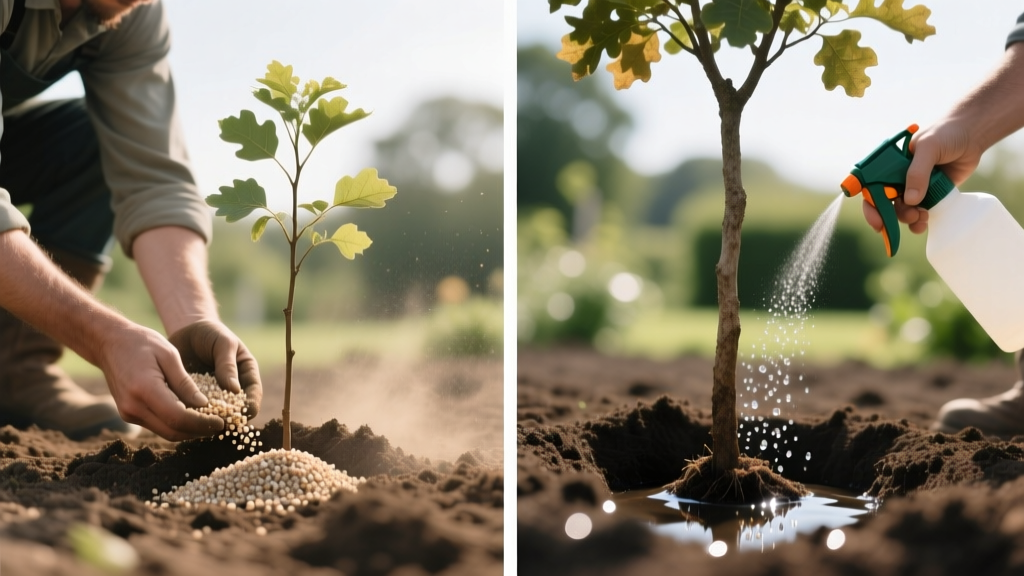
Granular vs Liquid Fertilizer for Trees: 2026 Planting Guide
Mike RodriguezPublished
The Critical Role of Fertilization in Tree Selection and Planting
When selecting and planting a new tree in your landscape, the initial fertilization strategy is just as critical as the hole you dig and the soil you backfill. As we navigate the 2026 planting season, arborists and horticulturists continue to debate the most effective nutrient delivery systems for newly transplanted trees. The choice between granular and liquid fertilizers fundamentally alters how a tree overcomes transplant shock, establishes its root system, and adapts to its new environment. This guide breaks down the science, application methods, and 2026 market realities of granular versus liquid tree fertilizers to ensure your newly selected trees thrive for decades.
Understanding Tree Root Dynamics in 2026
Before comparing fertilizer types, it is essential to understand how tree roots uptake nutrients. When you plant a tree, the fine, hair-like feeder roots—responsible for the vast majority of water and nutrient absorption—are often damaged or left behind at the nursery. According to the Arbor Day Foundation, the primary goal during the first year of planting is not explosive top growth, but rather vigorous root regeneration.
In 2026, soil science heavily emphasizes the role of the rhizosphere and mycorrhizal fungi in nutrient uptake. Fertilizers that disrupt this delicate microbial balance can actually hinder tree establishment. Therefore, the physical form of the fertilizer (granular vs. liquid) dictates how it interacts with the soil microbiome and the recovering root ball.
Granular Fertilizers: The Slow-Release Foundation
Granular fertilizers consist of dry, solid pellets or beads that are either broadcast over the soil surface or mixed into the backfill during planting. In recent years, polymer-coated slow-release granular technologies have advanced significantly, allowing for precise, temperature-dependent nutrient release.
Advantages of Granular Fertilizers
- Longevity: High-quality granular fertilizers can feed a newly planted tree for 3 to 9 months, reducing the need for frequent reapplication.
- Soil Integration: When mixed into the backfill soil (away from direct root contact), granular nutrients break down gradually with rainfall and irrigation, providing a steady baseline of nutrition.
- Cost-Effectiveness: For large-scale tree planting projects or orchard establishment, granular fertilizers remain the most economical choice per tree in 2026.
Drawbacks and Risks
The primary risk of granular fertilizer is root burn. If high-nitrogen synthetic granules are placed directly against the delicate root ball of a newly planted tree, the localized salt concentration can desiccate and kill the roots. Furthermore, granular fertilizers require adequate soil moisture to break down; in drought conditions, the nutrients remain locked in the pellets.
Top Granular Picks for 2026 Tree Planting
- Espoma Bio-tone Starter Plus (4-3-3): A premium organic granular option enriched with beneficial mycorrhizae. It is safe to mix directly into the backfill without risking root burn, making it a favorite among landscape professionals in 2026.
- Osmocote Smart-Release Tree & Shrub (19-6-12): Utilizing advanced 2026 polymer-coating technology, this synthetic option releases nutrients based on soil temperature, matching the tree's natural growth cycles.
Liquid Fertilizers: Immediate Relief and Rapid Uptake
Liquid fertilizers are concentrated solutions or water-soluble powders that are diluted in water and applied as a soil drench or foliar spray. For newly planted trees, liquid applications are primarily used as a 'rescue' or 'starter' treatment to combat immediate transplant shock.
Advantages of Liquid Fertilizers
- Immediate Availability: Because the nutrients are already dissolved, they are instantly available to the roots. This is crucial for trees showing signs of severe transplant stress.
- Root Stimulators: Many liquid formulations designed for tree planting include Indole-3-butyric acid (IBA), a rooting hormone that actively triggers the formation of new feeder roots.
- Even Distribution: Applying a liquid drench ensures that nutrients are evenly distributed throughout the root zone, avoiding the 'hot spots' associated with granular clumping.
Drawbacks and Risks
Liquid fertilizers are highly mobile in the soil profile. In sandy soils or during heavy spring rains, they can quickly leach past the root zone, leading to nutrient waste and potential groundwater contamination. Additionally, their effects are short-lived, typically lasting only 2 to 4 weeks, which necessitates a strict reapplication schedule throughout the first growing season.
Top Liquid Picks for 2026 Tree Planting
- Fertilome Root Stimulator & Plant Starter Solution (4-10-3): A classic liquid drench containing IBA to promote rapid root development in newly balled-and-burlapped (B&B) and container-grown trees.
- Neptune's Harvest Liquid Seaweed/Kelp: An organic liquid amendment packed with natural cytokinins and trace minerals that help trees withstand environmental stress and temperature fluctuations during their first summer.
Granular vs. Liquid Tree Fertilizer: 2026 Comparison Chart
| Feature | Granular Fertilizer | Liquid Fertilizer |
|---|---|---|
| Nutrient Release Speed | Slow to Moderate (Weeks to Months) | Immediate (Hours to Days) |
| Longevity in Soil | 3 to 9 Months | 2 to 4 Weeks |
| Application Timing | During planting (backfill) or early spring top-dress | Immediately post-planting and during stress periods |
| Avg. Cost per Tree (2026) | $1.50 - $4.00 | $2.50 - $6.00 (including labor/frequency) |
| Root Burn Risk | Moderate to High (if placed directly on roots) | Low (if diluted according to label instructions) |
| Best Use Case | Long-term baseline nutrition and soil building | Transplant shock recovery and root stimulation |
Step-by-Step Tree Planting Fertilization Protocol
To maximize the survival rate of your selected trees, landscape architects in 2026 recommend a hybrid approach that leverages the strengths of both granular and liquid formulations. Here is the optimal protocol for planting a new shade or ornamental tree:
Step 1: Soil Testing and Site Prep
Before selecting a fertilizer, conduct a soil test. The Penn State Extension strongly advises against blind fertilization, as excess phosphorus can inhibit the uptake of essential micronutrients like iron and zinc. Adjust your soil pH based on the specific tree species you have selected.
Step 2: The Granular Backfill Mix
When digging your planting hole, set aside the native soil. If using an organic, mycorrhizal-enhanced granular fertilizer (like Espoma Bio-tone), mix it thoroughly into the backfill pile at the rate specified on the package. Never throw granular fertilizer directly into the bottom of the hole or press it against the root ball.
Step 3: Planting and the Liquid Drench
Place the tree in the hole, ensuring the root flare is slightly above grade. Backfill with your amended soil, tamping gently to remove large air pockets. Once the hole is filled and mulched, apply a liquid root stimulator drench. Mix the liquid concentrate with water in a watering can or hose-end sprayer and saturate the root zone. This provides immediate hydration, settles the soil, and delivers rooting hormones directly to the cut root tips.
Step 4: Post-Planting Maintenance
For the remainder of the first growing season, rely on the slow-release granular fertilizer for baseline feeding. Only reapply liquid fertilizers if the tree exhibits signs of severe heat stress, chlorosis, or stunted growth. Remember that the University of Minnesota Extension notes that newly planted trees require consistent, deep watering far more than they require heavy fertilization during their first year.
Environmental Stewardship and Final Thoughts
As environmental regulations regarding nutrient runoff tighten in 2026, responsible tree planting requires mindful fertilizer application. Liquid fertilizers must be applied carefully to prevent leaching into storm drains, while granular fertilizers should be swept off hardscapes and back onto the soil. By understanding the distinct roles of granular and liquid fertilizers, you can tailor your planting strategy to the specific needs of your chosen tree species, ensuring a robust, resilient landscape for years to come.