
Landscaping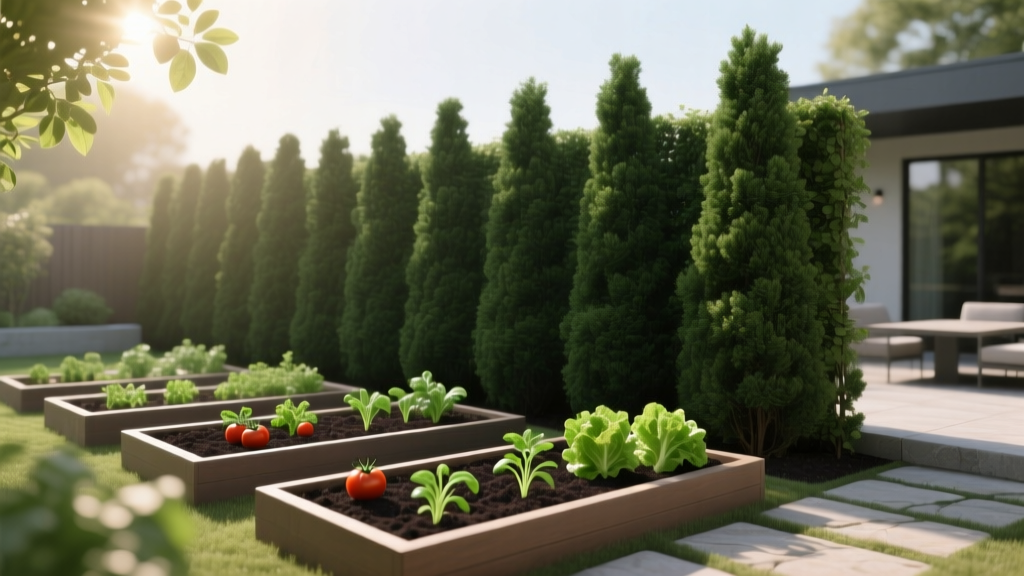
2026 Guide: Green Giant Arborvitae Privacy & Raised Beds
Mike RodriguezPublished
The 2026 Trend: Merging Privacy Hedging with Edible Landscapes
In 2026, the modern homestead is all about dual-purpose landscaping. Homeowners are no longer satisfied with purely ornamental yards; they want seclusion, beauty, and food security all in one cohesive design. One of the most popular and effective ways to achieve this is by integrating a backyard privacy screen with Green Giant arborvitae hedging alongside a thriving raised bed vegetable garden. The Thuja 'Green Giant' is the undisputed king of fast-growing evergreen privacy screens, capable of adding 3 to 5 feet of growth per year under optimal conditions. However, pairing these towering trees with sun-hungry vegetable crops requires careful planning, strategic spacing, and an understanding of microclimates.
When executed correctly, a Green Giant hedge does much more than block the view of your neighbors. It acts as a powerful windbreak, reduces soil erosion, and creates a stabilized microclimate that can actually extend your vegetable growing season. In this comprehensive guide, we will explore exactly how to design, plant, and maintain a Green Giant privacy screen that perfectly complements your raised bed vegetable garden in 2026.
Why Green Giant Arborvitae is the Ultimate Windbreak for Vegetables
Many gardeners overlook the impact of wind on vegetable productivity. High winds can snap delicate stems, strip moisture from leaves, and knock blossoms off tomato and pepper plants before they can set fruit. While solid wooden fences might seem like a good solution, they actually create severe wind turbulence and downdrafts on the leeward side, which can physically damage your crops.
A Green Giant arborvitae hedge acts as a permeable windbreak. The dense, needle-like foliage filters and slows down harsh gusts, reducing wind speed by up to 50% in the zone immediately behind the trees. According to research on agricultural windbreaks, a permeable barrier like an evergreen hedge provides a protected zone extending up to 10 times the height of the trees. For a mature 15-foot hedge, this means your raised beds will enjoy calm, stable air for up to 150 feet downwind, drastically improving pollination rates and moisture retention in your vegetable soil.
Strategic Placement: Spacing Trees and Raised Beds
The most common mistake landscapers and gardeners make is planting the privacy hedge too close to the raised beds. Green Giants are vigorous growers with expansive root systems and dense canopies that cast deep shade. Vegetables, particularly fruiting crops like tomatoes, eggplants, and squash, require a minimum of 6 to 8 hours of direct sunlight per day.
To avoid shading your crops, you must map the sun's trajectory across your yard. In the Northern Hemisphere, the sun arcs across the southern sky. Therefore, the ideal placement for your Green Giant privacy screen is on the north or northwest property line. This ensures the trees cast their shadows away from your raised beds during the peak growing months of summer.
Recommended Spacing Guidelines
Root competition is another critical factor. While raised beds elevate your vegetable soil, arborvitae roots will seek out the nutrient-rich, well-watered environment of your garden beds if given the chance. Use the table below to determine the minimum distance between your tree trunks and the edge of your raised beds.
| Tree Maturity / Height | Canopy Spread | Minimum Distance to Raised Bed | Root Barrier Required? |
|---|---|---|---|
| Young (Under 10 ft) | 3 - 5 ft | 6 feet | No |
| Mid-Growth (10 - 25 ft) | 8 - 12 ft | 10 feet | Recommended |
| Mature (25 - 40+ ft) | 12 - 20 ft | 15+ feet | Yes (HDPE Liner) |
For a deeper understanding of the spatial requirements and growth habits of this specific cultivar, the NC State Extension Plant Toolbox provides excellent botanical data on the Thuja 'Green Giant', confirming its massive mature spread and vigorous root foraging behavior.
Managing Soil pH and Root Competition
One of the hidden challenges of combining evergreens with edible landscapes is soil chemistry. Arborvitae thrive in slightly acidic to neutral soil (pH 6.0 to 7.0) and naturally drop acidic needles that can lower the soil pH over time. Most raised bed vegetables, however, prefer a slightly acidic to neutral pH of 6.2 to 6.8, but they are highly sensitive to sudden pH drops and the accumulation of acidic organic matter in their immediate root zone.
To manage this in 2026, smart gardeners are utilizing heavy-duty HDPE (High-Density Polyethylene) geomembrane root barriers. Trenching a 24-inch deep HDPE barrier between the hedge and the raised beds prevents the arborvitae roots from siphoning water and nutrients from your vegetable soil. Furthermore, maintaining a 3-foot mulch ring around the base of the trees (using cedar or pine bark) catches the acidic needle drop, keeping it far away from the alkaline-buffered soil mixes used in your raised beds.
The Ideal 2026 Raised Bed Soil Mix
Because your beds are situated near a massive water-consuming hedge, your raised bed soil must have exceptional moisture-retention properties without becoming waterlogged. The classic 'Mel's Mix' has been updated for 2026 sustainable gardening standards:
- 30% High-Quality Compost: Provides a slow-release nutrient base.
- 30% Coir (Coconut Coir):strong> A sustainable, pH-neutral alternative to peat moss that holds up to 10 times its weight in water, combating the moisture-drawing effect of nearby tree roots.
- 20% Coarse Vermiculite: Aerates the soil and traps nutrients.
- 20% Biochar: A 2026 staple for improving soil microbiology and retaining water in high-drainage raised beds.
For more foundational advice on constructing and filling these structures, the University of Minnesota Extension's guide on raised bed gardening offers timeless, science-backed principles on soil stratification and drainage that remain essential for modern growers.
Zoned Irrigation: Deep Roots vs. Shallow Beds
You cannot water your privacy screen and your vegetable beds on the same irrigation schedule. Vegetables require frequent, consistent, shallow watering to keep their topsoil moist and prevent issues like blossom end rot. Green Giant arborvitae, conversely, require infrequent but incredibly deep soakings to encourage their taproots to dive deep into the subsoil, making them drought-resistant and structurally sound.
In 2026, the integration of smart, multi-zone drip irrigation controllers is the standard for this type of mixed landscaping. You should install two completely separate drip zones:
- Zone A (Vegetable Beds): Uses high-flow drip tape or grid emitters (1 gallon per hour) placed every 6 inches. Programmed to run for 20-30 minutes daily during peak summer heat.
- Zone B (Arborvitae Hedge): Uses inline drip tubing with emitters spaced 18 inches apart, laid in a zigzag pattern along the root ball. Programmed to run for 2 to 3 hours, but only once every 10 to 14 days, forcing the water deep into the soil profile.
Pruning for Light Penetration and Airflow
To ensure your raised beds receive maximum sunlight, especially during the shorter days of spring and autumn, you must practice a technique called 'limbing up.' This involves pruning the lowest branches of the Green Giant arborvitae up to a height of 4 to 5 feet from the ground. By removing the lower skirt of the tree, you allow the low-angle morning and late-afternoon sun to pass under the canopy and reach your vegetable beds. Additionally, limbing up improves airflow at the ground level, reducing the humidity and fungal pressure that often plagues both evergreen hedges and susceptible vegetable crops like cucumbers and zucchini.
2026 Cost Breakdown for a 50-Foot Privacy and Veggie Setup
Budgeting is a crucial part of any landscaping project. Below is an estimated cost breakdown for installing a 50-foot Green Giant privacy screen paired with three 4x8-foot raised vegetable beds in 2026. Prices reflect current nursery rates, stabilized lumber costs, and modern smart irrigation components.
- Green Giant Arborvitae (6-7 ft tall, 15-gallon pots): 8 trees spaced ~6 feet apart = $1,200 ($150 each)
- Cedar or Composite Raised Beds (4x8 ft, 17-inch depth): 3 kits = $750 ($250 each)
- Organic Soil & Biochar Mix (Approx. 4 cubic yards): Bulk delivery = $350
- HDPE Root Barrier (50 ft roll, 24-inch depth): $180
- Smart Multi-Zone Drip Irrigation Kit & Controller: $250
- Mulch, Compost, and Soil Amendments: $150
- Total Estimated Material Cost: $2,880
While the upfront investment is notable, the dual return on investment—increased property value from mature landscaping and thousands of dollars in organic produce over the coming decades—makes this one of the smartest landscaping decisions a homeowner can make.
Best Vegetables to Grow Near Evergreen Windbreaks
If your spacing is slightly tighter than recommended, or if you are dealing with a partially shaded microclimate created by the hedge, choose your crops wisely. Leafy greens and root vegetables are far more tolerant of the dappled shade cast by the arborvitae. In 2026, top-performing crops for these transitional zones include Swiss chard, kale, spinach, radishes, and bush peas. Reserve your full-sun, southernmost raised beds for your heavy feeders like indeterminate tomatoes, bell peppers, and sweet corn.
Conclusion
Integrating a backyard privacy screen with Green Giant arborvitae hedging into a raised bed vegetable garden is a masterclass in functional landscape design. By respecting the spatial needs of the trees, managing root competition with modern barriers, and utilizing smart irrigation zoning, you can create a lush, private, and highly productive edible oasis. As you plan your 2026 garden layout, remember that the hedge and the harvest do not have to compete; with the right strategy, they will thrive together for decades to come.

