
Landscaping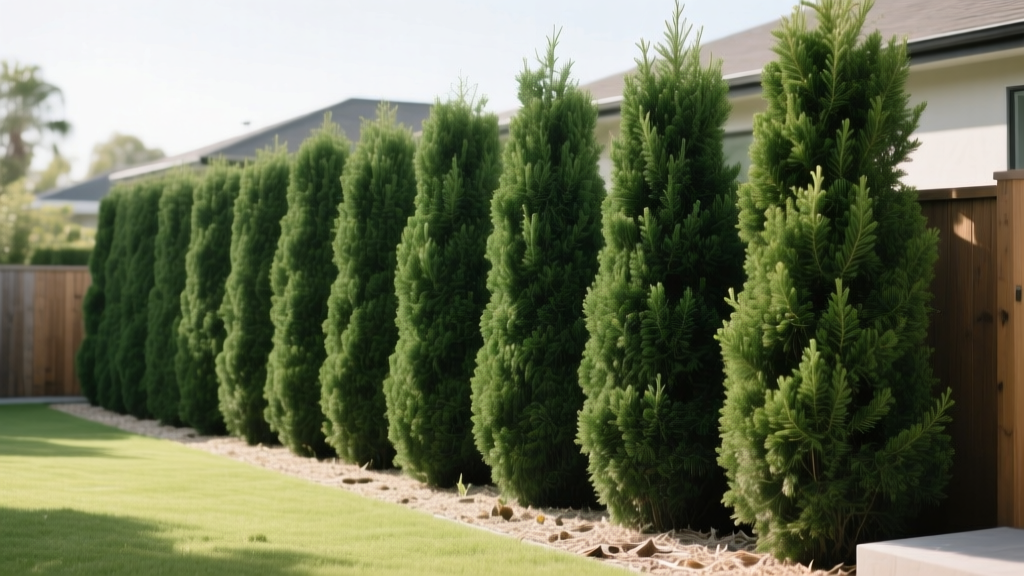
Planting Green Giant Arborvitae Privacy Screens 2026
Sarah ChenPublished
The Ultimate Guide to Green Giant Arborvitae Privacy Screens in 2026
As homeowners continue to invest heavily in outdoor living spaces and backyard sanctuaries throughout 2026, the demand for natural, living privacy fences has reached an all-time high. Among the myriad of evergreen options available, the Green Giant arborvitae (Thuja standishii x plicata 'Green Giant') remains the undisputed champion for rapid, dense, and low-maintenance privacy screens. Whether you are looking to block a neighbor's second-story window, muffle street noise, or create a lush backdrop for your garden beds, this comprehensive planting guide will ensure your hedge thrives for decades.
Originally introduced to the National Arboretum in the late 20th century, the Green Giant has only grown in popularity. By 2026, advanced nursery cultivation techniques have made high-quality, disease-resistant specimens more accessible than ever. However, proper site selection, precise spacing, and correct planting techniques are critical to avoiding the common pitfalls that lead to stunted growth or root rot.
Why Choose the Green Giant Arborvitae?
The Green Giant is a hybrid cross between the Japanese arborvitae and the Western redcedar. This genetic combination results in a tree that is exceptionally vigorous, highly resistant to the diseases that plague other evergreens, and remarkably adaptable to various soil types. According to the University of Maryland Extension, this cultivar can achieve growth rates of 3 to 5 feet per year under optimal conditions, making it the fastest way to establish a mature privacy screen in your landscape.
Furthermore, the Green Giant exhibits excellent resistance to bagworms and deer browsing compared to its cousins, and it tolerates heavy snow and ice loads without suffering the severe branch splitting common in other upright evergreens.
Cultivar Comparison: Choosing the Right Privacy Tree
Before committing to a massive planting project, it is helpful to see how the Green Giant stacks up against other popular privacy trees available at nurseries in 2026.
| Tree Variety | Growth Rate (Per Year) | Mature Height | Disease/Pest Resistance | 2026 Avg. Cost (6ft B&B) |
|---|---|---|---|---|
| Green Giant Arborvitae | 3 - 5 feet | 40 - 60 feet | Excellent | $130 - $180 |
| Leyland Cypress | 3 - 4 feet | 50 - 70 feet | Poor (Prone to Canker) | $110 - $150 |
| Emerald Green Arborvitae | 1 - 2 feet | 12 - 15 feet | Moderate | $80 - $120 |
| Nellie Stevens Holly | 2 - 3 feet | 20 - 30 feet | Excellent | $140 - $190 |
Note: B&B stands for Balled and Burlapped. Container-grown specimens (3 to 5-gallon pots) are generally cheaper ($45 to $85) but will take longer to achieve full privacy.
Site Selection and Spacing Strategies
Sunlight and Soil Requirements
Green Giants thrive in full sun to partial shade, requiring a minimum of 4 to 6 hours of direct sunlight daily for the densest foliage. While they are adaptable to poor soils, they prefer well-draining, slightly acidic to neutral soil (pH 6.0 to 7.0). Avoid planting in areas where water pools for more than 24 hours after a heavy rain, as 'wet feet' will quickly lead to fatal root rot.
Calculating Spacing for a Solid Screen
The most common mistake homeowners make is planting trees too close together in an attempt to get instant privacy. Overcrowding leads to competition for water and nutrients, poor air circulation, and increased susceptibility to fungal diseases.
- Single Row Privacy Screen: Plant trees 5 to 6 feet apart, measured from trunk to trunk. This allows the canopies to merge into a solid wall within 2 to 3 years while maintaining adequate airflow.
- Staggered Double Row (For Wide Properties):strong> If you have the space, plant two rows offset from one another. Space the rows 4 feet apart, and space the trees within each row 6 feet apart. This creates an impenetrable, sound-dampening barrier.
- Property Lines and Utilities: Always plant at least 3 to 4 feet inside your property line to prevent future disputes with neighbors. Crucially, call 811 before you dig to have underground utility lines marked.
Step-by-Step Planting Instructions
Proper planting technique is the single most important factor in the long-term survival of your arborvitae hedge. Follow these steps for 2026 best practices:
- Dig the Hole Correctly: The hole should be 2 to 3 times wider than the root ball to encourage lateral root expansion, but no deeper than the root ball itself. The top of the root flare (where the trunk widens at the base) must sit slightly above the surrounding soil grade.
- Prepare the Root Ball: If planting a container-grown tree, gently tease out the outer roots to prevent girdling. For B&B trees, place the tree in the hole, then cut and remove all synthetic burlap, twine, and wire baskets. Leaving wire baskets will eventually strangle the trunk.
- Backfill with Native Soil: Avoid the temptation to fill the hole with rich potting soil or heavy compost. Amending the backfill too heavily creates a 'bathtub effect,' where water collects in the loose soil and drowns the roots. Use the native soil you dug out, breaking up any large clods.
- Water and Tamp: As you backfill, pause halfway to water the soil deeply, eliminating large air pockets. Finish filling and gently tamp the soil with your foot—do not pack it so tightly that it restricts oxygen flow.
- Apply Mulch Properly: Apply a 2 to 3-inch layer of organic hardwood mulch over the planting area to retain moisture and regulate soil temperature. Keep the mulch at least 3 inches away from the trunk itself to prevent 'volcano mulching,' which invites rot and rodent damage.
Watering and Smart Irrigation
Newly planted arborvitae require consistent moisture to establish their root systems. The The Morton Arboretum recommends deep, infrequent watering rather than shallow daily sprinklings. During the first growing season, provide 1 to 1.5 inches of water per week, either from rainfall or manual irrigation.
In 2026, integrating a smart drip irrigation system is highly recommended for privacy hedges. Drip lines deliver water directly to the root zone, minimizing evaporation and keeping the foliage dry, which prevents fungal issues. Connect your drip system to a Wi-Fi-enabled smart controller that adjusts watering schedules based on local hyper-local weather forecasts and soil moisture sensors.
Fertilization Schedule
Green Giants are not heavy feeders, but an annual nutrient boost will maximize their explosive growth rate. In early spring, just before the new growth flush begins, apply a slow-release, balanced evergreen fertilizer (such as a 10-8-6 or 14-14-14 NPK ratio). Avoid high-nitrogen liquid fertilizers in late summer, as this promotes tender new growth that will be severely damaged by winter freezes.
Pruning and Long-Term Maintenance
One of the greatest advantages of the Green Giant is its natural, uniform pyramidal shape, which requires minimal pruning. However, to maintain a dense, formal hedge, light annual shearing is beneficial.
- Timing: Prune in late spring or early summer after the first flush of new growth has hardened off. Avoid pruning in late fall.
- Technique: Use sharp, clean hedge shears. Always ensure the base of the hedge is slightly wider than the top (a technique called 'battering'). This allows sunlight to reach the lower branches, preventing the bottom of the screen from thinning out and turning brown.
- Central Leader: If a tree develops multiple competing central leaders (main trunks), prune the weaker ones away in the tree's first year to ensure structural integrity against heavy snow loads.
Troubleshooting Common Pests and Diseases
While highly resilient, Green Giants are not entirely immune to environmental stress and pests. The Clemson University Cooperative Extension notes that spider mites and bagworms are the most frequent culprits when arborvitae health declines.
Bagworms
These caterpillars build protective, spindle-shaped bags out of the tree's own foliage, eventually defoliating entire branches. Inspect your hedge in late spring. If you spot small bags, hand-pick them and destroy them. For severe infestations, apply an organic Bacillus thuringiensis (Bt) spray while the caterpillars are still small and actively feeding in early summer.
Winter Burn and Desiccation
In regions with harsh, windy winters, the foliage may turn bronze or brown due to moisture loss when the ground is frozen. To prevent winter burn, ensure your trees are deeply watered in late autumn before the ground freezes. For young hedges exposed to prevailing winds, erecting a temporary burlap windbreak for the first two winters can significantly reduce desiccation stress.
Conclusion
Investing in a Green Giant arborvitae privacy screen is one of the most effective and aesthetically pleasing landscaping upgrades you can make to your property in 2026. By respecting their spacing requirements, planting them at the correct depth, and establishing a smart watering routine, your living fence will provide lush, green seclusion and significantly boost your home's curb appeal for decades to come.

