
Landscaping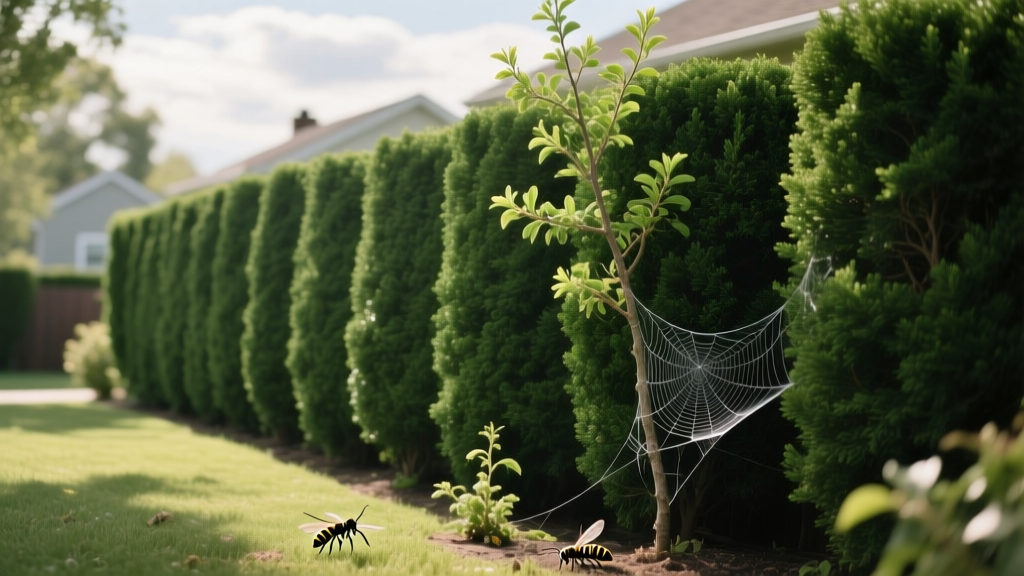
Green Giant Arborvitae Privacy Screen 2026: Web Worm Control
Sarah ChenPublished
The 2026 Standard for Backyard Privacy Screens
As homeowners continue to prioritize outdoor living spaces and secluded backyard retreats in 2026, the Green Giant arborvitae (Thuja standishii x plicata 'Green Giant') remains the undisputed champion of privacy hedging. Capable of growing three to five feet per year under optimal conditions, this robust evergreen provides a dense, year-round visual barrier that withstands heavy snow, ice, and varying soil conditions. However, establishing a flawless privacy screen requires more than just proper planting; it demands vigilant pest management. Among the most unsightly and potentially damaging pests to target these hedges are tree web worms—specifically the fall webworm and the closely related bagworm, which both utilize silk webbing to defoliate arborvitae foliage.
Planting Your Green Giant Screen: Spacing and Soil Prep
Before addressing pest control, a healthy, stress-free hedge is your first line of defense. When planting your Green Giant privacy screen in the 2026 season, proper spacing is critical. Plant trees five to six feet apart for a rapid, solid privacy wall, or eight feet apart if you prefer a staggered, more natural hedge that allows for better air circulation. Good airflow is essential for drying foliage and deterring fungal diseases and pest habitats.
Dig planting holes twice as wide as the root ball but no deeper, ensuring the root flare sits slightly above the native soil grade. Green Giants prefer a soil pH between 6.0 and 8.0. Amend heavy clay soils with organic compost to improve drainage, as waterlogged roots will stress the tree, making it highly susceptible to insect attacks. Apply a two-to-three-inch layer of hardwood mulch around the base, keeping it strictly away from the trunk to prevent rot and rodent damage.
Identifying the Web Worm Threat on Arborvitae
When homeowners complain of 'web worms' in their arborvitae, they are typically encountering one of two distinct pests that spin protective silk structures on the foliage. Accurate identification is the cornerstone of effective 2026 pest management.
1. The Fall Webworm (Hyphantria cunea)
Fall webworms are notorious for creating large, messy, silken tents that envelop the tips of branches, usually appearing in late summer and early autumn. According to the University of Minnesota Extension, these caterpillars feed gregariously inside their webs, expanding the tent as they consume the foliage. While fall webworms rarely kill a mature tree, severe defoliation on a young, establishing privacy screen can stunt the current year's growth and leave the hedge looking ragged and sparse just before winter.
2. The Bagworm (Thyridopteryx ephemeraeformis)
Often confused with webworms, bagworms are actually a much greater threat to Green Giant arborvitae. Instead of a large communal tent, bagworms construct individual, spindle-shaped silken bags camouflaged with bits of dead arborvitae foliage. They feed continuously from early summer through fall. The Clemson University Home & Garden Information Center notes that heavy bagworm infestations can completely defoliate and kill sections of an arborvitae hedge if left untreated, as the evergreen cannot easily regenerate foliage from completely bare, older wood.
The 2026 Climate Factor: Extended Feeding Seasons
Landscaping in 2026 requires adapting to shifting climate patterns. Warmer, extended autumns in many hardiness zones mean that fall webworms and bagworms are feeding later into the year. This extended window allows for larger caterpillar instars (growth stages) that are more resistant to biological controls and can consume significantly more biomass before winter dormancy. Consequently, monitoring your privacy screen must begin in early June and continue through late October.
Integrated Pest Management: Mechanical and Cultural Controls
For young privacy screens where the canopy is easily reachable, mechanical control is highly effective and environmentally friendly.
- Manual Removal: Inspect your Green Giants weekly during the summer. Use bypass pruners to snip off branch tips containing fall webworm tents or individual bagworm cases. Drop them into a bucket of soapy water to ensure they are destroyed.
- High-Pressure Water: For fall webworm tents that are slightly out of reach, a strong blast from a garden hose can break open the silken webbing. This exposes the caterpillars to natural predators like birds, parasitic wasps, and fungal pathogens.
- Promote Airflow: Lightly prune the interior of the hedge in early spring to remove dead wood and improve air circulation, making the environment less hospitable for pest egg-laying.
Biological and Chemical Treatment Options
When infestations are too widespread for hand-picking, targeted sprays are necessary. Timing is everything; treatments must be applied when the caterpillars are young and actively feeding outside or near the edges of their webs.
Biological Controls (Organic)
Bacillus thuringiensis var. kurstaki (Btk) is a naturally occurring soil bacterium that specifically targets caterpillars. When ingested, it disrupts their digestive system. Btk is highly effective on young webworms and bagworms and is completely safe for beneficial insects, pets, and humans. Another excellent organic option is Spinosad, a bacterial fermentation product that provides slightly longer residual control and works on slightly larger caterpillars.
Chemical Controls (Synthetic)
If the hedge is severely threatened and the caterpillars have reached their later, larger instars, synthetic pyrethroids (like Bifenthrin or Permethrin) or systemic options may be required. However, broad-spectrum insecticides should be a last resort in 2026 sustainable landscaping, as they can harm local pollinator populations and trigger secondary pest outbreaks, such as spider mites, which are a major issue for arborvitae in hot, dry weather.
Comparison Chart: Web Worm Treatment Options for 2026
| Treatment Type | Active Ingredient | Best Application Time | Pros | Cons |
|---|---|---|---|---|
| Biological | Btk (Bacillus thuringiensis) | Early summer when caterpillars are small | Safe for pollinators; highly targeted | Washes off in rain; ineffective on large larvae |
| Biological | Spinosad | Mid-summer upon first sign of webbing | Good residual activity; organic approved | Toxic to bees until dry; higher cost |
| Chemical | Bifenthrin / Permethrin | Late summer for severe, late-stage outbreaks | Fast knockdown; kills large caterpillars | Harms beneficial insects; can cause mite flare-ups |
| Mechanical | Pruning / Water Pressure | Anytime webs or bags are visible | Zero chemical cost; immediate results | Labor intensive; difficult on tall, mature hedges |
Long-Term Hedge Health and Vigor
A vigorously growing Green Giant arborvitae can easily outgrow minor web worm damage. To ensure your privacy screen remains thick and vibrant throughout the 2026 season and beyond, implement a strict fertilization and watering regimen. Apply a slow-release, balanced evergreen fertilizer (such as a 12-6-4 formulation with minor micronutrients) in early spring just before the new growth flush. Avoid fertilizing in late summer or fall, as this promotes tender new growth that is highly susceptible to winter burn and late-season pest feeding.
During the critical first two years of establishment, provide your hedge with one to two inches of water per week, utilizing soaker hoses or drip irrigation to keep the foliage dry. Wet foliage encourages fungal blights, which compound the stress caused by insect defoliation. By combining proper cultural practices with targeted, timely web worm interventions, your Green Giant privacy screen will remain a lush, impenetrable, and beautiful landscape feature for decades to come.

