Gardening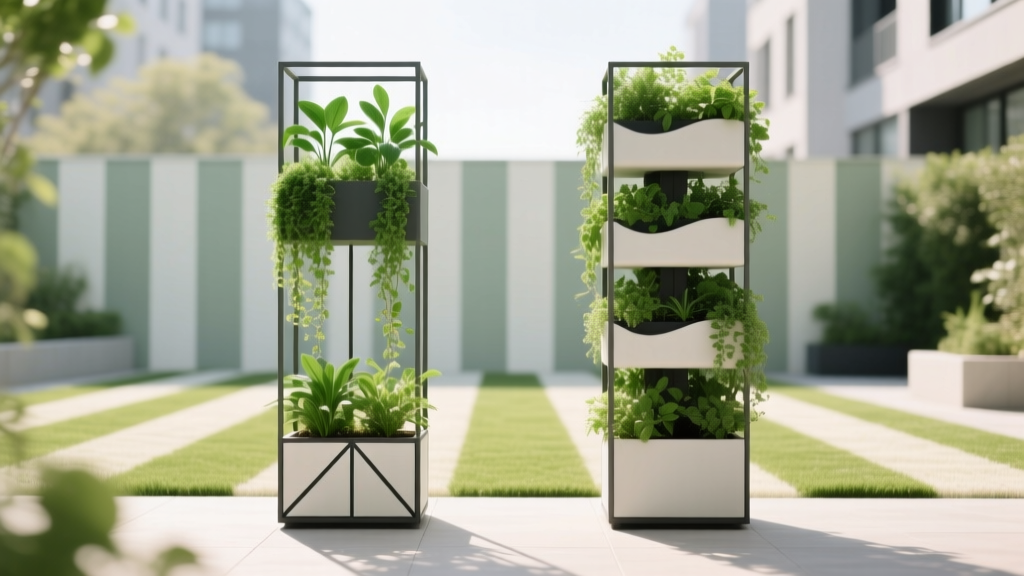
GreenStalk vs Garden Tower 2: 2026 Aesthetic Pattern Guide
Anna KowalskiPublished
Elevating Lawn Striping with Vertical Focal Points
When master landscapers and dedicated homeowners think about lawn striping, the focus is almost exclusively on the turf. The rich, alternating bands of light and dark grass created by a lawn striper kit are a testament to precise mowing and healthy turfgrass. However, as we move through the 2026 gardening season, the most breathtaking landscape designs are those that treat the striped lawn not as the final product, but as a canvas. To truly elevate a patterned lawn, you need verticality. You need architectural focal points that draw the eye, anchor the geometry, and provide a lush, living contrast to the horizontal lines of the turf. This is where vertical garden towers come into play.
Integrating vertical planters into a landscape defined by aesthetic patterns—whether it is a formal checkerboard, sweeping diagonal stripes, or concentric circles—requires a careful balance of form, function, and visual weight. The two undisputed heavyweights in the vertical planting space are the GreenStalk system and the Garden Tower 2. But which one is right for your specific landscape pattern? In this comprehensive 2026 guide, we will compare these two iconic systems strictly through the lens of aesthetic landscape design, spatial geometry, and lawn pattern integration.
The Geometry of Stripes: Why Verticality Matters
Before diving into the product comparison, it is essential to understand the visual mechanics of lawn striping. When you mow diagonal stripes across a rectangular lawn, you create a powerful optical illusion that directs the viewer's eye toward a specific vanishing point or corner. If that corner is empty, the eye simply slides off the property into the neighbor's yard or the street, leaving the landscape feeling unfinished.
By placing a vertical garden tower at these terminal points, you create a 'living bookend.' According to landscape design principles highlighted by Penn State Extension, vertical elements in the garden are crucial for breaking up flat planes and establishing a three-dimensional aesthetic. A well-placed tower stops the eye, forces the viewer to take in the entire expanse of the striped lawn, and provides a lush, colorful exclamation point at the end of your turf's geometric lines.
GreenStalk: Architectural Symmetry for Formal Patterns
The GreenStalk system, particularly the 5-tier and 7-tier models updated for 2026, is a masterclass in modular, geometric design. Unlike single-mold cylinders, GreenStalk is composed of stacked, tiered planters that create a slightly stepped, 'wedding cake' silhouette. This structural profile mimics classical architecture, making it the ultimate choice for formal, highly structured lawn patterns.
Best Pattern Matches: Checkerboards and Diagonals
If your lawn features a crisp checkerboard pattern or sharp, 45-degree diagonal stripes, the GreenStalk is your ideal companion. The clean lines and distinct horizontal tiers of the GreenStalk echo the structured, mathematical precision of formal turf patterns. In 2026, GreenStalk introduced new UV-resistant matte finishes in slate stone and terracotta, which provide a sophisticated, hardscape-like appearance even when the plants are just beginning to establish.
Because the GreenStalk lacks a central composting tube, its soil volume is distributed evenly throughout the tiers, giving it a lower center of gravity and a highly stable, grounded look. When placed at the intersection of two diagonal lawn stripes, a pair of GreenStalk towers can act like classical columns framing a vista, enhancing the symmetry and grandeur of your outdoor space.
Garden Tower 2: Organic Curves for Naturalistic Designs
On the other end of the aesthetic spectrum is the Garden Tower 2. This 50-plant, cylindrical powerhouse is defined by its monolithic, slightly bulging shape and its integrated central vermicomposting tube. While it is an absolute marvel for soil health and closed-loop gardening, its aesthetic profile is decidedly more organic, rustic, and earthy.
Best Pattern Matches: Concentric Circles and Sweeping Curves
The Garden Tower 2 is not the right choice for a rigid, formal checkerboard lawn. Instead, it shines when integrated into landscapes that feature curved mowing patterns, concentric circles, or naturalistic meadow-style borders. The cylindrical, continuous curve of the tower complements the sweeping arcs of a curved stripe pattern, creating a harmonious, flowing visual experience.
Furthermore, the Garden Tower 2's central composting core aligns perfectly with the sustainable, eco-conscious gardening trends dominating 2026. As noted by the EPA's Composting Basics guidelines, integrating vermicomposting directly into your garden beds reduces waste and enriches the soil microbiome. The slight rustic charm of the Garden Tower 2, especially when planted with cascading, wilder varieties of trailing flowers, softens the landscape and provides a beautiful, naturalistic contrast to the manicured curves of your lawn.
2026 Feature & Aesthetic Comparison Table
To help you decide which tower best anchors your specific lawn pattern, review the head-to-head comparison below based on 2026 specifications and landscape design applications.
| Feature | GreenStalk (5-Tier 2026 Model) | Garden Tower 2 (2026 Model) |
|---|---|---|
| Aesthetic Profile | Modular, tiered, architectural, formal | Monolithic, cylindrical, organic, rustic |
| Best Lawn Pattern Match | Checkerboard, sharp diagonals, parterres | Concentric circles, sweeping curves, borders |
| Visual Weight | Grounded, stepped, classical column feel | Tall, continuous, sculptural feel |
| Plant Capacity | 30 pockets (5-tier) / 42 (7-tier) | 50 pockets |
| Approx. 2026 Price | $169 - $199 (Tower only) | $349 - $399 (With composting core) |
| Filled Weight (Est.) | ~220 lbs (5-tier) | ~250 lbs |
Strategic Placement: Anchoring Your Stripes Without Killing Turf
A critical mistake many gardeners make when integrating heavy vertical planters into a striped lawn is placing them directly on the grass. A fully loaded GreenStalk or Garden Tower 2 can easily exceed 200 pounds. Leaving this weight on your carefully striped Kentucky Bluegrass or Bermuda grass will suffocate the turf, leaving a dead, yellow ring that ruins the aesthetic pattern.
The Hardscape Node Solution
To maintain the integrity of your lawn stripes while incorporating these towers, you must create 'hardscape nodes.' These are small, permeable base pads that align with your landscape's geometry. For a diagonal stripe pattern, cut out a perfect 2x2 foot square of turf at the terminal point and install a flush, permeable paver base. This not only protects the grass but creates a deliberate, architectural transition from the soft turf to the structured planter. As The Old Farmer's Almanac suggests, proper base preparation and drainage are paramount for the longevity of both your vertical garden and the surrounding landscape.
Plant Selection for Color Blocking and Texture
The tower itself is only half of the aesthetic equation; the plants you choose will determine how well the tower integrates with your lawn's color palette. In 2026, 'color blocking' is the premier technique for tying vertical towers to horizontal turf.
- High Contrast for Formal Lawns: If you have a dark green, formal striped lawn, plant your GreenStalk with bright, solid blocks of color. Use pure white alyssum, deep purple petunias, or vibrant red geraniums. Avoid mixed, chaotic color palettes, which will clash with the precise lines of the turf.
- Tonal Harmony for Curved Lawns: For a Garden Tower 2 situated in a sweeping, curved landscape, use trailing plants that mimic the organic shape of the tower. Creeping jenny, trailing lobelia, or sweet potato vine will spill over the edges, softening the transition between the tower and the grass below.
- Edible Aesthetics: Both towers excel at growing herbs and leafy greens. Planting vibrant red-leafed amaranth or rainbow chard in your Garden Tower 2 adds a stunning, multi-colored texture that contrasts beautifully with the uniform green of a striped lawn.
Conclusion: Designing with Purpose in 2026
Mastering the art of lawn striping and aesthetic patterns requires looking beyond the mower. By treating your landscape as a three-dimensional canvas, you can use vertical garden towers to anchor your designs, draw the eye, and create breathtaking focal points. If your landscape demands formal symmetry and architectural precision, the GreenStalk is your 2026 champion. If your design flows with organic curves and eco-conscious sustainability, the Garden Tower 2 is the perfect sculptural addition. Choose the tower that matches your geometry, prepare a proper hardscape base, and watch your patterned lawn transform into a masterclass of landscape design.
