Gardening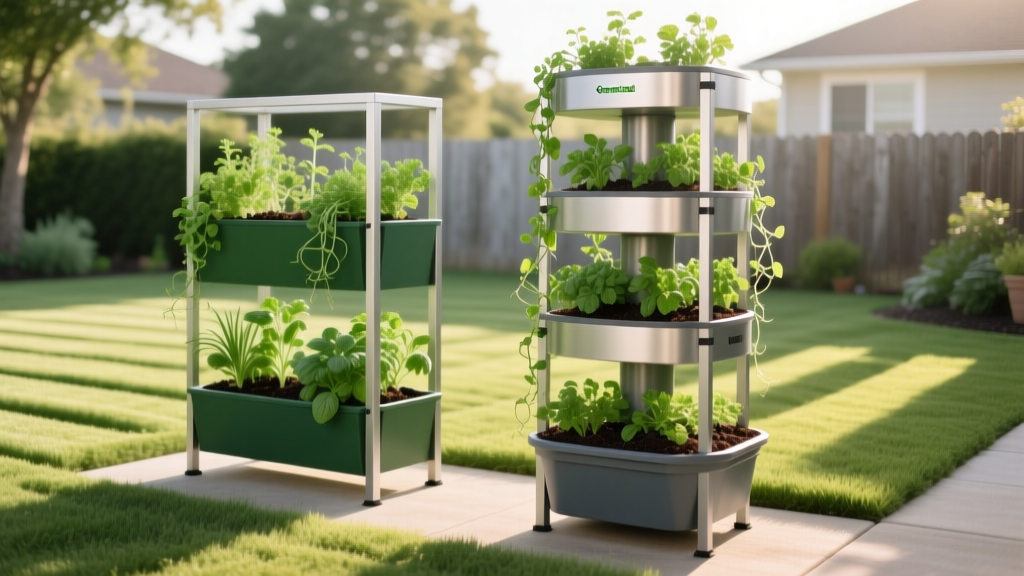
GreenStalk vs Garden Tower 2: 2026 Vertical Garden Comparison
James MillerPublished
Reclaiming Your Lawn for Advanced Mowing Patterns
For dedicated lawn care enthusiasts, achieving pristine, golf-course-quality turf is a labor of love. However, traditional ground-level vegetable patches and sprawling 4x8 raised beds often disrupt the visual flow of a yard and force awkward, jagged mower turns. As we enter the 2026 gardening season, the shift toward vertical container gardening has become a game-changer for turfgrass managers and home gardeners alike. By transitioning your crop production upward, you reclaim valuable square footage, allowing for long, unobstructed straight lines necessary for complex mowing patterns like the classic checkerboard, the diamond weave, or concentric circles.
But which vertical system best complements a lawn-centric landscape? In this comprehensive 2026 review, we compare the two titans of the industry: the GreenStalk Vertical Planter and the Garden Tower 2. We will evaluate their features, footprint, and base requirements, while providing expert mowing techniques to seamlessly integrate these towers into your turf maintenance routine.
The Space-Saving Advantage for Lawn Enthusiasts
According to turfgrass experts, the secret to perfect lawn striping lies in uninterrupted pass lengths and consistent overlapping. When you navigate around ground-level garden beds, you are forced to make tight, multi-point turns that can scuff the turf and break the visual continuity of your mowing pattern. Vertical garden towers occupy a mere two-foot by two-foot footprint while yielding the equivalent of twenty to fifty ground-planted crops. This spatial efficiency allows you to place your garden on a patio or a dedicated hardscape pad, leaving your main lawn completely open for intricate mowing designs.
GreenStalk Vertical Planter: The 2026 Overview
The GreenStalk system remains a favorite in 2026 for its modular, stackable design and American manufacturing. Constructed from food-safe, BPA-free polypropylene, the GreenStalk Original features five tiers with ten planting pockets each, supporting up to fifty plants. Its standout feature is the patented water reservoir system, which allows you to water the top tier and watch gravity distribute moisture evenly down through each subsequent layer.
Pros for the Lawn-Centric Gardener
- Compact Footprint: The base is incredibly small, making it easy to place on a paved patio adjacent to the lawn, keeping soil and water runoff off your pristine grass.
- Modular Height: You can customize the height from three to seven tiers, ensuring it does not cast unwanted shade on your sun-loving turfgrass varieties.
- Clean Aesthetics: The sleek, stone-colored resin blends beautifully into modern landscape designs without looking overly industrial.
Cons
- No Built-In Composting: You must fertilize manually or use liquid feeds, as there is no central vermicomposting core.
- Stability in High Winds: When placed on open, windy lawns or patios, the tall, top-heavy structure requires the GreenStalk support stand or a heavy base plate to prevent tipping.
Garden Tower 2: The Composting Powerhouse
The Garden Tower 2 is a robust, 50-plant vertical system that integrates a central vermicomposting tube. This core allows you to drop kitchen scraps and composting worms directly into the center of the tower, delivering continuous, nutrient-rich castings and 'worm tea' directly to the root zones of your plants. For the 2026 season, its UV-resistant plastic construction continues to be a benchmark for durability.
Pros for the Lawn-Centric Gardener
- Self-Sustaining Nutrition: The composting core reduces the need for external liquid fertilizers, minimizing the risk of chemical spills on your lawn that could cause turf burn.
- Wide, Stable Base: The Garden Tower 2 has a broader base than the GreenStalk, making it less prone to tipping when placed on uneven paver stones near the garden edge.
- High-Density Planting: With 50 pockets plus the top surface, it maximizes yield per square foot, keeping your primary lawn area completely clear for mowing.
Cons
- Extreme Weight: When fully loaded with wet soil and compost, the Garden Tower 2 can weigh over 500 pounds. It cannot be moved easily and will instantly kill any grass it is placed upon.
- Wider Footprint: The base requires a larger hardscape pad, which must be factored into your landscape design and mowing perimeter.
Head-to-Head Comparison Chart
| Feature | GreenStalk (5-Tier) | Garden Tower 2 |
|---|---|---|
| Plant Capacity | 50 Plants | 50 Plants + Top Planting |
| Fertilization Method | Manual / Liquid Feed | Central Vermicomposting Core |
| Watering System | Gravity-Fed Reservoir | Manual / Core Leaching |
| Estimated Soil Volume | 4.5 Cubic Feet | 6.5 Cubic Feet |
| Fully Loaded Weight | ~250 lbs | ~500+ lbs |
| Base Footprint | 19 x 19 inches | 24 x 24 inches |
| Best Placement | Patios, Balconies, Pavers | Reinforced Hardscape, Gravel Pads |
Base Preparation and Turf Protection
One of the most critical mistakes gardeners make is placing heavy vertical towers directly onto their lawns. A fully saturated Garden Tower 2 will compact the soil, suffocate the turfgrass roots, and create a muddy, depressed ring that ruins the leveling of your yard. To protect your lawn and maintain a smooth surface for your mower, you must install a proper base.
For the 2026 season, we recommend installing a 3x3 foot reinforced paver pad or a compacted gravel bed for your tower. This not only protects the grass but also creates a distinct hardscape focal point. When you are executing a mowing pattern, this pad becomes an anchor point for your design, much like a birdbath or a statue, allowing you to curve your mowing lines elegantly around the garden zone.
Mowing Techniques and Patterns Around Vertical Towers
Integrating vertical towers into your landscape requires specific mowing techniques to ensure the turf right up to the base remains healthy and visually striking. According to the Penn State Extension, maintaining the proper mowing height and avoiding soil compaction near garden borders is essential for turf vitality.
The Halo Cut Technique
When mowing around the paver pad that supports your GreenStalk or Garden Tower, use the 'Halo Cut' technique. Instead of ramming your mower deck into the hardscape edge—which can scalp the grass and damage your mower blades—leave a six-inch buffer zone around the pad. Use a high-quality string trimmer to carefully edge this halo. This prevents the mower wheels from dropping off the pavers and tearing the turf edge, maintaining a crisp, professional boundary between your garden zone and your mowing patterns.
The Concentric Circle Pattern
If your vertical tower is placed centrally in a circular lawn or a wide courtyard, the concentric circle mowing pattern is highly effective. Start by mowing a perfect circle around the tower's base pad. Then, work your way outward in expanding rings. This pattern naturally draws the eye toward the vertical garden tower as the centerpiece of the yard. As noted by the University of Minnesota Extension, varying your mowing pattern regularly prevents soil compaction and grain buildup in the grass, ensuring your turf remains upright and vibrant.
The Checkerboard with Hardscape Anchors
For rectangular lawns where the vertical tower is situated on a patio at the far end, the checkerboard pattern is ideal. Mow parallel lines down the length of the lawn, then turn around and mow perpendicular lines. The vertical tower acts as a visual terminus at the end of the lawn, giving your stripes a definitive destination. Because the tower is elevated, it does not block the sightlines of the stripes, an issue commonly faced with traditional, wide-raised beds.
Watering Runoff Management
Both the GreenStalk and Garden Tower 2 will produce some water runoff during heavy watering sessions or rainstorms. If this nutrient-rich water pools on your lawn, it can cause localized nitrogen burns or encourage fungal diseases in the turf. Always ensure your tower's base pad is slightly graded away from the lawn, directing runoff into a dedicated gravel French drain or a decorative rain garden bed. This keeps your mowing surface dry, firm, and free from muddy ruts caused by heavy mower tires.
Final Verdict for 2026
Choosing between the GreenStalk and the Garden Tower 2 ultimately depends on your landscape design and maintenance preferences. If you prioritize a lightweight, modular system that can be easily moved to accommodate seasonal lawn aeration or landscaping changes, the GreenStalk is the superior choice. Its clean lines and smaller footprint make it highly adaptable to modern lawn designs.
However, if you want a permanent, self-sustaining garden focal point that eliminates the need for synthetic fertilizers—and you have the space for a reinforced hardscape pad—the Garden Tower 2 is unmatched. By moving your vegetable production into either of these exceptional vertical systems, you free up your ground space, eliminate awkward mower turns, and unlock the full potential of your lawn's mowing patterns for the 2026 season and beyond.
