Gardening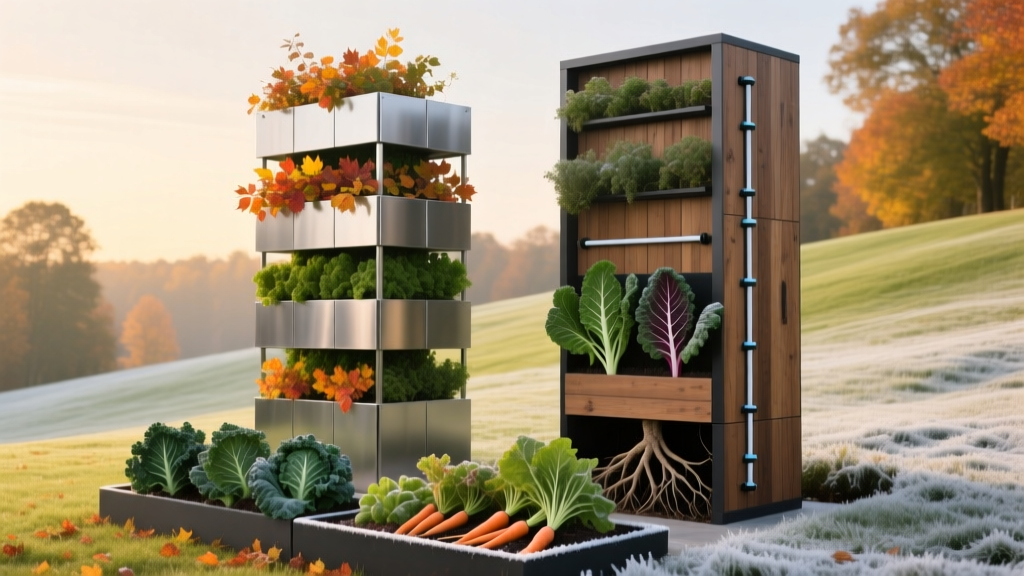
GreenStalk vs Garden Tower 2: 2026 Fall Crop Guide
Sarah ChenPublished
Transitioning to Fall: Vertical Towers and Lawn Care Synergy
As the sweltering heat of summer fades and the crisp air of autumn settles in, home gardeners and lawn care enthusiasts face a pivotal transition. Fall is the most critical season for turfgrass health. It is the time for core aeration, overseeding, dethatching, and deep root fertilization. However, managing these intensive lawn care routines often leaves little ground space for late-season vegetable gardening. This is where vertical garden towers become an indispensable asset for the modern homesteader.
In 2026, vertical gardening has evolved from a niche trend into a staple of efficient yard management. By moving your autumn crop production upward, you free up valuable ground space for lawn recovery and overseeding. Furthermore, the byproducts of fall lawn care—specificly shredded autumn leaves—can be seamlessly integrated into your vertical garden's soil and composting systems. When evaluating the market leaders for seasonal transitions, the GreenStalk and the Garden Tower 2 stand out as the premier choices. But which one is better suited for fall crops, winter preparation, and integration with your autumn lawn care schedule?
The Fall Lawn Care Connection: Mulching and Composting
Before diving into the tower comparison, it is essential to understand how fall lawn care feeds into vertical gardening. According to Penn State Extension, returning fallen leaves to the lawn via mulching mowers provides vital organic matter to the soil. However, you should always reserve a portion of your shredded, dry autumn leaves to act as 'browns' (carbon-rich material) for your garden tower compost.
Shredded leaves are the perfect amendment to balance the nitrogen-rich kitchen scraps you feed your tower worms during the fall. Additionally, if you are topdressing your lawn with compost in late autumn to protect grass crowns from winter freeze, the nutrient-dense castings harvested from a vertical tower compost core provide an elite, slow-release fertilizer for your turf.
GreenStalk: The Modular Soil Powerhouse
The GreenStalk system is renowned for its modular, stackable design and its highly efficient water reservoir system. Unlike traditional fabric grow bags or rigid planters, GreenStalk utilizes a patented water-catching mechanism that ensures every tier receives adequate hydration without waterlogging the roots.
Pros for Fall Gardening
- Deep Soil Volume: A standard 5-tier GreenStalk holds approximately 4 cubic feet of potting mix. This depth is exceptional for fall root crops like radishes, turnips, and even short-variety carrots.
- Heavy Feeder Support: Because it relies on a high-quality, user-mixed soil profile (typically a blend of peat moss, perlite, and vermicompost), it supports heavy autumn feeders like broccoli, cauliflower, and large kale varieties.
- Modular Breakdown: When winter arrives, GreenStalk tiers can be easily unstacked, cleaned, and stored flat in a garage or shed, freeing up patio space for winter lawn equipment storage.
Cons for Fall Gardening
- External Fertilization Required: GreenStalk does not have a built-in composting core. You must rely on liquid fertilizers or slow-release granular amendments mixed into the soil before planting your fall crops.
- Faster Cooling: Without the biological heat generated by active composting, the soil in a GreenStalk tower will cool down faster in late autumn, potentially shortening your frost-free growing window.
Garden Tower 2: The Vermicomposting Core
The Garden Tower 2 is a 50-plant vertical ecosystem defined by its central vermicomposting tube. This 6-inch perforated core runs the entire height of the tower, allowing red wiggler worms to process kitchen scraps directly within the soil column, delivering nutrients and biological heat straight to the plant roots.
Pros for Fall Gardening
- Biological Heat Generation: As the worms break down organic matter, the compost core generates a mild, consistent heat. This microclimate effect can extend your fall growing season by several weeks, protecting inner roots from early frosts.
- Direct Leaf Integration: You can feed your shredded fall lawn leaves directly into the compost tube alongside kitchen scraps, creating a closed-loop nutrient cycle right on your patio.
- High Plant Density: With 50 pockets plus the top planting area, it maximizes yield for fast-growing fall greens like spinach, arugula, and mache.
Cons for Fall Gardening
- Winter Worm Care: In freezing climates, the worm colony must be protected. You either need to move the massive, soil-filled tower into a garage or harvest the worms and store them indoors for the winter.
- Soil Compaction: Over time, the soil in the Garden Tower 2 can compact, making it slightly more challenging to plant dense fall root vegetables compared to the fluffier soil mix easily maintained in a GreenStalk.
Head-to-Head Comparison: 2026 Specifications
| Feature | GreenStalk (5-Tier) | Garden Tower 2 |
|---|---|---|
| Plant Capacity | 30 Pockets + Top | 50 Pockets + Top |
| Soil Volume | ~4.0 Cubic Feet | ~3.5 Cubic Feet |
| Composting System | External / Pre-mixed | Built-in Vermicompost Core |
| Fall Heat Retention | Moderate (Ambient) | High (Biological Worm Heat) |
| Root Crop Suitability | Excellent (Deep Pockets) | Fair (Best for Greens/Herbs) |
| Winter Storage | Easy (Stackable Tiers) | Difficult (Single Solid Unit) |
| Approx. 2026 Base Price | $159.00 | $359.00 |
Best Fall Crops for Vertical Towers
When planning your autumn harvest, timing is everything. The University of Minnesota Extension recommends calculating your planting dates based on the first expected fall frost, adding a two-week 'fall factor' to account for slowing growth rates as daylight decreases.
Top Picks for GreenStalk
- Winter Radishes & Turnips: The deep, loose soil pockets of the GreenStalk are perfect for root expansion.
- Garlic & Shallots: Planting alliums in the top tier or lower pockets in late autumn allows them to establish roots before winter dormancy.
- Swiss Chard: The robust soil volume supports the heavy nutrient demands of continuous chard harvesting.
Top Picks for Garden Tower 2
- Cold-Hardy Spinach: Varieties like 'Bloomsdale' thrive in the 50 pockets, benefiting from the nutrient-rich leachate from the compost core.
- Arugula & Mache: These rapid-growing salad greens love the slight warmth provided by the vermicomposting tube as October nights grow chilly.
- Claytonia (Miner's Lettuce): A fantastic, frost-tolerant green that excels in the shallow pocket environment of the Garden Tower.
Winterization and Fall Lawn Integration
As late autumn transitions into winter, your focus will shift entirely to lawn winterization and tower preservation. Once your final fall harvest is complete, the way you handle your tower's soil will impact your spring lawn care routines.
For GreenStalk owners, the winterization process is straightforward. Empty the soil from the tiers into a large tarp. This spent, nutrient-depleted soil can be spread thinly across your lawn as a mild topdressing before the ground freezes, or stored in bins to be re-amended with fresh compost in the spring. The plastic tiers can be washed with a mild bleach solution, dried, and stacked neatly away.
For Garden Tower 2 owners, winterization requires more strategy. If you live in a hard freeze zone, leaving waterlogged soil in the tower can cause the plastic to crack due to ice expansion. Many gardeners choose to pull the compost tube, harvest the worms for indoor bin storage, and leave the tower intact on the patio, covered with a breathable tarp. The decomposed castings left inside the tower will cure over the winter, providing a massive nutrient charge for spring planting.
According to the Environmental Protection Agency (EPA), maintaining a balanced carbon-to-nitrogen ratio is vital for odor-free composting. As you clean up your fall garden and prep your lawn, ensure you are layering those shredded, dry autumn leaves into your compost systems to maintain this balance over the winter months.
Final Verdict for the Autumn Gardener
Choosing between the GreenStalk and the Garden Tower 2 for fall gardening ultimately depends on your specific yard goals and climate. If your primary focus is growing hearty fall root vegetables, maximizing soil volume, and easily breaking down your equipment for winter lawn care storage, the GreenStalk is the undisputed champion. Its modular nature and deep pockets cater perfectly to the heavy feeders and root crops of autumn.
However, if your goal is to extend the leafy green season deep into the frosty months, utilize your shredded fall lawn leaves for active vermicomposting, and create a biological heat source that protects plant roots, the Garden Tower 2 is a marvel of autumn engineering. Both systems offer incredible value for the space-conscious gardener, ensuring that while your lawn goes dormant for the winter, your harvest remains vibrant, vertical, and delicious.
