Gardening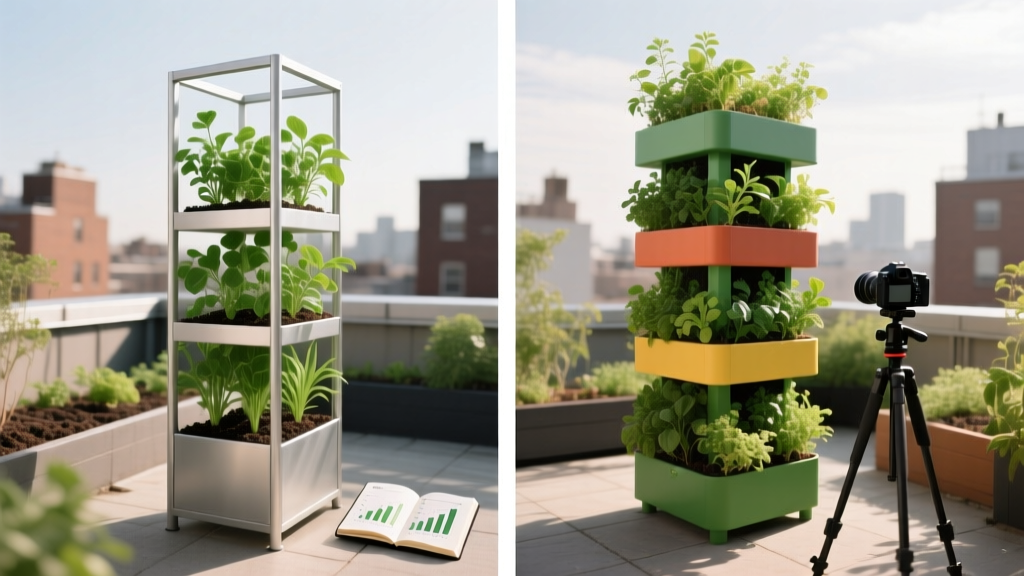
GreenStalk vs Garden Tower 2: 2026 Photo & Growth Guide
Lisa ThompsonPublished
Introduction to Vertical Garden Documentation in 2026
As urban homesteading and space-efficient growing continue to dominate the gardening scene in 2026, vertical garden towers have become the centerpiece of countless patios, balconies, and backyards. For garden enthusiasts, the journey of growing food and flowers is only half the experience; the other half is capturing, documenting, and sharing that growth. Whether you are building a visual diary for your personal archives, creating content for social media, or simply tracking your yields to improve next season's harvest, the physical structure of your garden tower plays a massive role in your photographic outcomes.
In this comprehensive guide, we are comparing the two undisputed heavyweights of the vertical growing world: the GreenStalk Vertical Planter and the Garden Tower 2. While both systems offer exceptional growing capabilities, they present entirely different aesthetic profiles, shadow dynamics, and structural nuances that directly impact garden photography and long-term documentation. Let us dive into how these two towers compare through the lens of a garden photographer in 2026.
Aesthetic and Structural Differences for Photographers
When setting up a garden documentation station, the physical geometry of your planter dictates your composition. The Garden Tower 2 is a massive, singular unit. Standing at 53 inches tall and 24 inches wide, it features 50 planting pockets and a central composting column. From a photographic standpoint, the Garden Tower 2 offers a dense, monolithic look. Because the pockets are relatively small and closely packed, the tower quickly transforms into a lush, unbroken cylinder of foliage. This makes it an incredible subject for wide-angle shots (24mm to 35mm) where you want to showcase sheer volume and biodiversity.
Conversely, the GreenStalk system is modular. A standard 5-tier GreenStalk stands about 58 inches tall but features 30 much larger planting pockets (six per tier). The tiers are visually distinct, separated by a small gap that reveals the central water reservoir structure. For photographers, GreenStalk offers superior geometric lines. The clear tier separation allows for excellent 'layer-by-layer' documentation. If you are shooting with a 50mm or 85mm prime lens, the GreenStalk allows you to isolate individual tiers or even single plants without the visual clutter of 50 competing pockets. The earthy, matte tones of the 2026 GreenStalk models also provide a more neutral, studio-like backdrop compared to the slightly reflective, lighter terracotta-colored plastic of the Garden Tower 2.
Visual Comparison Chart
| Feature | GreenStalk (5-Tier Original) | Garden Tower 2 |
|---|---|---|
| Height & Width | 58" H x 19" W | 53" H x 24" W |
| Planting Pockets | 30 Large Pockets | 50 Small Pockets |
| Visual Anchor | Clean, stacked horizontal tiers | Central compost tube & top opening |
| Shadow Profile | Deep, dramatic geometric shadows | Softer, diffused cylindrical shadows |
| Best Lens Choice | 50mm - 85mm (Tier isolation) | 24mm - 35mm (Full density capture) |
| Foliage Density Look | Structured, tiered, spaced | Wild, overflowing, unified cylinder |
Lighting and Shadow Play on Vertical Towers
Lighting is the lifeblood of garden photography, and vertical towers interact with sunlight very differently than traditional raised beds. According to the University of Minnesota Extension, understanding how sunlight hits container plants is crucial not just for plant health, but for observing the microclimates within your garden. When documenting your tower, you must account for how the structure casts shadows on its own lower tiers.
The Garden Tower 2, being a perfect cylinder, catches the morning and evening 'golden hour' light beautifully. The light wraps around the curved surface, creating soft gradients that highlight the texture of trailing plants like nasturtiums or sweet potato vines. However, at high noon, the top planting pockets cast harsh, straight-down shadows on the pockets immediately below them, making midday macro photography challenging without a reflector.
The GreenStalk's protruding, pocketed tiers create deep, dramatic shadows underneath each level. While this can make lower-tier plants look dim in photographs, it provides a fantastic opportunity for high-contrast, moody photography. By using a polarizing filter on your lens, you can cut through the glare on the upper leaves and use the deep shadows of the GreenStalk tiers to make bright, colorful flowers (like marigolds or zinnias) pop dramatically against the dark background. For 2026 documentation, investing in a small, foldable silver reflector is highly recommended to bounce light into the recessed pockets of both towers during your weekly photo sessions.
Documenting the Growth Cycle: Time-Lapse and Staging
One of the most rewarding aspects of garden documentation is the time-lapse. Watching a seed transform into a fruiting plant over 90 days in a 60-second video is a cornerstone of modern gardening content. Setting up a time-lapse for a vertical tower requires specific staging.
For the Garden Tower 2, the central compost column serves as a perfect visual anchor. When setting up your intervalometer or solar-powered 4K time-lapse camera, position the camera at a slight low angle, aiming up at the tower with the compost column dead center. As the plants grow and cascade outward, the central column remains visible, providing a static reference point that makes the explosive outward growth look even more dynamic.
For the GreenStalk, a straight-on, eye-level shot works best. Because the tiers are distinct, you can document the growth tier-by-tier. A popular 2026 documentation technique is the 'Tier Progression Grid.' Instead of one continuous video, you take a standardized photo of each individual tier every Sunday morning. In post-processing, you stitch these into a grid video where all five tiers grow simultaneously side-by-side. This method requires a fixed tripod mount and a consistent focal length to ensure the scale remains identical week over week.
Plant Selection for Visual Impact and Color Theory
Your tower is your canvas, and the plants are your paint. When selecting plants for a garden you intend to photograph heavily, you must think about color theory and foliage texture. The Old Farmer's Almanac emphasizes that container gardening requires careful selection of plant varieties that thrive in restricted soil volumes, but for the photographer, visual contrast is equally important.
- The Cascading Effect: Both towers benefit from trailing plants in the bottom tiers. For the Garden Tower 2, use trailing rosemary or creeping thyme. The small pockets suit these fine-textured herbs, creating a soft, feathery base in your photos. For the GreenStalk, the large pockets can support heavy cascaders like cherry tomatoes or trailing ornamental sweet potatoes, creating thick, bold visual lines that draw the viewer's eye downward.
- Color Blocking: On the GreenStalk, dedicate entire tiers to single colors. A 'purple tier' featuring purple basil, red amaranth, and purple kale creates a striking horizontal band in your photos. On the Garden Tower 2, vertical striping works better. Plant a vertical column of bright yellow nasturtiums spiraling up the tower, surrounded by deep green lettuces, to create a striking diagonal line that guides the eye through the frame.
- Macro Photography Subjects: If you enjoy documenting pollinators and pest management, the Garden Tower 2's dense canopy is a magnet for bees and ladybugs. However, the dense foliage makes it hard to get a clean macro shot without leaves blocking the background. The GreenStalk's spaced-out pockets allow you to shoot macro subjects with a beautiful, blurred background (bokeh), isolating the insect or the dew drop on a leaf without visual clutter.
Tracking Yields and Garden Data Visually
Documentation is not just about pretty pictures; it is about data. In 2026, smart gardeners combine visual logs with yield tracking to optimize their soil and watering routines. Both towers require different approaches to harvest photography.
When harvesting from the Garden Tower 2, the sheer volume of small harvests (like baby greens and herbs) is best documented using a 'flat lay' technique. Place your harvested greens on a contrasting surface, such as a dark slate board, and shoot from directly above (top-down) with a 35mm lens. Include a standardized reference object, like your gardening trowel or a 2026 edition garden journal, in the corner of the frame to provide scale for your weekly yield comparisons.
When harvesting from the GreenStalk, the larger pockets often yield larger, singular crops like bell peppers, strawberries, or full heads of romaine lettuce. For these, 'in-situ' photography is best. Document the fruit while it is still hanging in the pocket, using a clip-on macro lens for your smartphone or a dedicated 100mm macro lens for your mirrorless camera. Capture the exact moment of harvest, then photograph the empty pocket. Over the season, this creates a powerful visual narrative of the tower's productivity, showing the transition from lush foliage to bountiful harvest and back to bare soil.
Pro-Tip for 2026: Use a digital garden journaling app that allows you to pin your weekly tower photos to specific GPS coordinates and weather data overlays. This visual metadata is invaluable when trying to correlate a sudden burst of growth or a pest infestation with a specific heatwave or rainfall event.
Conclusion: Which Tower Wins for the Documentarian?
Choosing between the GreenStalk and the Garden Tower 2 ultimately depends on your photographic style and documentation goals. If your goal is to capture a wild, overflowing, monolithic jungle of biodiversity and you prefer wide-angle, holistic garden shots, the Garden Tower 2 is your ideal subject. Its 50 pockets and central compost column provide a dense, dynamic canvas that looks incredible in time-lapses and golden hour lighting.
However, if you prefer structured, geometric compositions, tier-by-tier progress tracking, and the ability to isolate individual plants for high-quality macro and portrait photography, the GreenStalk is the superior choice. Its modular design, deep shadows, and large pockets offer a level of visual control and staging flexibility that the Garden Tower 2 simply cannot match. Whichever system you choose in 2026, remember that consistency in your camera angles, lighting, and staging is the true secret to breathtaking garden documentation.
