Pest Control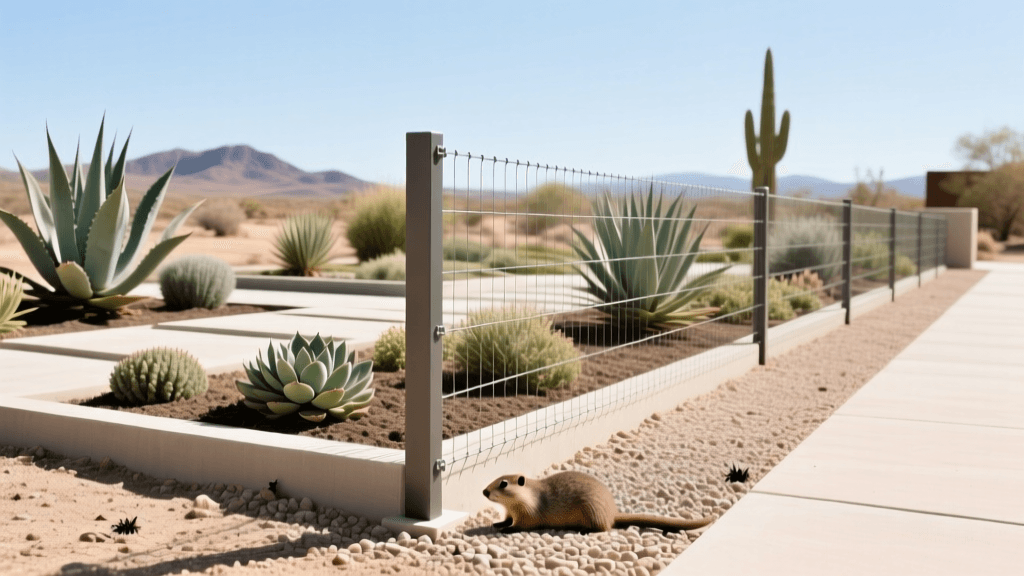
Groundhog L-Footer Fences for Xeriscapes: 2026 Guide
The Unique Challenge of Groundhogs in Xeriscapes
Groundhogs (Marmota monax), also known as woodchucks, are notorious diggers and voracious herbivores. In 2026, as more homeowners transition to xeriscaping and low-water landscaping to combat prolonged droughts and rising municipal water costs, a distinct pest control challenge has emerged: groundhogs are actively targeting these dry, well-draining environments. Unlike traditional turf lawns, xeriscapes often feature loose, sandy soils, decomposed granite, and extensive rockscaping. To a groundhog, this is the equivalent of a luxury excavation site. The soil is easy to dig, and the large boulders or retaining rock walls provide excellent structural support for their extensive, multi-chambered burrow systems.
Furthermore, many popular drought-tolerant plants—such as young agave shoots, certain sedums, creeping thymes, and the tender new growth on native shrubs—are surprisingly palatable to these opportunistic foragers. Protecting your low-water landscape investment requires a robust physical barrier. According to the Penn State Extension, standard vertical fencing is entirely ineffective against woodchucks because they are both adept climbers and prolific diggers. The only permanent, non-lethal, and highly effective solution is a properly installed L-footer wire fence buried barrier, specifically adapted for xeriscape drainage requirements.
Why Trapping and Relocation Fails in Low-Water Landscapes
Many homeowners attempt to solve groundhog issues using live traps. However, in a xeriscape environment, trapping is a temporary fix at best. Xeriscapes are highly attractive to groundhogs due to the superior drainage and warmth provided by hardscaping elements like gravel and boulders. If you remove one groundhog, the prime real estate of your dry garden will quickly be claimed by another transient woodchuck within days. Exclusion via an L-footer barrier is the only long-term strategy that protects the structural integrity of your rock gardens and prevents the collapse of dry-stacked walls caused by underground tunneling.
What is an L-Footer Buried Barrier?
An L-footer is a specialized fencing technique designed specifically to thwart burrowing mammals. Instead of simply burying a fence straight down—which a groundhog will easily bypass by digging a few inches away from the fence line and tunneling underneath—an L-footer bends outward at a strict 90-degree angle beneath the soil surface. When a groundhog encounters the vertical fence, its natural instinct is to dig directly at the base. With an L-footer, the animal digs down, hits the horizontal wire mesh, and is unable to comprehend how to back up and dig further away from the fence. This psychological and physical barrier stops them in their tracks. For xeriscapes, integrating this barrier without compromising the aesthetic and drainage principles of low-water landscaping requires specific techniques and materials.
Materials Needed for 2026 Xeriscape Integration
Sourcing the right materials is critical for a barrier that survives the elements and maintains the look of your garden. In 2026, galvanized steel prices have stabilized, making high-quality hardware cloth more accessible for residential pest control projects.
- Galvanized Hardware Cloth: 14-gauge or thicker, with a 1-inch or 1/2-inch mesh. Avoid chicken wire (poultry netting), as groundhogs can easily chew through it or bend it with their powerful claws.
- Vertical Fencing: If you are also building an above-ground fence to prevent climbing, use a 2x4 welded wire fence, at least 3 to 4 feet high, with the top 12 inches bent outward at a 45-degree angle to prevent climbing.
- Heavy-Duty Landscape Staples (U-Pins): 6-inch to 8-inch galvanized staples to secure the horizontal L-footer to the ground before backfilling.
- Xeriscape Backfill Materials: Decomposed granite (DG), crushed gravel, or coarse river rock. Do not use topsoil or compost, as these retain moisture, defeat the purpose of your xeriscape, and invite root rot in drought-adapted plants.
- Boulders and Flagstone: For concealing the transition line between the vertical fence and the ground.
Step-by-Step Installation Guide for Low-Water Landscapes
Step 1: Trenching the Xeriscape Perimeter
Dig a trench around the perimeter of the area you wish to protect. For a standard groundhog exclusion barrier, the trench should be 12 inches deep and 12 inches wide, extending outward from the fence line. In a xeriscape, you must be extremely careful not to disturb existing drip irrigation lines or the delicate root zones of established drought-tolerant shrubs. Hand-digging with a sharp spade is highly recommended over using a mechanical trencher to preserve the precise grading required for low-water runoff and to avoid severing sub-surface irrigation tubing.
Step 2: Attaching and Bending the Hardware Cloth
Cut your galvanized hardware cloth into strips that are 24 inches wide. Attach the top 12 inches to the bottom of your vertical fence using heavy-duty UV-resistant zip ties or galvanized hog rings. Bend the remaining 12 inches outward at a strict 90-degree angle so it lays flat on the bottom of your trench, pointing away from the protected garden. According to the Internet Center for Wildlife Damage Management, the horizontal apron must face outward toward the approaching pest to effectively intercept their digging attempts and leverage their own downward digging force against the mesh.
Step 3: Securing the L-Footer
Place the horizontal wire mesh flat against the bottom of the trench. Secure it every 12 inches using 6-inch galvanized landscape staples. Drive the staples deep into the subsoil to ensure the mesh cannot be pushed upward by the animal or by frost heave during winter freezing cycles. Ensure there are no gaps at the corners; overlap the mesh by at least 6 inches and staple heavily at all junctions.
Step 4: Xeriscape-Specific Backfilling
This is where xeriscaping diverges from traditional gardening. Do not cover the L-footer with rich, loamy topsoil. Instead, backfill the trench with your chosen hardscape materials. A 3-inch layer of coarse gravel followed by a top layer of decomposed granite or decorative river rock is ideal. This maintains the rapid drainage profile of your xeriscape while adding a heavy, physical weight on top of the wire mesh that further discourages digging.
Comparing Backfill Materials for L-Footer Barriers
| Backfill Material | Drainage Profile | Digging Resistance | Xeriscape Aesthetic Value |
|---|---|---|---|
| Topsoil / Compost | Poor (Retains Water) | Low (Easy to Dig) | Low (Invites Weeds) |
| Decomposed Granite (DG) | Excellent | High (Compacts Firmly) | High (Natural Desert Look) |
| Coarse River Rock | Excellent | Very High (Heavy/Loose) | High (Dry Creek Bed Style) |
| Mulch / Wood Chips | Moderate | Very Low (Easy to Move) | Moderate (Not True Xeriscape) |
Protecting Drip Irrigation Lines from Groundhog Teeth
Xeriscapes rely heavily on targeted drip irrigation to deliver water directly to plant roots while minimizing evaporation. Unfortunately, groundhogs are known to chew through polyethylene drip tubing, either out of curiosity, to file their constantly growing incisors, or to access the water inside during peak summer droughts. When installing your L-footer, take the opportunity to audit your irrigation lines. In 2026, upgrading vulnerable above-ground poly tubing to polyurethane lines or encasing main drip lines in flexible metal conduit is a smart preventative measure. Burying main irrigation lines beneath the L-footer's horizontal mesh ensures that even if a groundhog manages to dig near the perimeter, they cannot access and destroy your water delivery system.
Concealing the Barrier with Rockscaping and Groundcovers
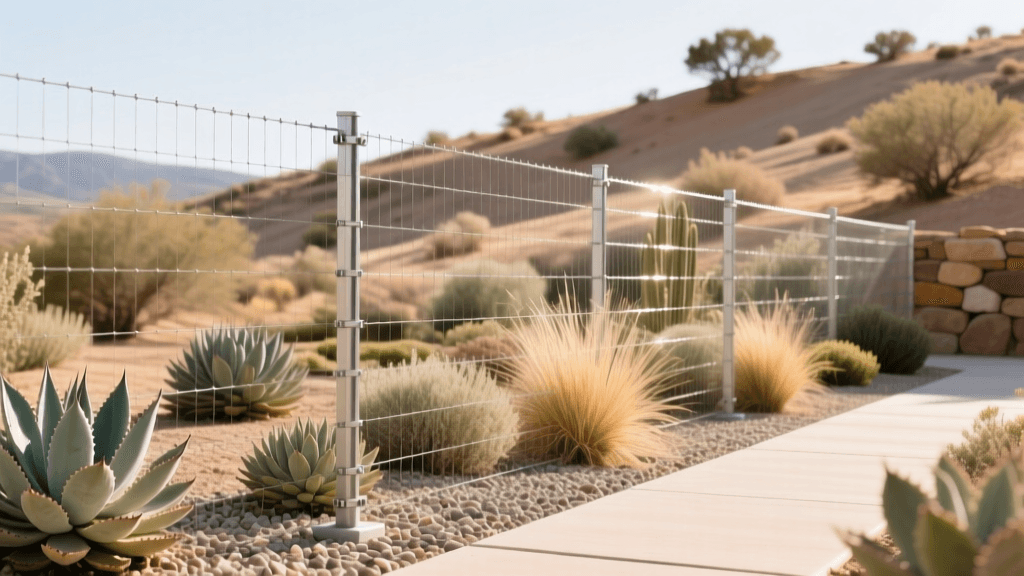
One of the primary goals of xeriscaping is maintaining a natural, rugged aesthetic. Exposed galvanized wire at the base of a fence ruins the visual appeal of a desert, prairie, or Mediterranean-style garden. To hide the transition point where the vertical fence meets the L-footer, utilize dry-stacked flagstone, large river boulders, or creeping groundcovers. Plants like creeping thyme, purple ice plant (Delosperma cooperi), or creeping rosemary require minimal water, thrive in the gravelly backfill, and their dense root systems help lock the soil in place. More importantly, these low-growing plants do not provide enough vertical cover for a groundhog to hide while attempting to dig, adding a layer of psychological deterrence to the physical barrier.
Maintenance and Monitoring in 2026
Even the best-installed L-footer requires seasonal maintenance to remain effective. In early spring, check the perimeter for frost heave, which can push the horizontal wire mesh upward, creating gaps beneath the fence. Re-secure any loose sections with additional landscape staples and top-dress with fresh decomposed granite. Additionally, inspect the base of your vertical fencing for rust or corrosion, especially if you live in an area that uses salt for winter de-icing. Replacing compromised sections of hardware cloth immediately prevents a determined woodchuck from exploiting a weak point. By integrating the L-footer seamlessly into your low-water design, you ensure your xeriscape remains a beautiful, drought-tolerant sanctuary, entirely free from the destructive tunneling of groundhogs.