Pest Control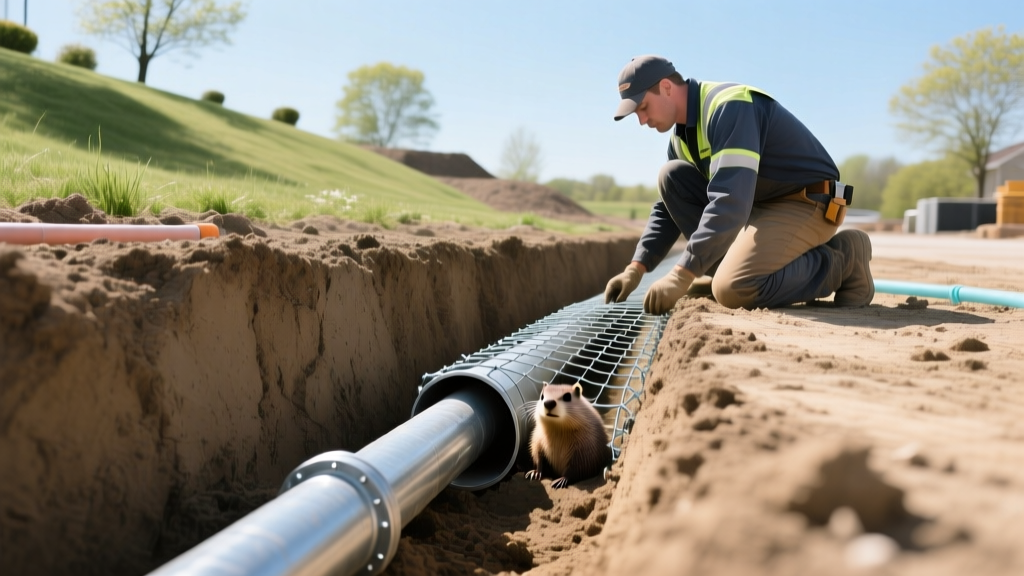
2026 Guide: Groundhog L-Footer & French Drain Trenching
Emily WatsonPublished
The Hidden Opportunity in French Drain Excavation
As landscaping and excavation costs continue to rise in 2026, homeowners are increasingly looking for ways to maximize the efficiency of their outdoor projects. If your yard suffers from poor drainage and you are preparing to install a French drain, you are already committing to significant trenching and soil disruption. This presents a golden, often overlooked opportunity to implement integrated pest management (IPM) simultaneously. Specifically, integrating a groundhog exclusion L-footer wire barrier while your French drain trench is open is one of the most cost-effective pest control strategies available today. By combining hardscaping drainage solutions with subterranean wildlife exclusion, you save thousands of dollars in secondary labor while protecting your garden from severe burrowing damage.
Why Groundhogs Target Drainage Zones
Groundhogs (Marmota monax), also known as woodchucks, are prolific diggers that prefer well-draining, loose, and aerated soil for their extensive burrow systems. A newly backfilled French drain trench is essentially a luxury invitation for these pests. The combination of washed drain rock, disturbed earth, and the linear depression of the trench makes digging effortless and provides excellent water runoff away from their den entrances. According to the Penn State Extension, woodchucks can move massive amounts of soil, and their burrows can undermine foundations, patios, and drainage systems alike. If a groundhog decides to use your French drain gravel bed as a starting point for a burrow, it can lead to soil subsidence, pipe crushing, and severe erosion. Stopping them before they break ground is a critical component of modern yard maintenance.
The Mechanics of the L-Footer Barrier
Standard vertical fences inevitably fail against groundhogs because the animals simply dig underneath the bottom rail. An L-footer is a specialized wire mesh barrier buried in an L-shape to exploit the natural digging instincts of the animal. The wire extends vertically down into the soil for about 12 inches, and then bends horizontally outward (away from the protected garden) for another 12 to 18 inches. When a groundhog encounters the fence and begins to dig at the base, its front paws hit the horizontal wire mesh. Because groundhogs do not possess the cognitive ability to back up 18 inches and start digging behind the wire, they eventually give up and move on to an easier location.
Sizing and Sourcing Materials for 2026
Selecting the correct wire mesh is critical, especially when the barrier will be in close proximity to the moisture-heavy environment of a French drain. Chicken wire is entirely unsuitable; groundhogs can easily bite through it, and it will rust rapidly when exposed to the constant moisture of a drainage bed. Instead, you need heavy-duty welded wire. Below is a comparison of the top materials used by landscaping professionals in 2026.
| Material Type | Gauge | Pros | Cons | 2026 Est. Cost (50ft) |
|---|---|---|---|---|
| Galvanized Welded Wire | 14-Gauge | High durability, rust-resistant, strong | Stiff, requires heavy tools to bend | $85 - $110 |
| PVC-Coated Wire Mesh | 16-Gauge | Blends with landscape, flexible, extra rust protection | Coating can scratch during install | $120 - $145 |
| Galvanized Hardware Cloth | 19-Gauge | Very tight weave, stops small pests like voles | Flimsy, requires extensive staking | $90 - $120 |
For most French drain integrations, the 14-gauge galvanized welded wire with 2x4 inch or 1x1 inch mesh openings is the industry standard. It provides the rigidity needed to hold its L-shape under the weight of the backfilled soil and drain rock.
Step-by-Step Integration with French Drain Trenching
Integrating the L-footer requires precise timing during your French drain installation. The goal is to lay the horizontal portion of the L-footer so that it overlaps the trench zone, preventing the groundhog from tunneling between the fence line and the drain pipe.
Step 1: Planning the Trench Route
Map out your French drain route to ensure it runs parallel to your garden perimeter or fence line where groundhog intrusion is most likely. A standard French drain requires a trench that is 18 to 24 inches deep and 12 inches wide, sloped at a minimum of 1 inch per 8 feet to ensure proper gravity flow. Ensure your trenching path leaves enough room on the outward-facing side to accommodate the 12-inch horizontal L-footer flap.
Step 2: Excavation and Pipe Laying
Excavate the trench and lay down a high-quality geotextile filter fabric, ensuring you have plenty of excess fabric on the sides to wrap over the top later. Add a 2-inch base layer of washed drain rock and lay your perforated corrugated pipe with the holes facing downward. This is the standard 2026 best practice for preventing sediment clogging in the pipe.
Step 3: Forming the L-Footer
Before backfilling, take your welded wire mesh and bend it into an L-shape. You can use a wooden 2x4 and a mallet to create a crisp 90-degree fold. The vertical section should be roughly 36 inches tall (to extend above ground and attach to your fence), the downward buried section should be 12 inches, and the outward horizontal flap should be 12 to 18 inches. Position the wire so the vertical section aligns with your fence line, the 12-inch drop goes straight down into the undisturbed soil on the outside edge of your trench, and the horizontal flap extends outward, partially hovering over the open drain trench.
Step 4: Integration and Backfilling
Secure the horizontal wire flap using heavy-duty landscape staples driven into the undisturbed soil outside the trench. Once the wire is anchored, proceed to fill the French drain trench with washed drain rock up to the level of the horizontal wire flap. The gravel will help weigh down and support the wire mesh. Finally, fold the excess geotextile fabric over the top of the gravel and the wire flap to prevent soil intrusion, and cap the trench with topsoil and sod. The groundhog is now blocked from digging under the fence, and the drain pipe is protected from being used as a burrow conduit.
Cost Analysis: Standalone vs. Combined Installation
Landscaping labor rates for trenching in 2026 average between $75 and $120 per linear foot, depending on soil composition and regional markets. If you were to install a French drain in the spring and then hire a pest control contractor to trench and install an L-footer barrier in the summer, you would be paying for excavation twice. By combining the projects, you eliminate 100 percent of the secondary excavation labor. The only added cost is the wire mesh and landscape staples, which typically adds less than $3 per linear foot to your overall French drain budget. This makes the combined approach an absolute no-brainer for homeowners dealing with both water pooling and wildlife intrusion.
Common Mistakes to Avoid in 2026
- Bending the Wire the Wrong Direction: The horizontal flap of the L-footer MUST point outward, away from the area you are trying to protect. If it points inward toward your garden, the groundhog will simply stand on the wire and dig straight down into your protected beds.
- Skipping the Geotextile Fabric: If you fail to wrap the French drain gravel properly, the topsoil will wash down into the rocks, clogging the pipe and causing the trench to collapse. This collapse can expose your L-footer wire, rendering it useless and creating a tripping hazard in your yard.
- Using Poultry Netting: As mentioned, chicken wire is far too weak. The USDA APHIS Wildlife Damage Management guidelines consistently recommend heavy-gauge welded wire for excluding large burrowing rodents. Groundhogs have powerful incisors and can easily snap thin, flimsy wires.
- Ignoring the Drain Exit: Groundhogs are smart and will look for the weakest point in your perimeter. Ensure that the area where your French drain daylighted (exits the soil) is also protected with a gravel apron or wire mesh grate so the animals cannot crawl up the pipe itself.
Long-Term IPM Strategies and Maintenance
Installing the physical barrier is only the first step in a comprehensive Integrated Pest Management plan. To ensure long-term success, you must maintain the perimeter. Inspect the L-footer barrier every spring after the frost heave has settled. Look for any areas where the soil has eroded away from the wire, exposing a gap. If you find gaps, simply add topsoil and tamp it down firmly. Additionally, consider planting groundhog-resistant flora near the drain exit and fence lines. Plants with strong odors, such as lavender, mint, and garlic, can act as natural olfactory deterrents, discouraging groundhogs from even approaching the barrier to test it. By viewing your yard's infrastructure through a dual lens of water management and pest exclusion, you create a resilient, healthy landscape that stands up to the elements and the wildlife alike.