Pest Control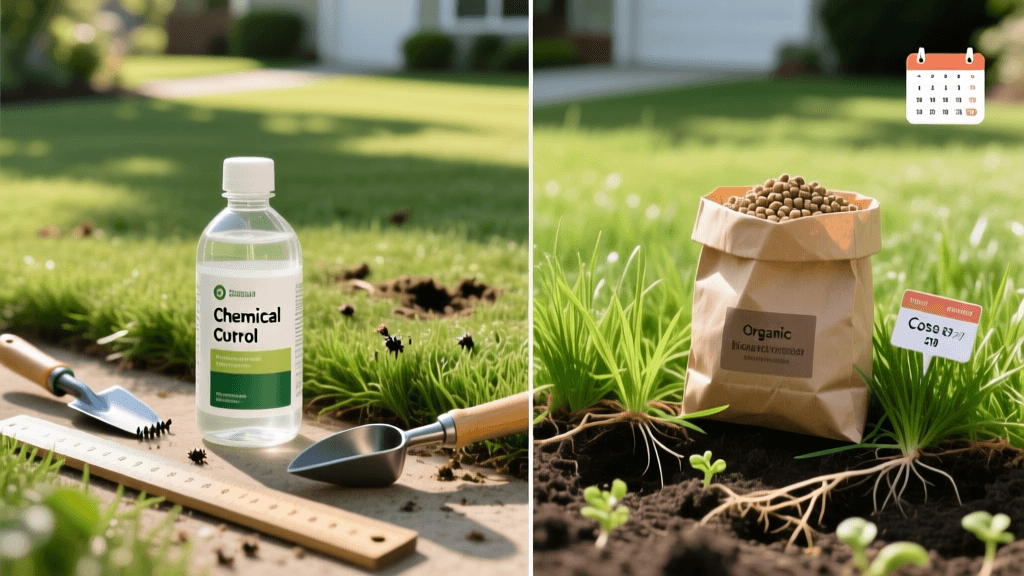
Best Grub Control Products: Chemical vs Organic Reviewed
Understanding the White Grub Threat in Lawns
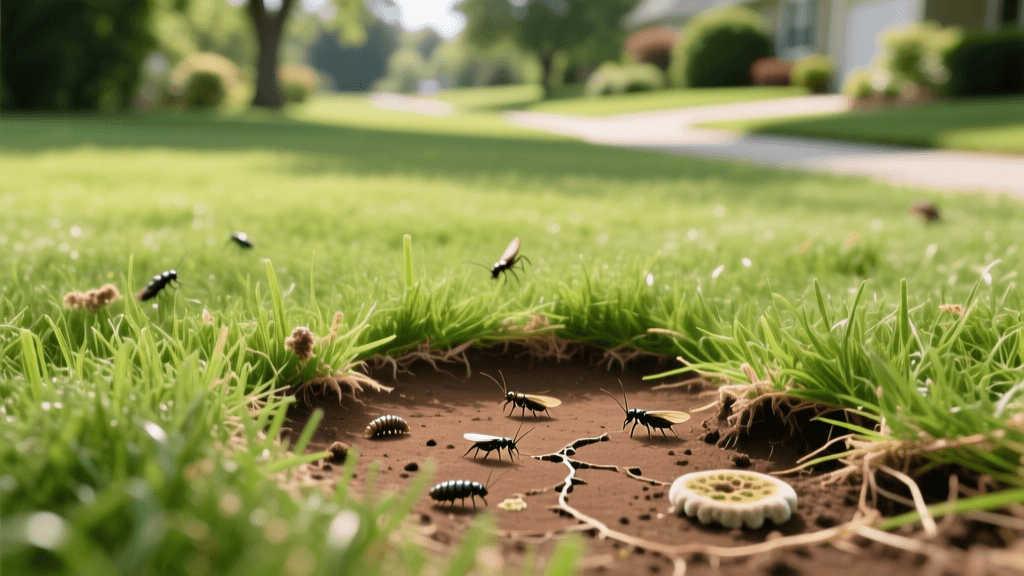
White grubs are the larval stage of various scarab beetles, including Japanese beetles, June bugs, and European chafers. These C-shaped, cream-colored pests live beneath the soil surface, feeding aggressively on grassroots. If left unchecked, a severe infestation can destroy a lawn's root system, leading to large, irregular brown patches that can be rolled back like a carpet. Furthermore, secondary pests such as skunks, raccoons, and crows will often tear up the turf to feed on the grubs, causing even more devastation.
According to UMass Extension, effective grub management relies heavily on Integrated Pest Management (IPM) principles. This means understanding the life cycle of the pest, scouting for thresholds, and choosing the right product—whether chemical or biological—at the exact right time of year. In this comprehensive review, we compare the most effective chemical and organic grub control products on the market, breaking down their active ingredients, costs, application timing, and overall efficacy.
How We Evaluated These Grub Control Products
To provide the most actionable advice for homeowners and lawn care professionals, we evaluated products based on four critical metrics:
- Efficacy and Speed: Does the product prevent grubs from hatching, or does it kill existing grubs (curative)?
- Environmental Impact: Is the product safe for pollinators, earthworms, and pets once dried or watered in?
- Cost Efficiency: What is the price per 1,000 square feet of coverage?
- Application Window: How strict is the timing for application?
Top Chemical Grub Control Products Reviewed
1. Acelepryn (Chlorantraniliprole) - Best Preventative Chemical
Acelepryn is widely considered the gold standard for preventative grub control in the professional turf industry. Its active ingredient, Chlorantraniliprole, targets the ryanodine receptors in insects, causing muscle paralysis and death. Because it is highly specific to insects, it has an incredibly low toxicity profile for mammals, birds, and crucially, pollinators like bees.
Measurements and Cost: A standard 8 oz bottle of liquid Acelepryn costs around $120 and covers approximately 58,000 square feet at the preventative rate. This breaks down to roughly $2.00 per 1,000 square feet, making it highly cost-effective for large lawns.
Timing: Acelepryn has a long residual activity in the soil. It should be applied between early April and late May. It binds to organic matter in the thatch and soil, slowly releasing to kill young grubs as they hatch and begin feeding in mid-summer.
Pros: Extremely safe for the environment; long application window; excellent preventative control.
Cons: Not effective as a curative treatment for large, mature grubs in late summer.
2. BioAdvanced Grub Killer Plus (Imidacloprid + Dylox) - Best Curative Chemical
When you have missed the preventative window and your lawn is actively being damaged in late August or September, you need a curative solution. BioAdvanced Grub Killer Plus combines Imidacloprid (a systemic preventative) with Dylox (Trichlorfon), a fast-acting contact insecticide that knocks out mature grubs within 24 hours.
Measurements and Cost: A 10-pound granular bag typically costs around $25 and covers 5,000 square feet, equating to $5.00 per 1,000 square feet.
Timing: Apply in late summer or early fall when active grub feeding is occurring and turf damage is visible.
Pros: Rapid 24-hour knockdown of active infestations; dual-action formula.
Cons: Dylox degrades rapidly in high-pH soils; higher toxicity to non-target organisms compared to Acelepryn; requires immediate and thorough watering.
Top Organic and Biological Grub Control Products
3. Milky Spore (Paenibacillus popilliae) - Best Long-Term Organic
Milky Spore is a naturally occurring bacterium that specifically targets the larvae of Japanese beetles. When grubs ingest the spores while feeding on roots, the bacteria multiply inside their hemolymph (blood), eventually killing the grub and releasing billions of new spores back into the soil.
Measurements and Cost: A 20-ounce shaker tube of granular Milky Spore costs about $60 and covers 7,000 square feet (approx. $8.50 per 1,000 sq ft). It requires a specific grid application pattern (one teaspoon every four feet).
Timing: Apply in late summer or early fall when grubs are actively feeding near the surface.
Pros: Once established, it provides 10 to 15 years of control; completely safe for pets, humans, and beneficial insects.
Cons: Only works on Japanese beetle grubs (not European chafers or June bugs); takes 2 to 3 years to build up effective spore counts in the soil; higher upfront cost.
4. Beneficial Nematodes (Heterorhabditis bacteriophora) - Best Fast-Acting Organic
Beneficial nematodes are microscopic, unsegmented worms that naturally hunt soil-dwelling pests. The Hb (Heterorhabditis bacteriophora) species is the most effective against white grubs. They enter the grub through natural openings, release a symbiotic bacteria that kills the host within 48 hours, and then reproduce inside the carcass.
Measurements and Cost: A package containing 50 million nematodes costs around $40 and covers 5,000 square feet ($8.00 per 1,000 sq ft).
Timing: Apply in late summer or early fall when soil temperatures are between 60°F and 85°F. They must be applied in the early evening or on a cloudy day to protect them from UV light.
Pros: Fast-acting organic curative control; effective against multiple grub species; safe for earthworms and plants.
Cons: Requires strict soil moisture management; short shelf life; must be kept refrigerated before use.
Comprehensive Product Comparison Chart
| Product Name | Active Ingredient | Control Type | Cost per 1k sq ft | Best Application Window |
|---|---|---|---|---|
| Acelepryn | Chlorantraniliprole | Preventative | $2.00 | April - May |
| BioAdvanced Plus | Imidacloprid + Dylox | Curative | $5.00 | August - September |
| Milky Spore | Paenibacillus popilliae | Long-Term Organic | $8.50 | August - October |
| Hb Nematodes | Heterorhabditis bacteriophora | Curative Organic | $8.00 | August - September |
Application Timing and IPM Best Practices
Selecting the right product is only half the battle; proper application and scouting are essential for success. Penn State Extension emphasizes that treating a lawn without first verifying a grub infestation is a waste of resources and introduces unnecessary chemicals into the environment.
Step 1: Scouting and Thresholds
Before purchasing any product, perform a turf inspection in late summer. Using a flat-edged spade, cut a one-foot by one-foot square of turf on three sides and peel it back like a page in a book. Count the number of grubs in the top two inches of soil. According to University of Kentucky Entomology, a healthy, well-watered lawn can tolerate up to 5 to 10 grubs per square foot without showing visible damage. Treatment is only recommended if you exceed this threshold or if secondary animal damage is occurring.
Step 2: Watering In the Product
Whether you are using granular Dylox, liquid Acelepryn, or living nematodes, the product must be moved past the thatch layer and into the root zone where the grubs feed. Immediately after application, irrigate the lawn with at least 1/4 inch of water. For biological controls like nematodes, the soil must remain consistently moist for 10 to 14 days post-application to allow the organisms to swim through soil pores and locate their hosts.
Step 3: Mowing and Thatch Management
Mow your lawn right before applying any grub control product to remove weed flowers, which protects foraging bees from accidental exposure to chemical residues. Additionally, maintain a thatch layer of no more than 1/2 inch. Excessive thatch will intercept chemical and biological treatments, binding them before they ever reach the soil where the grubs reside. Core aeration in the fall can help reduce thatch and improve the soil infiltration of your chosen grub control product.
Conclusion
When it comes to grub control, there is no single magic bullet, but rather a right tool for every specific situation. For homeowners looking for a low-toxicity, highly effective preventative measure, Acelepryn is the undisputed champion, offering season-long protection at a low cost per square foot. If you have missed the preventative window and are facing an active outbreak, BioAdvanced Grub Killer Plus provides the rapid chemical knockdown required to save your turf. Finally, for those committed to organic lawn care, Beneficial Nematodes offer a powerful, fast-acting biological curative, while Milky Spore remains a viable long-term investment for Japanese beetle management. By combining these products with proper scouting and IPM practices, you can maintain a pristine, grub-free lawn season after season.