Pest Control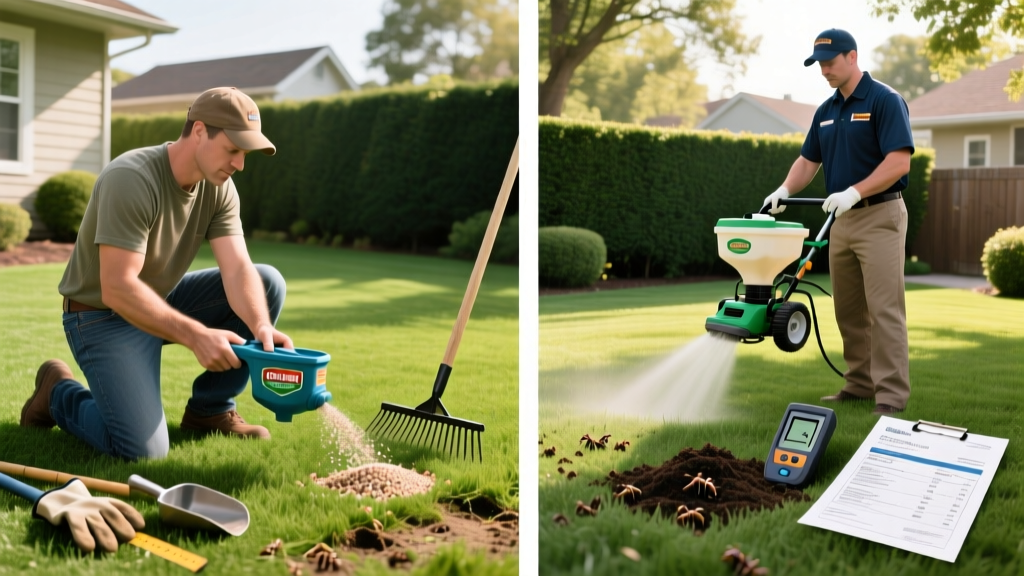
Grub Control Cost Guide: DIY vs Professional Pricing
Lisa ThompsonPublished
The Financial Threat of White Grubs
When it comes to lawn pests, few can cause as much rapid, widespread, and expensive damage as white grubs. These C-shaped larvae of beetles—such as Japanese beetles, June bugs, and European chafers—feed aggressively on the root systems of turfgrass. As they sever the roots, the grass loses its ability to absorb water and nutrients, leading to large, spongy, brown patches that can be rolled back like a carpet. But the financial impact of a grub infestation extends far beyond the initial pest problem. According to the University of Minnesota Extension, secondary damage from foraging animals like skunks, raccoons, and crows tearing up the turf to eat the grubs often costs homeowners more to repair than the grub damage itself.
For homeowners facing this threat, a critical financial decision arises: should you tackle grub control as a DIY project, or hire a professional lawn care service? This comprehensive cost and pricing guide breaks down the expenses, return on investment (ROI), and hidden costs associated with both approaches, helping you make the most financially sound decision for your landscape.
Timing is Everything: Preventative vs. Curative Treatments
Before calculating costs, it is vital to understand that grub control products are divided into two distinct categories: preventative and curative. The timing of your application dictates which product you must buy, which directly impacts your budget.
Preventative Treatments
Preventative grub control involves applying long-lasting insecticides in late spring or early summer (typically May through July). These products, often containing active ingredients like Chlorantraniliprole or Imidacloprid, are absorbed by the grass roots and kill young grubs as they hatch and begin to feed. They are generally more cost-effective because they stop damage before it starts, preserving the integrity of your lawn and preventing costly renovations.
Curative Treatments
If you discover an active infestation in late summer or early fall, you must use a curative treatment. Products containing Trichlorfon or Carbaryl act quickly to kill large, mature grubs. However, curative chemicals are typically more expensive, degrade faster in the soil, and require precise watering to activate. More importantly, by the time you need a curative treatment, your lawn has likely already sustained root damage, meaning you will incur additional landscaping costs.
The True Cost of DIY Grub Control
DIY grub control is highly appealing to budget-conscious homeowners. The primary expenses include the chemical treatment itself, the application equipment, and your personal labor. Here is a detailed breakdown of what you can expect to spend for an average-sized lawn of 5,000 square feet.
Preventative Product Costs
The gold standard for DIY preventative grub control is Chlorantraniliprole, widely sold under brand names like 'Scotts GrubEx1'. A standard bag covering 5,000 square feet typically retails between $25 and $30. This product is highly regarded because it is relatively safe for earthworms and pollinators when applied correctly, and it provides up to four months of residual control. If you opt for a generic Imidacloprid-based product, expect to pay slightly less, around $18 to $22 for the same coverage area.
Curative Product Costs
Curative treatments are more expensive per square foot. A bag of 'Bayer Advanced 24 Hour Grub Killer Plus' (Trichlorfon) covering 5,000 square feet generally costs between $40 and $55. Because Trichlorfon breaks down rapidly in the soil, you may need a second application if the infestation is severe, potentially doubling your chemical costs to $80 - $110.
Equipment and Hidden DIY Expenses
To apply granular grub control evenly, you need a broadcast spreader. If you do not already own one, a basic push spreader costs $40 to $70. Additionally, curative treatments require immediate and deep watering to wash the chemical into the root zone. This will cause a slight bump in your monthly water bill. Finally, you must factor in the value of your time: measuring the lawn, calibrating the spreader, applying the product, and cleaning up generally takes 1 to 2 hours.
Professional Grub Control Pricing
Hiring a professional lawn care company shifts the burden of timing, product selection, and application to the experts. Professionals have access to commercial-grade chemicals that are often more effective and longer-lasting than consumer-grade products found at big-box stores.
Most professional lawn care companies do not sell grub control as a standalone, one-off service. Instead, it is usually bundled into a comprehensive annual lawn care program that includes fertilization, broadleaf weed control, and crabgrass prevention. An annual program for a 5,000-square-foot lawn typically ranges from $450 to $800, with the preventative grub control application factored into the summer visit.
If you specifically request a standalone grub treatment from a local landscaper or pest control company, expect to pay a premium. A standalone preventative or curative application usually costs between $75 and $125 for an average-sized yard. This higher price point accounts for the company's minimum trip charge, commercial-grade materials, and labor.
Cost Comparison Chart: DIY vs. Professional
To visualize the financial differences, review the cost breakdown below for a standard 5,000-square-foot lawn.
| Treatment Type | DIY Cost (Materials Only) | Professional Cost (Service) | Efficacy Window |
|---|---|---|---|
| Preventative (Spring/Summer) | $25 - $35 | $75 - $125 (Standalone) or Bundled | May - July |
| Curative (Late Summer/Fall) | $40 - $55 | $90 - $150 (Standalone) | August - October |
| Equipment (Spreader) | $40 - $70 (One-time) | $0 | N/A |
| Labor / Time Investment | 1 - 2 Hours | 0 Hours | N/A |
The Hidden Cost of Inaction: Lawn Renovation
When evaluating the cost of grub control, homeowners must also calculate the risk and expense of doing nothing. If a grub infestation goes unnoticed or untreated, the financial consequences are severe. Experts at Penn State Extension note that severe grub feeding can completely destroy the root system of a lawn in a matter of weeks during late summer droughts.
If your lawn dies due to grubs, you are no longer paying for pest control; you are paying for a full lawn renovation. The costs associated with repairing grub damage include:
- Slice Seeding and Aeration: $150 to $300 for a 5,000-square-foot lawn.
- Sod Installation: If the damage is too severe for seed, professional sod removal, soil preparation, and installation will cost between $1.00 and $2.50 per square foot. Replacing just 2,000 square feet of damaged turf can easily cost $2,000 to $5,000.
- Topsoil and Grading: $100 to $250 for materials and delivery.
When viewed through the lens of potential renovation costs, spending $30 on a DIY preventative treatment or $100 on a professional application yields an incredibly high return on investment. It is essentially an insurance policy for your landscape.
Environmental Considerations and Safety
Cost is not the only metric for ROI; environmental stewardship and safety are equally important. When applying DIY treatments, homeowners risk over-applying chemicals, which can lead to runoff into local waterways. The Environmental Protection Agency (EPA) strongly advises homeowners to read all pesticide labels, follow application rates exactly, and avoid treating areas where water pools or near storm drains.
Professional applicators are licensed, trained, and legally bound to follow strict environmental guidelines. They use calibrated commercial equipment that ensures precise application rates, minimizing the risk of chemical runoff. For environmentally conscious homeowners, or those with properties adjacent to water features, the premium paid for a professional service may be justified by the guarantee of responsible, targeted application.
Making the Final Decision
Choosing between DIY and professional grub control ultimately depends on your budget, available time, and comfort level with handling pesticides.
Choose DIY if: You have a smaller lawn (under 5,000 square feet), you already own a broadcast spreader, you are diligent about lawn monitoring, and you want to keep your out-of-pocket expenses under $40. DIY preventative care using Chlorantraniliprole is highly effective and offers the best raw financial ROI.
Choose a Professional if: You have a large or complex property, you are already investing in a comprehensive lawn care program, you lack the time or physical ability to push a spreader, or you have a history of severe animal damage that requires guaranteed, commercial-grade eradication. The convenience, precision, and peace of mind provided by a professional service easily justify the $75 to $125 price tag for most busy homeowners.
Ultimately, the most expensive grub control strategy is the one you skip entirely. Whether you spend $30 at the garden center or $100 with a local pro, securing your lawn's root system early in the season is the smartest financial move you can make for your landscape.