Pest Control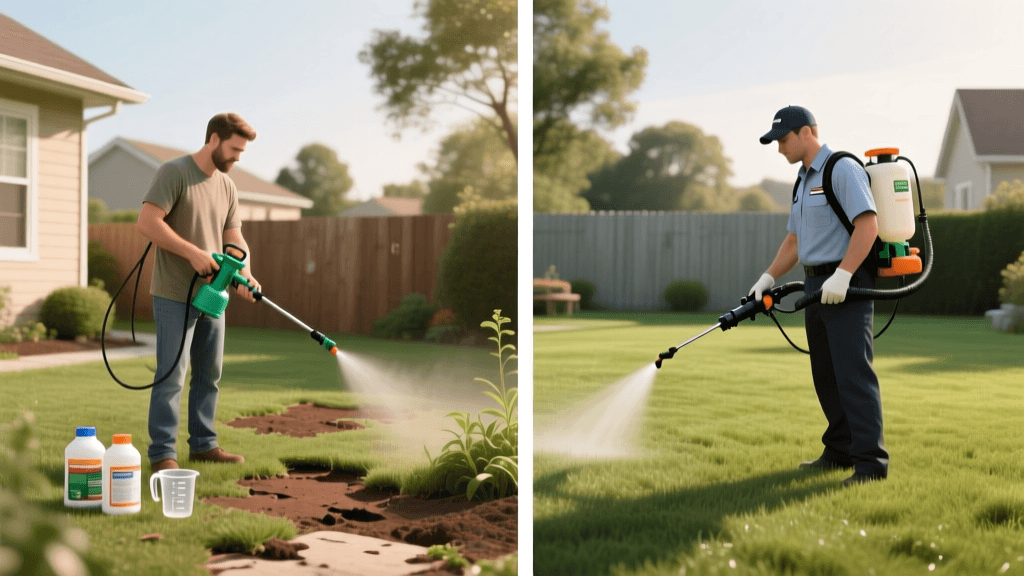
Grub Control Cost Guide: DIY vs Professional Pricing
The Economics of Grub Control: Protecting Your Lawn Investment
When budgeting for annual lawn care, pest control often takes a backseat to mowing, fertilization, and weed management. However, ignoring subterranean pests like white grubs can lead to catastrophic turf loss, turning a routine maintenance budget into a massive lawn renovation expense. Grubs—the larval stage of Japanese beetles, June bugs, and European chafers—feed aggressively on grassroots, severing the turf from its soil and water supply. From a financial perspective, understanding the cost of grub control is not just about pest management; it is about protecting your landscape investment.
This comprehensive pricing guide breaks down the exact costs of DIY preventative and curative grub treatments, biological controls, and professional lawn care services. By analyzing the cost per square foot and the return on investment (ROI) of timely applications, homeowners can make informed decisions that save money while maintaining a pristine, healthy lawn.
The Hidden Costs of Ignoring Grubs
Before evaluating treatment costs, it is vital to understand the financial risk of inaction. A severe grub infestation can destroy thousands of square feet of turf in a matter of weeks during late summer and early fall. Furthermore, grub-damaged lawns attract secondary pests like skunks, raccoons, and crows, which tear up the soil to feed on the larvae, compounding the destruction.
If grubs are left untreated, the cost shifts from simple pest control to full-scale lawn renovation. Consider the following average repair costs:
- Reseeding and Overseeding: $0.10 to $0.25 per square foot (including seed, topsoil, and starter fertilizer).
- Sod Installation: $1.00 to $2.50 per square foot (including soil prep, sod material, and labor).
- Core Aeration and Topdressing: $150 to $300 per average-sized lawn (5,000 square feet) to repair soil compaction caused by foraging wildlife.
Spending $30 to $100 on preventative grub control is a fractional premium compared to the $1,000 to $5,000 it might cost to replace a destroyed lawn.
DIY Preventative Grub Control Costs
Preventative grub control is the most cost-effective and reliable strategy for homeowners. These products contain systemic insecticides that are absorbed by the grassroots and kill young grubs as they begin feeding in mid-to-late summer. The two most common active ingredients are Chlorantraniliprole and Imidacloprid.
Chlorantraniliprole (e.g., Scotts GrubEx, Acelepryn)
Chlorantraniliprole is widely considered the gold standard for residential grub prevention due to its low toxicity to beneficial insects and pets once watered in. It provides long-lasting residual control and must be applied between April and early June.
- Average Product Cost: $25 to $30 per bag.
- Coverage: 5,000 square feet.
- Cost per 1,000 Sq. Ft.: $5.00 to $6.00.
Imidacloprid (e.g., BioAdvanced Grub Killer Plus)
Imidacloprid is slightly faster-acting than Chlorantraniliprole but has a shorter residual window. It is best applied in late June to early July.
- Average Product Cost: $18 to $22 per bag.
- Coverage: 5,000 square feet.
- Cost per 1,000 Sq. Ft.: $3.60 to $4.40.
DIY Curative Grub Control Costs
Curative treatments are emergency interventions used when active grub damage is already visible (typically in August or September). These products act on contact and must be watered in immediately. The primary active ingredient for curative control is Trichlorfon (e.g., Dylox, BioAdvanced 24 Hour Grub Killer).
- Average Product Cost: $20 to $25 per bag.
- Coverage: 5,000 square feet.
- Cost per 1,000 Sq. Ft.: $4.00 to $5.00.
While curative products are relatively inexpensive, they do not repair the dead grass. Homeowners must still budget for fall overseeding and soil repair, making curative control a reactive expense rather than a proactive investment.
Biological Control: Nematodes and Milky Spore
For homeowners seeking organic or integrated pest management (IPM) solutions, biological controls offer an environmentally friendly alternative to synthetic chemicals. According to the University of California Integrated Pest Management Program, biological controls can be highly effective when timed correctly with grub life cycles.
Beneficial Nematodes (Heterorhabditis bacteriophora)
Nematodes are microscopic worms that hunt and parasitize grubs in the soil. They must be purchased live, kept refrigerated, and applied via hose-end sprayer in late summer when grubs are small.
- Average Cost: $35 to $50 for 10 million nematodes.
- Coverage: 2,500 to 3,000 square feet.
- Cost per 1,000 Sq. Ft.: $11.60 to $20.00.
Milky Spore (Paenibacillus popilliae)
Milky spore is a naturally occurring bacterium that specifically targets Japanese beetle grubs. It is expensive upfront but can provide control for 10 to 15 years once established in the soil.
- Average Cost: $60 to $80 for a 40-ounce dispenser tube.
- Coverage: 2,500 square feet (applied in a grid pattern).
- Cost per 1,000 Sq. Ft.: $24.00 to $32.00 (initial year only; near $0 in subsequent years).
Professional Lawn Care Pricing for Grub Control
Hiring a professional lawn care company removes the guesswork regarding application timing, calibration, and product selection. Most national and regional franchises offer grub control as a standalone service or as part of a comprehensive 6-to-8-step annual fertilization and weed control program.
Professional services utilize commercial-grade products like Acelepryn (Chlorantraniliprole), which is heavily regulated and generally unavailable to retail consumers. According to turfgrass experts at Penn State Extension, commercial formulations offer superior soil mobility and longer residual control, justifying the premium price.
Standalone Grub Control Application
- National Average Cost: $65 to $125 per application.
- Cost per 1,000 Sq. Ft.: $8.00 to $15.00 (often subject to a minimum trip charge of $50-$75).
Bundled Lawn Care Programs
If you subscribe to an annual lawn care program (typically costing $400 to $800 per year for a 5,000 sq. ft. lawn), preventative grub control is frequently included in the late-spring visit at no additional charge. This represents the highest ROI for professional pest management.
Cost Comparison Chart: DIY vs. Professional
The following table summarizes the estimated costs for treating a standard 5,000-square-foot lawn based on current retail and industry pricing.
| Treatment Type | Method / Product | Cost per 1,000 Sq. Ft. | Total Cost (5,000 Sq. Ft.) | Best Application Window |
|---|---|---|---|---|
| DIY Preventative | Chlorantraniliprole | $5.00 - $6.00 | $25.00 - $30.00 | April - Early June |
| DIY Preventative | Imidacloprid | $3.60 - $4.40 | $18.00 - $22.00 | June - Early July |
| DIY Curative | Trichlorfon | $4.00 - $5.00 | $20.00 - $25.00 | August - September |
| DIY Biological | Beneficial Nematodes | $11.60 - $20.00 | $58.00 - $100.00 | Late August - September |
| DIY Biological | Milky Spore | $24.00 - $32.00 | $120.00 - $160.00 | Spring or Fall (Year 1) |
| Professional | Commercial Preventative | $8.00 - $15.00 | $65.00 - $125.00 | April - June |
Economic Thresholds: When is Treatment Worth the Cost?
Not every lawn requires annual grub control. Applying pesticides blindly wastes money and disrupts local ecosystems. Entomologists recommend utilizing an 'economic threshold' to determine if the cost of treatment is justified. According to Ohio State University Extension Fact Sheet ENT-44, a healthy, well-irrigated lawn can typically tolerate a population of 5 to 10 grubs per square foot without showing visible damage.
How to test your threshold:
- Use a flat-edged spade to cut a 1-foot by 1-foot square of turf (12 inches by 12 inches).
- Peel back the sod like a carpet and inspect the top 2 inches of soil.
- Count the number of C-shaped white grubs.
- Repeat this process in 3 to 4 different areas of the lawn.
If you average fewer than 8 grubs per square foot, your lawn will likely survive without chemical intervention, saving you the cost of treatment. If you find 10 or more grubs per square foot, the cost of preventative or curative treatment is highly justified to prevent severe turf loss.
Equipment and Miscellaneous Costs
When calculating the true cost of DIY grub control, homeowners must factor in application equipment. Grub control granules require a broadcast spreader for even distribution. If you do not already own one, a basic rotary spreader costs between $35 and $60. Additionally, all grub control products—especially curative chemicals and nematodes—require immediate and deep watering to move the active ingredient into the root zone. If you lack an irrigation system, the cost of running a sprinkler attached to a municipal water hose can add $10 to $25 to your monthly water bill during the treatment period.
Conclusion: Budgeting for a Grub-Free Lawn
When viewed through the lens of long-term lawn care budgeting, preventative grub control is one of the most cost-effective insurance policies a homeowner can purchase. Spending roughly $25 to $30 once a year on a DIY Chlorantraniliprole application, or ensuring it is included in a $500 annual professional lawn care contract, pales in comparison to the thousands of dollars required for sod replacement and soil remediation. By understanding economic thresholds, timing applications correctly, and choosing the right active ingredients, you can protect your turf and your wallet from the devastating appetite of white grubs.