Pest Control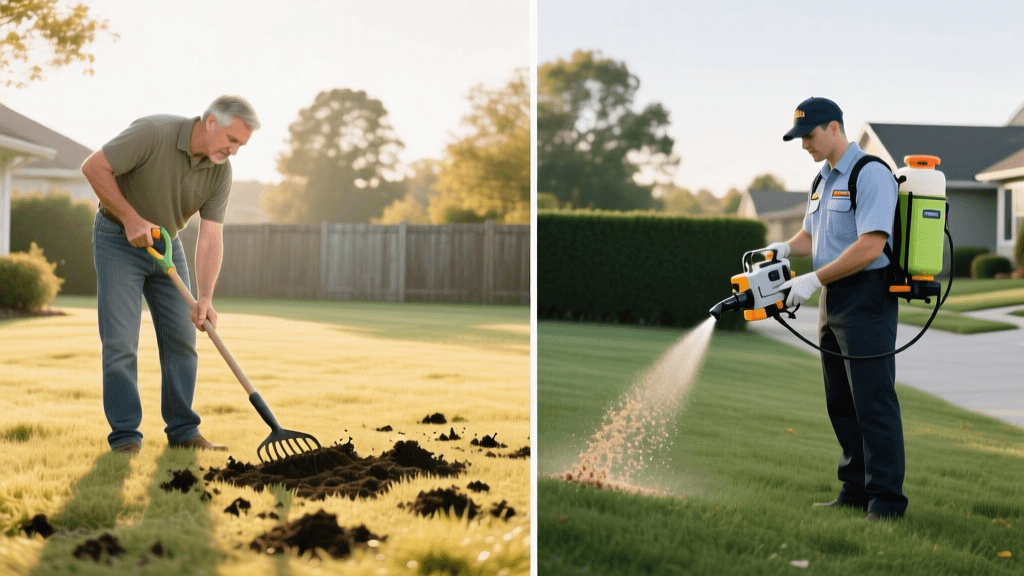
Grub Control Costs: DIY vs Professional Treatment Budget Guide
The Hidden Financial Threat of White Grubs
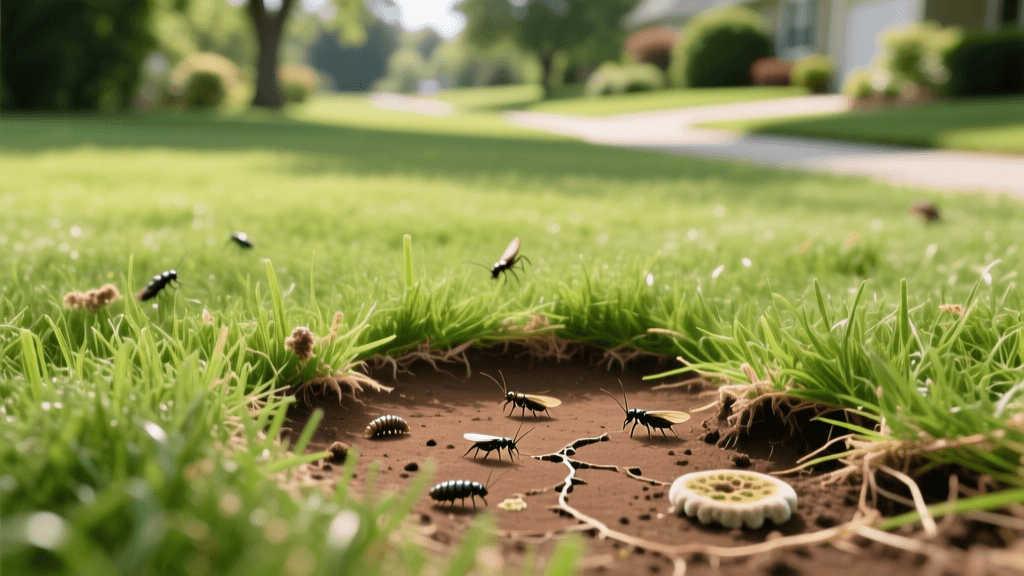
When budgeting for annual lawn care, many homeowners focus on fertilization, weed control, and mowing. However, one of the most destructive and financially damaging threats to your turf often operates entirely out of sight: white grubs. Grubs are the larval stage of various scarab beetles, including Japanese beetles, June bugs, and masked chafers. According to Penn State Extension, these C-shaped, cream-colored larvae feed aggressively on grassroots, severing the turf from its soil base.
The cost of inaction can be staggering. A severe grub infestation can destroy thousands of square feet of turf in a matter of weeks. Beyond the direct damage to the grass, grubs attract secondary pests like skunks, raccoons, and crows, which will literally tear up your lawn to feast on the larvae. Replacing damaged sod costs between $1.00 and $2.00 per square foot, meaning a 2,000-square-foot patch of destroyed lawn could cost you upwards of $4,000 to repair. Implementing a strategic, budget-conscious grub control plan is not just an agronomic best practice; it is a vital financial safeguard for your property.
DIY Grub Control: Product Costs and Options
Taking a do-it-yourself approach to grub management can save you significant money on labor, provided you select the right products and apply them at the correct time. Grub control products generally fall into two categories: preventatives and curatives. Preventatives are applied before the grubs hatch and cause damage, while curatives are used to kill active, feeding grubs.
Preventative Grub Control Products
Preventatives are the most cost-effective long-term strategy. Products containing Chlorantraniliprole (commonly sold as Acelepryn or Scotts GrubEx) are highly regarded in Integrated Pest Management (IPM) circles. As noted by Purdue Extension, Chlorantraniliprole is exceptionally safe for pollinators and earthworms while providing outstanding grub control. It typically costs between $60 and $80 to cover 5,000 square feet. Another common preventative active ingredient is Imidacloprid (Merit), which is slightly cheaper at $30 to $45 per 5,000 square feet but carries higher toxicity risks for bees and aquatic invertebrates.
Curative Grub Control Products
If you discover an active infestation in late summer or early fall, you will need a curative product. Trichlorfon (Dylox) is the industry standard for rapid knockdown, killing grubs within 24 to 48 hours. A 10-pound bag, covering roughly 5,000 square feet, costs around $45 to $60. However, Trichlorfon has a very short residual effect, meaning it will not protect your lawn from future hatches.
Organic and Biological Controls
For eco-conscious homeowners on a budget, biological controls offer a sustainable alternative. Beneficial Nematodes (specifically the Heterorhabditis bacteriophora strain) are microscopic worms that hunt and destroy grubs. A commercial application for 5,000 square feet costs about $35 to $50, though they require strict soil moisture management. Milky Spore disease is another organic option targeting Japanese beetle grubs. While a 10-pound bag costs around $40 to $50, it can take up to three years to establish in the soil, making it a poor choice for immediate budget relief.
DIY Product Cost Comparison Chart
| Product Type | Active Ingredient / Agent | Action Type | Est. Cost (5,000 sq ft) | Best Application Window |
|---|---|---|---|---|
| Scotts GrubEx / Acelepryn | Chlorantraniliprole | Preventative | $60 - $80 | April - June |
| Merit / Bayer Advanced | Imidacloprid | Preventative | $30 - $45 | June - July |
| Dylox | Trichlorfon | Curative | $45 - $60 | August - September |
| Beneficial Nematodes | H. bacteriophora | Curative / Organic | $35 - $50 | August - October |
| Milky Spore | Paenibacillus popilliae | Preventative / Organic | $40 - $50 | Spring or Fall |
Professional Pest Control Costs
If you prefer to outsource the labor, calibration, and chemical handling to a licensed professional, you must budget for service fees. Professional lawn care companies typically offer grub control either as an a la carte service or bundled within an annual lawn care program.
Bundled Annual Programs
Most national and regional lawn care providers include preventative grub control in their premium annual packages. These comprehensive programs, which also cover fertilization, broadleaf weed control, and sometimes aeration, generally cost between $500 and $1,200 per year for an average 5,000 to 10,000 square foot lawn. When broken down, the grub prevention component of this bundle effectively costs the consumer around $75 to $125 annually.
A La Carte Curative Treatments
If you call a professional in late summer after noticing brown, rolling patches of dead turf, you will need a curative rescue treatment. Because this requires a specialized visit outside of a scheduled route, companies charge a premium. Expect to pay between $125 and $250 for a single, targeted curative application. Furthermore, if the turf damage is severe, professionals may recommend a fall aeration and overseeding package to repair the lawn, which can add $300 to $600 to your final bill.
DIY vs. Professional: A Budgeting Breakdown
Choosing between DIY and professional application depends on your available time, equipment, and risk tolerance. Here is a structured comparison to help you allocate your landscaping budget:
- Initial Financial Outlay: DIY is significantly cheaper upfront. You only pay for the product ($30 to $80). Professional services require a minimum service fee or contract commitment ($100 to $500+).
- Equipment Costs: DIY requires a broadcast spreader. If you do not own one, a quality walk-behind spreader costs $60 to $120. Professionals bring their own commercial-grade, calibrated equipment.
- Time Investment: DIY application takes 1 to 2 hours, plus the time required to monitor local weather patterns for optimal soil conditions. Professionals handle all scheduling and application in under 30 minutes.
- Efficacy and Guarantees: Professional services almost always offer a satisfaction guarantee. If grubs breach their preventative barrier, they will return and treat the lawn with a curative product at no extra charge. DIY offers no such safety net; if your timing or spreader calibration is off, you absorb the total cost of the resulting lawn damage.
Timing Your Treatment for Maximum ROI
In pest management, timing is synonymous with budget efficiency. Applying the wrong product at the wrong time is essentially throwing money into the wind. The University of Kentucky Entomology department emphasizes that understanding the local scarab beetle lifecycle is critical for maximizing your return on investment.
Preventative Timing (Highest ROI): The most cost-effective strategy is applying a long-residual preventative like Chlorantraniliprole between April and early June. The product absorbs into the root zone and waits. When beetle eggs hatch in late July and August, the young, highly vulnerable grubs ingest the treated roots and die before causing noticeable damage.
Curative Timing (Lowest ROI): Waiting until August or September to apply a fast-acting curative like Trichlorfon is a reactive strategy. By this time, grubs are larger, requiring higher application rates, and they have already severed grassroots. Furthermore, curatives break down quickly in the soil, meaning you are paying a premium for a product that offers zero future protection.
Hidden Costs: Watering and Lawn Recovery
When building your pest control budget, you must account for the hidden costs associated with product activation and lawn recovery.
The Cost of Watering In
Almost all granular grub control products require immediate irrigation to wash the active ingredient off the grass blades and down into the soil profile where the grubs feed. You must apply at least 0.5 inches of water immediately after application. Depending on your local municipal water rates and the size of your lawn, this single deep watering event can add $15 to $40 to your water bill. If you are using beneficial nematodes, the soil must remain consistently moist for two weeks post-application, which can significantly increase your monthly water expenditure during the heat of late summer.
Lawn Repair and Renovation
If your budget did not include preventative care and you are forced into a curative route, you must also budget for lawn recovery. Dead patches caused by grubs will not simply turn green again once the pests are eliminated. You will need to purchase grass seed ($20 to $40 per bag), topsoil or compost ($5 to $10 per bag), and potentially rent a core aerator ($60 to $100 per day) to prepare the seedbed. Factoring in these recovery costs makes the $60 upfront investment in a preventative product look like an absolute bargain.
Final Thoughts on Grub Control Budgeting
Effective grub control is an exercise in proactive budgeting. By investing $40 to $80 in a high-quality preventative product like Chlorantraniliprole in early summer, you protect your lawn from catastrophic damage and avoid the compounding costs of curative chemicals, emergency professional service calls, and extensive fall lawn renovations. Whether you choose to calibrate your own spreader or hire a licensed professional, ensuring that grub management is a line item in your annual lawn care budget is the smartest financial decision you can make for the long-term health and value of your landscape.