Pest Control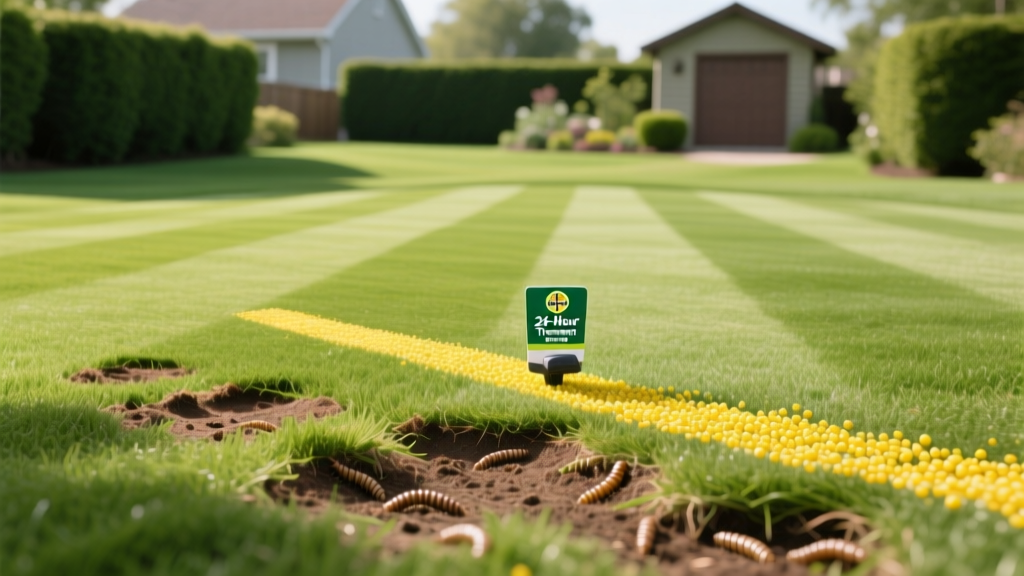
Grub ID & Bayer Advanced 24-Hour Treatment for Striped Lawns 2026
Emily WatsonPublished
The Intersection of Turf Health and Lawn Aesthetics
Lawn striping is the pinnacle of residential turf aesthetics. In 2026, the pursuit of the perfect checkerboard, diamond, or wave pattern in home lawns has reached new heights, driven by advanced zero-turn mowers and sophisticated lawn striping kits. However, the foundation of any breathtaking aesthetic pattern is not just the mower deck or the striping roller; it is the structural integrity of the turfgrass root system. When grub worms invade your soil, they do not just eat roots—they eat your canvas.
To achieve the alternating light and dark bands that define a beautifully striped lawn, the grass blades must be healthy, deeply rooted, and resilient enough to be bent by a roller and remain in that position. If the roots are severed by subterranean pests, the turf loses its anchoring ability. The grass blades will uproot, lay flat irregularly, or turn brown, creating unsightly smudges that completely destroy the optical illusion of your striping pattern. Protecting your lawn's aesthetic appeal requires rapid identification and intervention, which is where grub worm identification and the Bayer Advanced 24-Hour treatment protocol become essential tools for the modern turf artist.
Why Grub Worms Destroy Lawn Striping Patterns
Grub worms are the larval stage of various scarab beetles, including Japanese beetles, European chafers, and June bugs. They reside just beneath the soil surface, feeding voraciously on the root systems of cool-season and warm-season grasses. From an aesthetic perspective, grubs are the ultimate saboteurs of lawn striping for three primary reasons:
- Loss of Blade Tension: Striping relies on the physical bending of the grass blade. Healthy roots hold the crown of the plant firmly in the soil, allowing the top half of the blade to bend and reflect sunlight at different angles. Grub-damaged turf has no root tension; the entire plant simply pulls out of the ground when a striping roller passes over it.
- The 'Spongy Turf' Effect: As grubs tunnel through the topsoil, they detach the turf from the earth. This creates a spongy, carpet-like feel underfoot. When you mow a spongy lawn, the mower deck scalps the uneven surface, leaving jagged, yellow-brown scars that ruin the crisp lines of your pattern.
- Animal Foraging Damage: Secondary pests like skunks, raccoons, and crows will tear up your meticulously striped lawn to feast on the grubs. The resulting craters and flipped sod patches are virtually impossible to blend into a geometric striping pattern without extensive renovation.
Grub Worm Identification: Spotting the Canvas Destroyers
Before applying any chemical control, accurate grub worm identification is crucial. Not all white grubs cause the same level of damage, and identifying the species can help you predict their lifecycle. According to Penn State Extension, proper identification requires examining the physical characteristics of the larvae, specifically the 'raster pattern' on their abdomen.
Visual Identification Markers
- Body Shape: Grubs typically rest in a distinct 'C-shape' when disturbed or unearthed.
- Coloration: They feature a plump, milky-white body with a distinct brown head capsule and six spindly legs near the head.
- Size: Depending on the species and instar stage, they range from 0.25 inches to over 1.5 inches in length.
- The Raster Pattern: The underside of the grub's posterior segment (the raster) contains tiny hairs and bristles arranged in species-specific patterns. For example, Japanese beetle grubs have a distinct V-shaped raster pattern, while European chafer grubs have a Y-shaped anal slit.
The 'Tug Test' for Aesthetic Lawns
If you notice your striping patterns looking dull, or if the light-reflecting bands appear washed out and brown at the edges, perform the 'Tug Test'. Grab a handful of turf in the affected area and pull gently. If the grass rolls back like a freshly cut carpet with no resistance and reveals white, C-shaped larvae in the top two inches of soil, you have an active grub infestation that is actively destroying your striping canvas.
Bayer Advanced 24-Hour Grub Treatment: The 2026 Protocol
When your lawn's aesthetic patterns are under immediate threat, you cannot wait weeks for slow-acting biological controls to work. You need a rapid knockdown curative treatment. In 2026, the consumer product formerly known as Bayer Advanced 24 Hour Grub Killer Plus is widely marketed under the BioAdvanced brand name (following the corporate transition to Envu), but the core chemistry remains the trusted gold standard for emergency turf rescue.
The active ingredient in this formulation is Dylox (Trichlorfon 6.2%). Dylox is a fast-acting organophosphate insecticide that targets the nervous system of the grub worm. When applied correctly, it begins killing active grubs within 24 hours, immediately halting the root-severing damage and preserving whatever structural integrity your turf has left.
2026 Turf Care Note: Trichlorfon degrades rapidly in soils with a high pH (above 7.2). If your lawn has highly alkaline soil, you must water the product in immediately after application to move it into the root zone before it breaks down, ensuring the grubs receive a lethal dose before the chemical neutralizes.
Step-by-Step Application Guide for Patterned Lawns
To protect your lawn's aesthetic patterns without causing chemical burn or uneven application streaks, follow this precise protocol for the BioAdvanced (Bayer Advanced) 24-Hour Grub Killer granular treatment:
- Calculate the Canvas: Measure your total lawn area in square feet. A standard 10-pound bag of BioAdvanced 24 Hour Grub Killer typically covers up to 3,500 square feet. In 2026, the retail cost averages around $28 to $34 per bag.
- Mow First: Mow your lawn using your standard striping pattern, but do not use the striping roller or heavy drag mat for this pass. You want the turf standing as upright as possible to allow the granules to fall through the canopy and reach the soil surface.
- Calibrate the Spreader: Use a rotary spreader for even distribution. Set the spreader to the manufacturer's recommended setting for Dylox 6.2% granules (usually setting 6 or 7 on a Scotts standard rotary spreader). Uneven application will result in overlapping chemical burns that will show up as dark, toxic stripes on your lawn.
- Apply the Granules: Apply the product in a grid pattern (north-south, then east-west) to guarantee uniform coverage. Uniformity is the secret to both pest control and flawless striping.
- Immediate Water-In: This is the most critical step. Within 30 minutes of application, irrigate the lawn with at least 0.25 to 0.5 inches of water. This activates the Trichlorfon, washing it off the grass blades and down into the top two inches of soil where the grubs are feeding.
Curative vs. Preventative Grub Control Comparison
While the Bayer Advanced 24-Hour treatment is the ultimate curative savior for a damaged striping canvas, understanding how it compares to preventative measures is vital for long-term lawn aesthetics. Below is a comparison chart to help you plan your 2026 turf management calendar.
| Treatment Type | Active Ingredient | Speed of Control | Best Use Case for Striped Lawns |
|---|---|---|---|
| BioAdvanced 24-Hour (Curative) | Trichlorfon (Dylox) | 24 Hours | Emergency rescue when grubs are actively destroying roots and ruining current striping patterns. |
| Scotts GrubEx (Preventative) | Chlorantraniliprole | 60-90 Days | Spring/early summer application to prevent grubs from ever hatching, ensuring a flawless canvas for fall striping. |
| Milky Spore (Biological) | Paenibacillus popilliae | 1 to 3 Years | Long-term organic soil building. Not suitable for immediate aesthetic rescue, but excellent for sustainable turf health. |
| Beneficial Nematodes | Heterorhabditis bacteriophora | 3 to 7 Days | Organic curative control. Requires precise soil moisture and temperature management to protect the turf canopy. |
Restoring Your Stripes Post-Treatment
Once the Bayer Advanced 24-Hour treatment has eliminated the grub threat, your immediate focus must shift to aesthetic restoration. The dead patches and spongy areas left behind by the grubs will not magically re-stripe themselves. According to turfgrass researchers at Purdue University, prompt renovation of damaged areas is necessary to maintain a uniform turf canopy.
The Aesthetic Recovery Plan
- Press the Turf Down: If the grubs detached the roots but the grass blades are still somewhat green, use a lightweight lawn roller (filled only halfway with water) to press the turf back into contact with the soil. This encourages the remaining root nodes to re-establish contact with the earth.
- Targeted Overseeding: For areas where the turf was completely destroyed or pulled up by foraging animals, rake the bare soil, apply a high-quality turf-type tall fescue or Kentucky bluegrass seed blend, and cover lightly with peat moss. Choose a seed blend that matches your existing lawn's blade width and color to ensure the new growth blends seamlessly into your striping pattern.
- Resume Striping Carefully: Avoid using heavy striping rollers on newly overseeded or recently treated, spongy areas until the new roots have anchored deeply (usually 3 to 4 weeks). Once the 'Tug Test' confirms strong root anchorage, you can safely resume your aggressive mowing and striping routines, knowing your 2026 lawn canvas is secure from subterranean threats.