Pest Control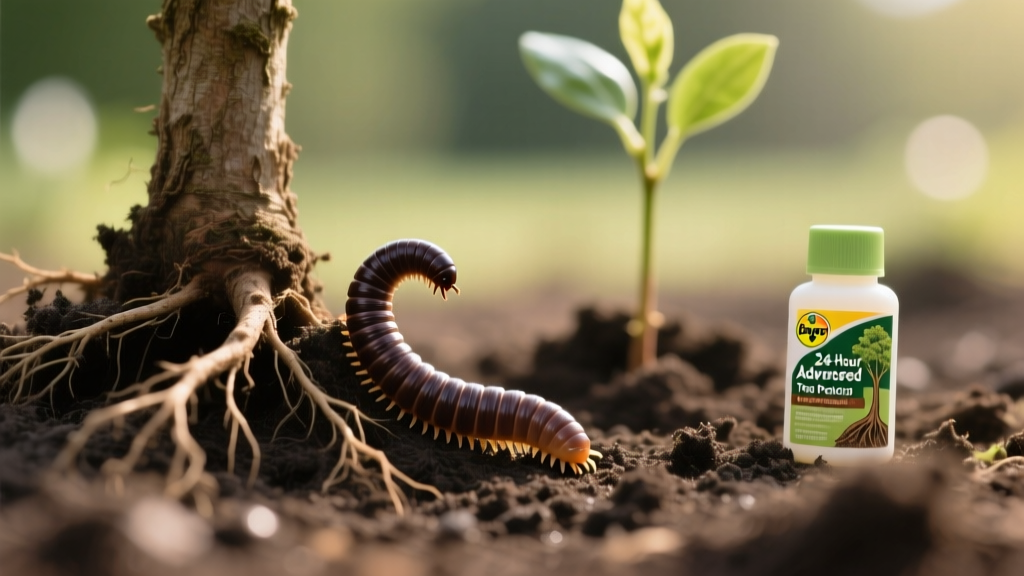
Grub Worm ID & Bayer 24-Hour Treatment For Trees 2026
Anna KowalskiPublished
The Hidden Threat to Your 2026 Tree Planting Projects
When homeowners and landscape architects plan their 2026 tree planting projects, the focus is overwhelmingly on above-ground factors: canopy spread, fall foliage color, hardiness zones, and drought tolerance. However, the most critical determinant of a young tree's first-year survival lies entirely out of sight. Soil-dwelling pests, specifically white grub worms, can silently decimate a newly planted tree's fragile root system before the first leaves even unfurl. Integrating pest management into your tree selection and planting guide is no longer optional; it is a fundamental step in ensuring long-term arboreal health.
Unlike established trees with massive, deep root networks that can easily outgrow minor pest damage, newly planted trees—whether bare-root, balled-and-burlapped (B&B), or container-grown—rely entirely on a confined, vulnerable root ball. If that root ball is placed into soil heavily infested with grub worms, the results are often catastrophic. The grubs will sever the fine feeder roots responsible for water and nutrient uptake, leading to transplant shock, severe wilting, and ultimately, tree death.
In this comprehensive guide, we will explore how to properly identify grub worms in your planting zone, understand their specific threat to young trees, and utilize the highly effective Bayer Advanced 24-Hour treatment (now frequently branded under the BioAdvanced label in 2026) to curatively protect your investment during the planting process.
Identifying Grub Worms in the Tree Planting Zone
Before you dig a single hole for your new oak, maple, or ornamental cherry, you must conduct a soil survey. Grub worms are the larval stage of various scarab beetles, including Japanese beetles, June bugs (May beetles), and European chafers. According to the University of Minnesota Extension, these larvae spend the majority of their life cycle beneath the soil surface, feeding on organic matter and living plant roots.
To identify a grub infestation in your proposed planting bed, perform a simple soil test. Using a sharp spade, cut a one-square-foot section of soil about 3 to 4 inches deep and peel it back. Examine the soil profile and the roots of any existing grass or weeds. You are looking for larvae that are plump, grayish-white, and curled into a distinct 'C' shape. They will have six legs near their brown head capsules.
While finding one or two grubs per square foot is normal and rarely threatens a robust tree, finding more than five to seven grubs per square foot indicates a severe infestation. At this density, the soil ecology is heavily skewed toward root-destroying pests, and planting a young tree without intervention is highly risky. Furthermore, examining the 'raster pattern' (the arrangement of tiny hairs and spines on the grub's tail end) can help you identify the exact beetle species, which is useful for long-term Integrated Pest Management (IPM).
How Grubs Devastate Young Tree Root Systems
The relationship between grub worms and young trees is a race against time. When you plant a tree, it undergoes immense physiological stress. It must rapidly generate new fine root hairs to establish a hydraulic connection with the surrounding soil. Grub worms, particularly the larger third-instar larvae feeding in the spring and early fall, are voracious eaters. They do not distinguish between the fibrous roots of your lawn and the delicate new root hairs of your newly planted Acer rubrum (Red Maple).
As grubs chew through the root ball, they effectively girdle the tree below the soil line. The above-ground symptoms often mimic severe underwatering or transplant shock: leaves will yellow, curl, and drop prematurely, and the canopy will thin out. Because the damage is subterranean, many gardeners mistakenly increase irrigation, which only exacerbates the problem by creating waterlogged, low-oxygen soil conditions that further promote root rot in the already-compromised root system.
Bayer Advanced 24-Hour Treatment: The Curative Solution
When you are ready to plant a tree and discover an active grub infestation during site preparation, you do not have the luxury of waiting weeks for a slow-acting preventative to work. You need an immediate, curative knockout. This is where the Bayer Advanced 24-Hour Grub Killer Plus (often found on 2026 store shelves under the BioAdvanced umbrella) becomes an essential tool in your planting arsenal.
The active ingredient in this 24-hour formulation is typically Trichlorfon (historically known by the trade name Dylox). Unlike systemic neonicotinoids such as Imidacloprid, which must be taken up by the roots and translocated through the plant over several weeks, Trichlorfon is a fast-acting contact and stomach poison. When applied to the soil and watered in, it creates a toxic zone that paralyzes and kills active grub worms within 24 hours.
According to the University of California Statewide Integrated Pest Management Program, rapid knockdown of soil-dwelling larvae is critical when protecting high-value, vulnerable plants from immediate root severing. By neutralizing the grub threat in the planting hole and the immediate backfill zone, you give your new tree the critical 60-to-90-day window it needs to push roots into the native soil without interference.
Comparing Grub Treatments for Tree Planting Beds
Choosing the right chemical or biological intervention depends entirely on your planting timeline. Below is a comparison of common grub control methods relative to tree planting schedules.
| Treatment Type | Active Ingredient / Agent | Speed of Control | Best Use Case in Tree Planting |
|---|---|---|---|
| Curative (24-Hour) | Trichlorfon (Bayer/BioAdvanced) | 24 Hours | Active infestation found on planting day; immediate root ball protection. |
| Preventative | Imidacloprid / Clothianidin | 2 to 4 Weeks | Applied in early summer before fall tree planting to stop young grubs. |
| Biological Nematodes | Heterorhabditis bacteriophora | 3 to 7 Days | Organic IPM approach for sensitive tree species and edible landscapes. |
| Bacterial Spores | Milky Spore (Paenibacillus popilliae) | 1 to 3 Years | Long-term soil inoculation; useless for immediate planting day protection. |
Step-by-Step: Applying Bayer 24-Hour During Tree Planting
To effectively use the Bayer Advanced 24-Hour treatment to protect a newly planted tree, follow these precise arboricultural steps:
- Excavate and Inspect: Dig your planting hole to the appropriate depth (matching the root flare) and twice the width of the root ball. Inspect the walls and floor of the hole for C-shaped larvae.
- Measure and Apply: Calculate the square footage of the planting bed surrounding the hole. Apply the Bayer Advanced 24-Hour granules at the curative rate specified on the 2026 product label (typically around 3 lbs per 1,000 sq ft for heavy infestations).
- Incorporate Lightly: Gently rake the granules into the top inch of the surrounding soil and the loose backfill dirt. Avoid piling the chemical directly against the tender trunk tissue.
- Water to Activate: Trichlorfon requires moisture to break down and move into the soil profile where the grubs live. Apply at least 0.5 inches of water immediately. This perfectly aligns with the deep, settling watering required after planting a new tree.
- Plant and Mulch: Set your tree in the hole, backfill with the native soil, and apply a 2-inch layer of organic mulch, keeping it away from the trunk flare to prevent rot and rodent habitation.
Tree Selection Strategies for Grub-Prone Landscapes
If you are designing a landscape in an area historically plagued by Japanese beetles and subsequent grub infestations, your initial tree selection can mitigate long-term risks. Beetles are highly selective about where they lay their eggs, often preferring the moist, partially shaded soil beneath the canopies of specific tree species.
Trees that are highly attractive to adult Japanese beetles—including Lindens (Tilia), Birch (Betula), and certain Crabapples (Malus)—will naturally draw egg-laying females to their root zones, guaranteeing future grub pressure. When planting in these zones, utilizing a curative treatment like Bayer Advanced 24-Hour at the time of planting is mandatory, followed by rigorous annual IPM monitoring.
Conversely, selecting trees with deep, aggressive taproots or those that are less attractive to scarab beetles can provide a buffer. Oaks (Quercus), Hickories (Carya), and Ginkgo (Ginkgo biloba) are generally less preferred by egg-laying beetles. Furthermore, the Arbor Day Foundation emphasizes that selecting locally adapted, vigorous rootstocks ensures the tree can generate roots faster than local pests can consume them, giving the tree a distinct biological advantage.
Long-Term IPM for Established Tree Zones
Proper site preparation and soil pest management are just as critical to a tree's first-year survival as canopy pruning and mulching.
While the Bayer Advanced 24-Hour treatment is an unparalleled rescue and planting-day tool, it degrades relatively quickly in the soil, usually within a week or two. It is not a season-long preventative. Therefore, a holistic Integrated Pest Management (IPM) strategy must follow the initial planting.
Once the tree is established, transition to biological controls to maintain soil health without harming the beneficial mycorrhizal fungi that young trees desperately need. Applying beneficial nematodes (Heterorhabditis bacteriophora) in late summer targets the newly hatched first-instar grubs before they can grow large enough to cause significant root damage. Additionally, maintaining proper soil drainage and avoiding over-irrigation in mid-summer makes the soil environment less hospitable to beetle eggs, which require high moisture levels to survive.
By combining intelligent tree selection, rigorous pre-planting soil surveys, and the targeted, fast-acting curative power of Bayer Advanced 24-Hour treatments, you can ensure that your 2026 tree planting projects survive their most vulnerable stage and grow into the majestic canopy anchors your landscape deserves.