Pest Control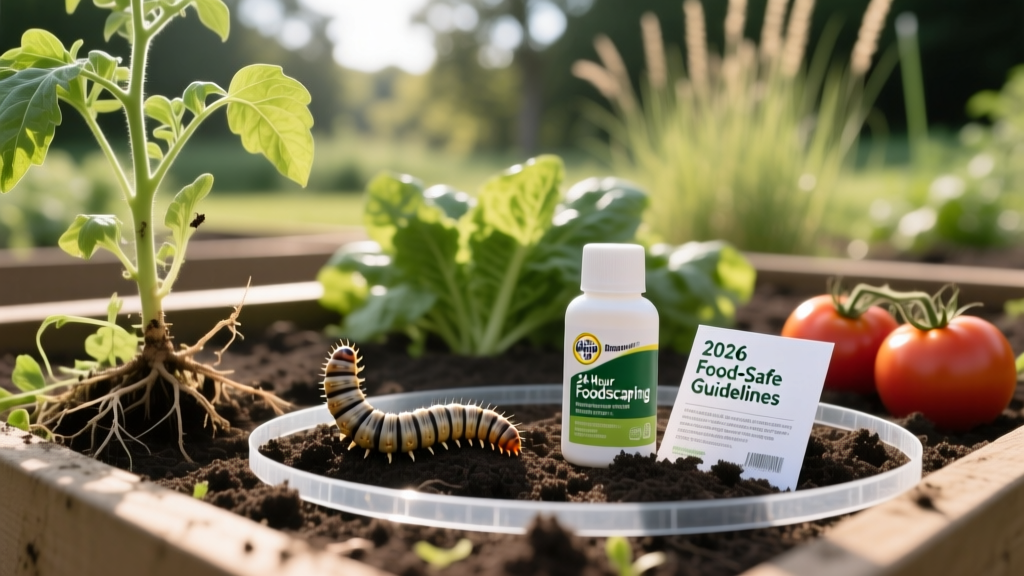
Grub Worm ID and Bayer Advanced 24-Hour Treatment Guide 2026
Anna KowalskiPublished
Introduction to Grubs in the 2026 Edible Landscape
Foodscaping—the art and science of integrating edible crops seamlessly into traditional ornamental and turf landscapes—has exploded in popularity. By 2026, the modern home garden is no longer divided into a strict 'front lawn' and 'back vegetable patch.' Instead, homeowners are weaving blueberry bushes into foundation plantings, planting strawberry borders along walkways, and cultivating sweet potatoes as groundcover. However, this beautiful integration creates unique pest management challenges, particularly when dealing with subterranean pests like white grubs.
White grubs are the larval stage of various scarab beetles, including Japanese beetles, June bugs, and European chafers. While they are notorious for destroying turfgrass roots, in a foodscape, they pose a severe threat to shallow-rooted edibles, root vegetables, and newly transplanted fruiting shrubs. This comprehensive guide covers precise grub worm identification, the mechanics and safety protocols of using Bayer Advanced 24-Hour Grub Killer Plus in a mixed landscape, and the food-safe alternatives required for your edible garden beds.
Grub Worm Identification: Know Your Enemy
Before deploying any treatment, accurate identification is the cornerstone of Integrated Pest Management (IPM). Grubs live beneath the soil surface, making them invisible until the damage is already severe.
Visual Signs in Turf and Garden Beds
In the turf areas of your foodscape, grub damage mimics drought stress. You will notice irregular brown patches that fail to green up after watering. In the edible zones, the signs are more specific:
- Strawberries and Lettuce: Sudden wilting during the heat of the day, with plants easily lifting out of the soil due to severed root systems.
- Sweet Potatoes and Carrots: Direct scarring, tunneling, and chewing damage on the edible root crops themselves, rendering them unmarketable and prone to secondary fungal rot.
- Fruiting Shrubs: Yellowing leaves and stunted new growth on blueberries or raspberries, caused by larvae feeding on the fine feeder roots.
The 'Tug Test' and Soil Inspection
To confirm a grub infestation, perform the 'Tug Test' on suspect turf. Grub-damaged grass will roll back like a loose carpet because the roots have been entirely consumed. For edible beds, use a hand trowel to dig a 1-foot by 1-foot square of soil about 4 inches deep. Sift through the soil and count the grubs. According to University of Kentucky Entomology, finding more than 5 to 10 grubs per square foot in a high-value edible or turf zone warrants immediate intervention.
Identify the pest by its classic C-shape, creamy white body, brown head capsule, and six jointed legs near the head. Examining the raster pattern (the arrangement of tiny hairs and bristles on the underside of the tail end) can help you identify the exact beetle species, which is vital for long-term biological control.
Bayer Advanced 24-Hour Grub Killer Plus: Overview and Mechanics
When dealing with an active, destructive grub population in the non-edible turf and ornamental buffer zones of your landscape, rapid knockdown is essential. Bayer Advanced 24-Hour Grub Killer Plus (now manufactured under the Envu environmental science umbrella as of 2026) remains a go-to rescue treatment for homeowners.
Active Ingredient and Mechanism
The active ingredient in this formulation is Trichlorfon (commonly known by the trade name Dylox). Trichlorfon is an organophosphate insecticide that acts as a cholinesterase inhibitor. When grubs ingest treated soil or roots, or come into direct contact with the granules, their nervous systems are rapidly disrupted, leading to paralysis and death within 24 hours.
Unlike preventive grub controls (such as chlorantraniliprole or imidacloprid) which must be applied months in advance and remain in the soil for long periods, Trichlorfon is highly mobile in the soil and breaks down rapidly via hydrolysis, especially in alkaline soils. This rapid breakdown is why it is classified as a '24-hour' rescue treatment rather than a long-term preventive.
Application Rates and Timing for Lawn Areas
For the turf pathways and non-edible lawn zones of your foodscape, timing is critical. Apply the granules when grubs are actively feeding near the soil surface—typically late summer to early fall (August through September, depending on your USDA hardiness zone).
- Spreader Settings: Use a rotary or drop spreader calibrated to the specific settings listed on the 2026 product label (usually around 3 to 4 lbs per 1,000 square feet for rescue treatments).
- Watering In: Trichlorfon must be watered in immediately after application. Apply at least 1/4 to 1/2 inch of irrigation or rely on a steady rainfall to move the active ingredient down into the root zone where the grubs are feeding. Without water, the granules will degrade on the surface via UV exposure and fail to reach the target pest.
CRITICAL: Bayer Advanced in Foodscaping (Safety & Buffer Zones)
Here is where the edible landscaping perspective drastically alters your pest control strategy. Trichlorfon is NOT labeled for use on or near edible crops. As noted by the EPA's Safe Pest Control guidelines, applying synthetic organophosphates to food-bearing plants is illegal, dangerous, and risks severe chemical residue contamination in your harvest.
In a foodscape, you must establish strict chemical buffer zones. The turf is treated differently than the vegetable bed.
| Zone in Foodscape | Grub Threat Level | Approved Treatment Strategy (2026) |
|---|---|---|
| Central Turf Lawn & Paths | High | Bayer Advanced 24-Hour (Envu) Rescue Treatment |
| Ornamental Buffer Borders | Moderate | Bayer Advanced (if no edibles present) or Milky Spore |
| Edible Crop Beds & Berries | High | Beneficial Nematodes, Hand-picking, Neem Cake |
| Root Crop Zones (Carrots/Potatoes) | Severe | Crop rotation, Tilling, Heterorhabditis Nematodes |
If you are applying Bayer Advanced 24-Hour to the lawn bordering your foodscape, maintain a minimum buffer zone of 5 to 10 feet away from any edible crops to prevent drift, runoff, and lateral soil leaching. Always sweep any granules that land on hard surfaces back onto the lawn to prevent them from washing into your edible garden beds during heavy rains.
Food-Safe Alternatives for the Edible Garden Beds
Because chemical rescue treatments are forbidden in the edible zones, foodscapers must rely on biological and organic IPM strategies to protect their crops. According to the USDA National Institute of Food and Agriculture, biological controls are the cornerstone of sustainable, edible landscape management.
Beneficial Nematodes (Heterorhabditis bacteriophora)
Beneficial nematodes are microscopic, unsegmented worms that naturally occur in soil. The Heterorhabditis bacteriophora (Hb) species is a voracious predator of white grubs. When applied to the soil, they actively seek out grub larvae, enter their bodies, and release symbiotic bacteria that kill the grub within 48 hours. The nematodes then reproduce inside the dead grub and release thousands of new infective juveniles into the soil.
Application Protocol: Apply Hb nematodes in the late afternoon or early evening to avoid UV degradation. The soil temperature must be above 60°F, and the soil must be kept consistently moist for at least two weeks post-application. In 2026, high-quality, refrigerated nematode suspensions are readily available online and can be applied using a standard hose-end sprayer.
Milky Spore Disease (Paenibacillus popilliae)
Milky Spore is a naturally occurring bacterium that specifically targets Japanese beetle grubs. While it takes 2 to 3 years to fully establish in the soil, once established, it provides 10 to 15 years of biological control. It is applied in a grid pattern across the garden and lawn using a drop tube. It is 100% safe for humans, pets, earthworms, and all edible crops.
Cultural Controls: Tilling and Crop Rotation
For root crops like sweet potatoes, physical soil disruption is highly effective. Tilling the garden bed in late fall or early spring exposes overwintering grubs and pupae to freezing temperatures and predatory birds. Additionally, practicing strict crop rotation prevents localized grub populations from building up in specific garden beds year after year.
Integrated Pest Management (IPM) for the 2026 Foodscape
Managing grubs in an edible landscape requires a bifurcated approach. You must treat the ornamental and turf zones with the speed and efficacy of products like Bayer Advanced 24-Hour Grub Killer Plus, while fiercely protecting the soil ecology of your edible beds using biological controls like beneficial nematodes and Milky Spore.
By understanding the life cycle of the grub, respecting the chemical restrictions of Trichlorfon near food crops, and leveraging modern biological alternatives, you can maintain a lush, vibrant, and highly productive foodscape in 2026 and beyond. Always read and follow the most current pesticide labels, as regulations and application rates are subject to ongoing environmental review.