Pest Control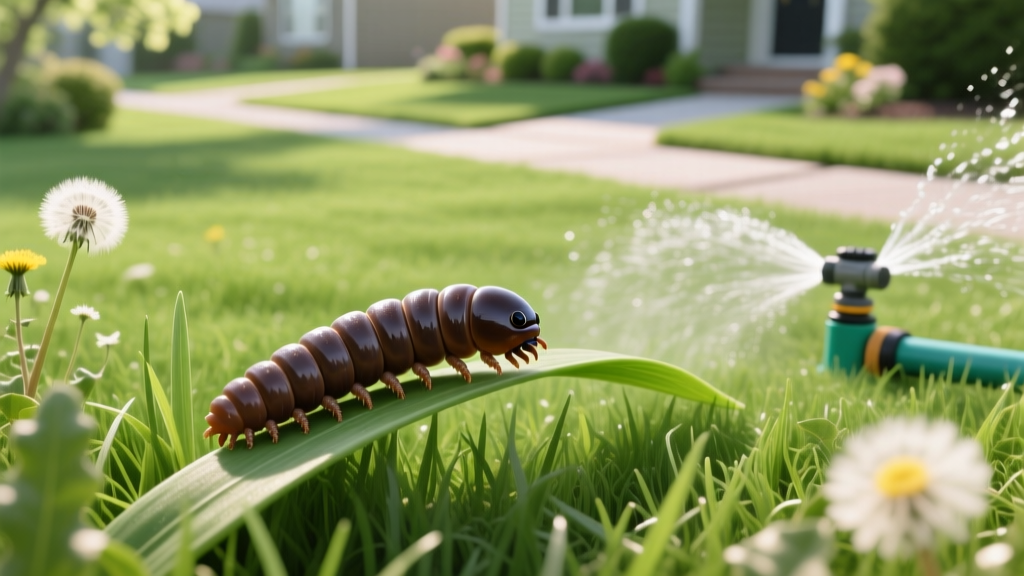
Identify Grubs & Use Bayer Advanced 24-Hour Treatment 2026
Lisa ThompsonPublished
Introduction to Grub Worms and Irrigation in 2026
As we navigate the 2026 lawn care season, homeowners are increasingly battling severe white grub infestations that can decimate a pristine turf in a matter of weeks. White grubs—the larvae of scarab beetles such as Japanese beetles, June bugs, and European chafers—feed aggressively on grassroots, severing the turf from its soil foundation. While many gardeners focus solely on chemical interventions, the true secret to both preventing and treating grub worms lies hidden within your sprinkler and irrigation systems. Over-irrigation creates the perfect breeding ground for egg-laying beetles, while precise, calculated watering is the absolute key to activating fast-acting curative treatments like the Bayer Advanced 24-Hour Grub Killer Plus (now widely distributed under the BioAdvanced label). In this comprehensive guide, we will explore how to accurately identify grub damage and leverage your home irrigation system to activate a 24-hour treatment effectively.
How to Identify Grub Worm Damage in Your Lawn
Before deploying any pest control product, accurate identification is critical. Grub damage is often mistaken for drought stress, fungal diseases, or dog urine spots. Because grubs feed underground, the visible symptoms on the surface are a result of root loss.
Visual Signs of Infestation
- Spongy Turf: The grass feels loose and spongy underfoot, much like walking on a freshly laid rug.
- Irregular Brown Patches: Expanding areas of dead, brown grass that do not respond to additional irrigation.
- Animal Foraging: Raccoons, skunks, and crows tearing up your lawn to feast on the protein-rich grubs beneath the soil.
The Tug Test and Sod Peel Method
To confirm an infestation, perform the 'Tug Test.' Grab a handful of brown grass and pull gently. If the turf rolls back like a carpet without any root resistance, grubs have likely severed the root system. For definitive proof, use a flat-edged shovel to cut a one-square-foot section of sod about two inches deep and peel it back. Count the number of C-shaped, white grubs in the topsoil and root zone. According to Cornell University's Integrated Pest Management guidelines, a threshold of 7 to 15 grubs per square foot warrants immediate curative treatment, depending on the overall health of your turf.
The Sprinkler Paradox: Why Irrigation Attracts Grubs
Understanding the relationship between your sprinkler system and grub lifecycles is vital for long-term lawn health. Adult scarab beetles emerge in early summer and actively seek out moist, easily penetrable soil to lay their eggs. If your neighborhood is experiencing a dry spell and your automated sprinkler system is running frequently, your lawn becomes a prime target for egg-laying females.
Frequent, shallow watering keeps the top inch of soil perpetually moist, signaling to beetles that the environment is ideal for their offspring. To deter future infestations, turfgrass experts recommend deep, infrequent irrigation. However, when an active infestation is discovered in late summer or early fall, you must shift your irrigation strategy from 'deterrence' to 'treatment activation.' This is where your sprinkler system becomes your most valuable pest control tool.
Bayer Advanced 24-Hour Treatment: Application via Sprinkler Systems
The Bayer Advanced 24-Hour Grub Killer Plus utilizes the active ingredient Dylox (trichlorfon). Unlike preventive products containing chlorantraniliprole that take weeks to work, Dylox is a fast-acting contact and stomach poison designed to kill actively feeding grubs within 24 hours. However, its efficacy is entirely dependent on your sprinkler system's ability to deliver the chemical to the root zone.
Dylox degrades rapidly when exposed to sunlight and high-pH environments. If the granules sit on the surface or get trapped in the thatch layer, they will break down before reaching the grubs. Therefore, 'watering in' the treatment immediately after application is non-negotiable.
Step-by-Step Irrigation Activation
- Mow the Lawn: Cut your grass to its standard height and bag the clippings to reduce thatch interference.
- Apply Granules: Use a broadcast spreader to apply the Bayer Advanced 24-Hour treatment evenly across the affected zones.
- Calibrate Sprinklers: Place empty tuna cans or irrigation catch cups in a grid pattern across the treatment zone.
- Water-In Immediately: Activate your sprinkler system to deliver exactly 0.25 to 0.5 inches of water. This volume is sufficient to dissolve the granules and carry the active ingredient past the thatch and into the top two inches of soil where grubs feed.
Irrigation Scheduling Table for Grub Treatment Activation
Different sprinkler heads and soil types require varying runtimes to achieve the necessary 0.5 inches of water without causing runoff. Use the 2026 calibration chart below to program your irrigation controller for the water-in phase.
| Sprinkler Head Type | Soil Type | Estimated Runtime for 0.5 Inches | Runoff Risk |
|---|---|---|---|
| Static Spray Heads | Clay / Heavy Loam | 15 - 20 minutes | High (Use Cycle & Soak) |
| Static Spray Heads | Sandy / Loam | 10 - 15 minutes | Low |
| Gear-Drive Rotors | Clay / Heavy Loam | 40 - 50 minutes | Moderate |
| Gear-Drive Rotors | Sandy / Loam | 25 - 35 minutes | Low |
Note: If you have clay soil and use spray heads, utilize the 'Cycle and Soak' feature on your smart controller. Split the 20-minute runtime into two 10-minute cycles separated by a 30-minute soak period to ensure deep percolation without wasteful runoff.
Leveraging Smart Irrigation Controllers in 2026
Modern smart irrigation controllers, such as the latest models from Rachio and Hunter Hydrawise, feature specialized 'System Testing' or 'Manual Zone' modes that are perfect for pesticide water-in. In 2026, many of these controllers integrate with local weather stations and soil moisture sensors. When applying the Bayer Advanced 24-Hour treatment, temporarily disable your controller's 'Seasonal Adjust' or 'Smart Cycle' water-saving features for that specific watering event. You must guarantee the exact volume of water hits the soil immediately. Once the 0.5-inch water-in is complete, you can resume your smart controller's water-saving algorithms.
Post-Treatment Lawn Care and Irrigation Adjustments
After the Bayer Advanced treatment has been watered in and the active grubs have been eliminated, your irrigation strategy must shift back to promoting deep root growth. As highlighted by the University of Minnesota Extension, lawns require about 1 to 1.5 inches of water per week, ideally delivered in one or two deep watering sessions rather than daily light sprinklings.
Deep watering forces grassroots to grow downward in search of moisture, creating a more resilient turf that can tolerate minor insect feeding. Furthermore, allowing the top layer of soil to dry out between irrigation cycles makes the environment less hospitable for the next generation of scarab beetles looking to lay eggs. By mastering the dual role of your sprinkler system—as both a habitat modifier and a chemical delivery mechanism—you ensure your lawn remains thick, green, and grub-free throughout the 2026 season and beyond.
Conclusion
Grub worm identification and treatment require more than just spreading granules; it requires a synergistic approach between pest control chemistry and precise irrigation management. By accurately identifying the damage, understanding how your watering habits influence beetle behavior, and using your sprinkler system to flawlessly activate the Bayer Advanced 24-Hour treatment, you can rescue your lawn from severe root destruction. For more localized advice on soil percolation and pest thresholds, always consult resources like Michigan State University Extension to keep your turf thriving year-round.