Pest Control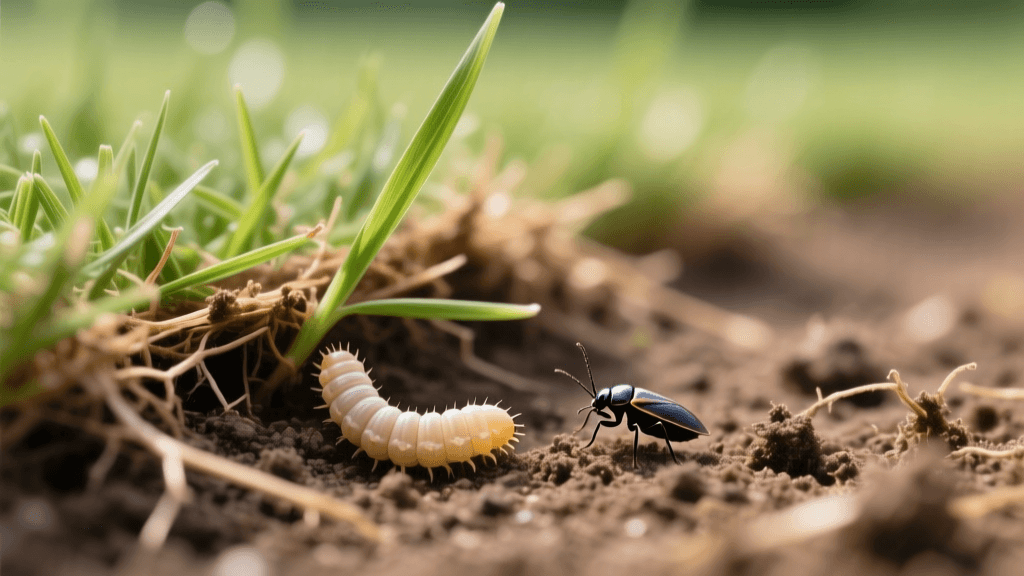
Diagnosing Lawn Grubs vs. Chinch Bugs: Troubleshooting
The Late-Summer Lawn Mystery: Grubs or Chinch Bugs?
When mid-to-late summer arrives, many homeowners are greeted by a frustrating sight: irregular brown patches spreading across their once-lush turf. The immediate instinct is often to rush to the garden center and grab a generic pesticide. However, applying the wrong treatment is a waste of money, damages the environment, and can harm beneficial soil organisms. The two most common culprits for late-summer turf decline are white grubs and chinch bugs. While both cause severe browning, their biology, feeding habits, and treatment protocols are entirely different. This troubleshooting guide will help you accurately diagnose the problem and implement a targeted Integrated Pest Management (IPM) strategy to restore your lawn.
The Suspects: Understanding the Culprits
White Grubs
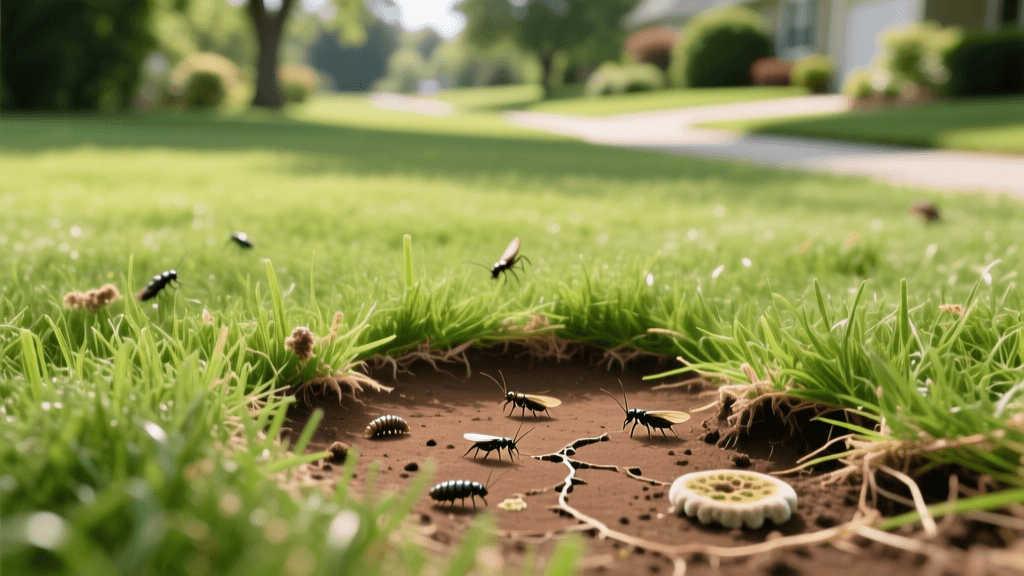
White grubs are the larval stage of various scarab beetles, including Japanese beetles, June bugs, and European chafers. They are C-shaped, plump, white larvae with distinct brown head capsules and six legs near the head. Grubs live in the soil and feed on the root systems of turfgrass. Because they sever the roots, the grass loses its ability to take up water and nutrients, leading to drought-like stress and eventual death. According to Penn State Extension, grub damage is most prevalent in late summer and early fall when the larvae are in their later, most voracious instar stages.
Chinch Bugs
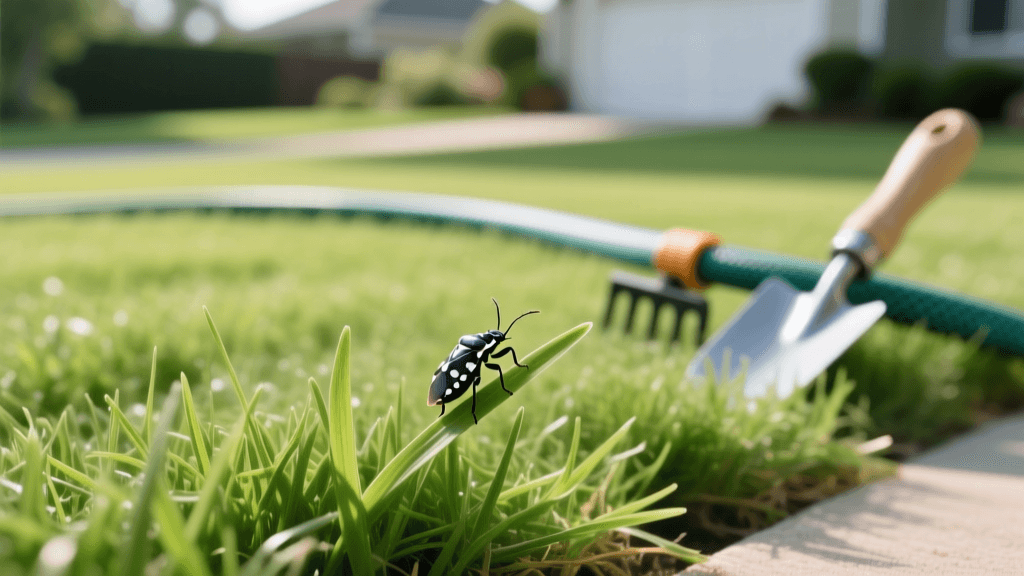
Chinch bugs (such as the Southern chinch bug or the hairy chinch bug) are surface-dwelling insects. Adults are small, about 1/8 to 1/4 inch long, with black bodies and distinctive white, triangular wings that form an X-shape on their backs. Nymphs are bright red with a white band before turning black as they mature. Unlike grubs, chinch bugs do not eat roots. Instead, they use piercing-sucking mouthparts to extract sap from the crown and stems of the grass blades, injecting a toxic saliva that clogs the plant's vascular system. The University of Florida IFAS notes that this toxin causes the grass to yellow and die rapidly, often mimicking drought stress.
Diagnostic Field Tests: Troubleshooting the Damage
Before purchasing any chemical controls, you must confirm which pest is present. Guessing leads to failure. Use these two diagnostic field tests to isolate the problem.
1. The Tug Test and Soil Dig (For Grubs)
Because grubs destroy the root system, the turf loses its anchor. Walk to the edge of a brown patch where the dead grass meets the green grass. Grab a handful of the brown turf and pull gently. If the grass rolls up like a loose carpet with no soil attached, you likely have a grub infestation. Next, use a shovel or a heavy knife to cut three sides of a 12x12 inch square of turf at the margin of the damage and peel it back. Dig through the top 2 to 3 inches of soil and count the grubs. The Michigan State University Extension recommends a treatment threshold of 8 to 10 grubs per square foot. If you find fewer, the lawn can usually outgrow the damage with proper watering.
2. The Coffee Can Soap Flush (For Chinch Bugs)
Chinch bugs hide in the thatch layer and at the soil surface, making them hard to spot with the naked eye. To force them out, perform a soap flush test. Remove both ends of a metal coffee can or a large plastic nursery pot. Push the can 2 to 3 inches into the soil right at the transition zone between the healthy green grass and the dying yellow/brown grass. Fill the can with water mixed with 2 tablespoons of liquid dish soap per gallon of water. Wait for 5 to 10 minutes. The soapy water irritates the insects, forcing them to float to the surface. If you see 15 to 20 or more chinch bugs float up, you have an infestation requiring treatment.
Damage Comparison Chart
| Diagnostic Feature | White Grubs | Chinch Bugs |
|---|---|---|
| Damage Location | Root zone (2-3 inches below soil) | Surface / Thatch layer and crown |
| Turf Response | Spongy feel; rolls up like carpet | Grass turns yellow, then brown; firmly rooted |
| Pest Appearance | C-shaped, white body, brown head | Black/white wings (adults) or red/black (nymphs) |
| Primary Test | Tug test and soil peeling | Soap flush test (coffee can method) |
| Peak Damage Time | Late August through October | July through September (hot, dry weather) |
| Secondary Signs | Birds, skunks, or raccoons digging up lawn | Nocturnal moth activity; no animal digging |
Targeted Treatment Protocols
Once you have positively identified the pest, you can select the appropriate control method. Timing and active ingredients are critical for success.
Treating White Grubs
If you diagnose grubs in late summer or early fall, preventative products will no longer work, as they target only young, newly hatched larvae. You must use a fast-acting curative insecticide.
- Chemical Curative Control: Look for products containing Trichlorfon (commonly sold as Dylox). Apply at a rate of roughly 2.8 lbs per 1,000 square feet. Trichlorfon is highly water-soluble and must be watered in immediately with at least 1/2 inch of irrigation to move it into the root zone where the grubs are feeding. It kills active grubs within 24 to 48 hours. Cost is approximately $15 to $20 per 5,000 sq ft bag.
- Organic Curative Control: Beneficial nematodes (Heterorhabditis bacteriophora) are microscopic worms that hunt and infect grubs. They must be applied when the soil is moist and temperatures are between 60°F and 85°F. Apply via hose-end sprayer in the late evening to protect them from UV light. Cost is around $40 for a pack of 10 million nematodes, covering roughly 2,000 square feet.
- Future Prevention: To prevent next year's infestation, apply a preventative containing Chlorantraniliprole (e.g., Scotts GrubEx) or Imidacloprid (e.g., Merit) in late May or June. These products cost about $25 to $30 and create a protective barrier in the soil that kills grubs as they hatch in mid-summer.
Treating Chinch Bugs
Chinch bugs thrive in hot, dry conditions and thick thatch layers. Because they live on the surface, soil drenches used for grubs are ineffective.
- Chemical Control: Liquid sprays are generally more effective than granules for chinch bugs because they coat the thatch and grass blades. Look for active ingredients like Bifenthrin (Talstar), Carbaryl (Sevin), or Lambda-cyhalothrin (Scimitar). Mix the liquid concentrate according to the label (usually 1 oz per gallon of water per 1,000 sq ft) and spray the entire lawn, focusing heavily on the margins of the damaged areas where the bugs are actively migrating. Cost for a concentrate bottle is $20 to $30, treating up to 5,000 square feet. Do not water the lawn for 24 hours after application.
- Cultural and Organic Control: Reduce thatch buildup through annual core aeration, as chinch bugs use thick thatch as a shield against predators and weather. Furthermore, consider overseeding with endophyte-enhanced turfgrass cultivars. Endophytes are naturally occurring fungi that live inside the grass blades and produce alkaloids that are toxic to surface-feeding insects like chinch bugs, providing a natural, long-term defense.
Lawn Recovery and Post-Treatment Care
Eradicating the pest is only half the battle; you must also help the lawn recover. For grub damage, the severed roots mean the dead patches will not turn green again. You must rake out the dead thatch, loosen the topsoil with a garden rake, and overseed the bare spots with a high-quality, drought-tolerant grass seed blend matching your existing turf. Keep the newly seeded areas consistently moist until germination occurs.
For chinch bug damage, the grass may look entirely dead, but the crown and root system often remain intact if the infestation was caught early. After applying your bifenthrin or carbaryl treatment, implement a deep and infrequent watering schedule (providing 1 to 1.5 inches of water per week). This encourages the surviving crowns to push out new tillers and recover without the need for reseeding. By combining accurate diagnosis with targeted IPM strategies, you can protect your lawn from these destructive pests while minimizing unnecessary chemical use.